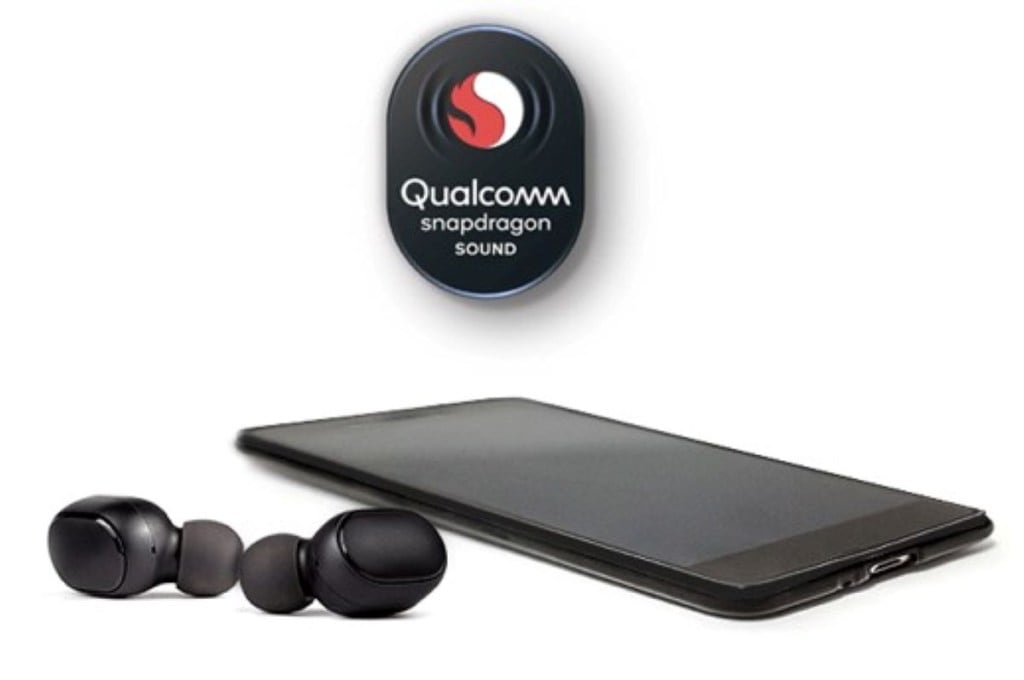
Qualcomm Snapdragon Sound: Chip-making giant Qualcomm has announced the launch of Snapdragon Sound to improve wireless headphones. As per the company, Snapdragon Sound is a chain of audio software and innovations aimed at improving the audio quality for earbuds, and wireless headphones among other devices. Qualcomm voice, music, wearables VP James Chapman said that the goal of this platform is to bring the high-resolution audio quality of wired headphones to the users in wireless products.
Snapdragon Sound makes use of its flagship Snapdragon 888 Mobile Platform for processing while Qualcomm FastConnect Mobile Connectivity system is used, along with Bluetooth Audio SoCs, to enhance the connectivity of the audio enhancement platform. Moreover, in order to improve the audio quality, aptX Adaptive and Aqstic codecs are used, so that the product would be able to deliver playback of hi-fi music up to 24-bit 96kHz. The platform also has support for echo cancellation, noise suppression as well as active noise cancellation.
This concept is not new, what with Sony pushing its own technology which is capable of transmitting thrice the amount of data a standard SBC Bluetooth codec can. However, components from Qualcomm are already present in numerous headphones and earbuds like those of Audio-Technica, Bose, Sennheiser, etc, proving the audio capabilities of Qualcomm. Now, the boxes of audio products and smartphones that jump onto the wagon of this HD audio would also be displaying a Snapdragon Sound badge, to let users know that they contain Qualcomm sound capabilities. But existing products would not be updated to support this.
The next few months are likely to see the launch of the first products making use of Snapdragon Sound, with Audio-Technica and Xiaomi having already announced themselves as the first two partners for this platform.
The system would not only bring high-resolution music to users, but would also bring clearer voice quality, as well as lower latency when the user is playing games, along with connection stability. However, the system still did not focus on multipoint pairing for the headphones with two Bluetooth devices simultaneously, something which is increasingly becoming a necessity due to the multiple devices users are constantly finding themselves using.