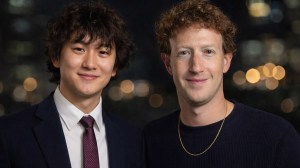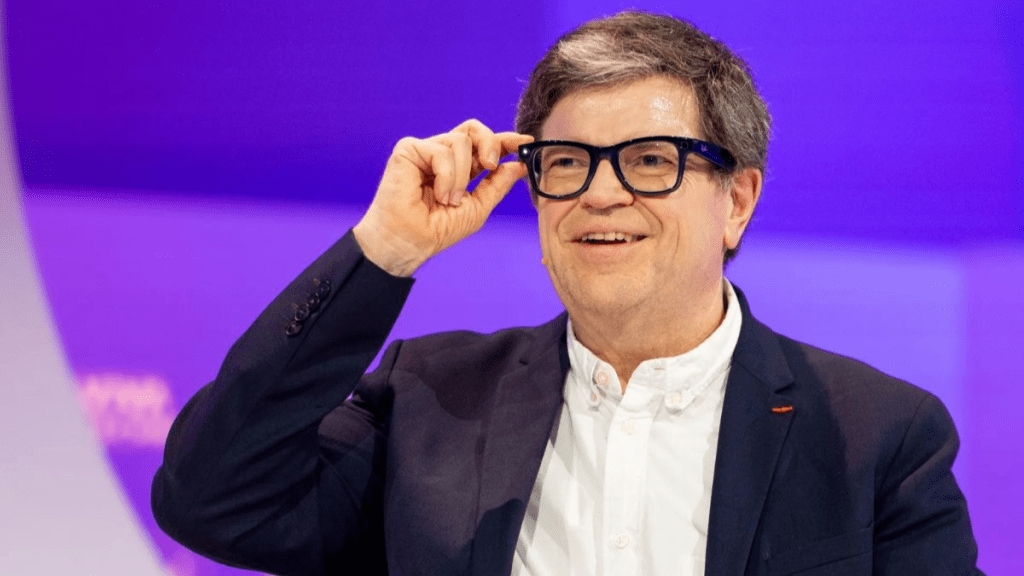
Yann LeCun is leaving Meta, but he is far from stepping away from artificial intelligence. Meta’s outgoing chief artificial intelligence scientist is already in early talks to raise 500 million euros ($586 million) for a new AI startup that could value the company at around 3 billion euros ($3.5 billion) even before its official launch, according to a report by the Financial Times.
The ambitious fundraising tell us that one of the world’s most influential AI researchers is preparing for his next big chapter.
LeCun’s new hat
The Financial Times report said LeCun has brought on Alexandre LeBrun, founder of French health-tech startup Nabla, as the chief executive of the new venture. LeCun confirmed last month that he will leave Meta at the end of the year to focus fully on the startup, which aims to build a new generation of super intelligent AI systems.
“I am creating a startup company to continue the Advanced Machine Intelligence research program (AMI) I have been pursuing over the last several years with colleagues at FAIR, at NYU, and beyond,” LeCun wrote on LinkedIn in November.
“The goal of the startup is to bring about the next big revolution in AI: systems that understand the physical world, have persistent memory, can reason, and can plan complex action sequences.”
What LeCun’s startup will focus on
Unlike today’s chatbots, the startup plans to build AI using “world models,” systems designed to understand how the physical world works. These AI systems could be used in areas such as robotics and transport, where understanding space, movement, and cause-and-effect is critical.
Strong funding commitments and a high valuation at such an early stage, however, are also raising concerns. Industry leaders have already warned that excitement around AI may be moving faster than real-world business results, increasing fears of a potential AI bubble.
LeCun is widely regarded as one of the “godfathers” of deep learning, alongside Geoffrey Hinton and Yoshua Bengio. The trio won the 2018 Turing Award, often described as the Nobel Prize of computing.
He joined Facebook in 2013 to lead the company’s AI research efforts and later became Meta’s chief AI scientist. Over 12 years at the company, he spent five years as the founding director of Fundamental AI Research (FAIR) and seven years in the top AI role.
Meta’s AI shake-up
This year, the company reorganised its AI efforts around a new Superintelligence Lab, led by Scale AI founder Alexandr Wang. The shift followed a muted response from developers to Meta’s latest open-source AI model, Llama 4.
That disappointment pushed CEO Mark Zuckerberg to spend billions to strengthen Meta’s AI leadership, including a $14.5 billion investment in Scale AI in June. Wang, just 28 years old, was later appointed Meta’s new chief AI officer.
The restructuring meant LeCun would report to Wang instead of Meta’s Chief Product Officer Chris Cox. Yuchen Jin, CEO and CTO of Hyperbolic, publicly accused Zuckerberg of forcing LeCun out.
In a post on X, Jin wrote, “Meta CEO Mark Zuckerberg’s actions are responsible for this decision made by the company’s long-time chief AI scientist.” Jin argued that LeCun’s departure was not sudden but the “inevitable outcome” of decisions made earlier this year.
According to him, Meta’s priorities had shifted away from long-term foundational research toward faster, product-focused development. “Yann never believed in LLM-to-AGI. Zuck’s patience ran out,” Jin wrote, referring to LeCun’s long-standing skepticism about using large language models as a direct path to artificial general intelligence. At 65, LeCun is stepping away from one of the world’s biggest tech companies but not from the work that defined his career