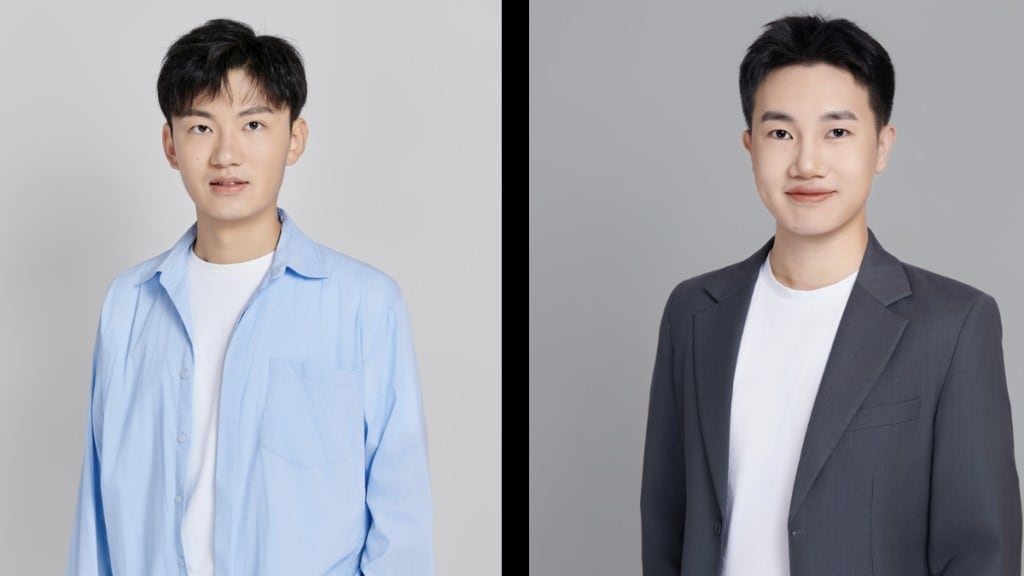
A pair of 22-year-old computer scientists has sent shockwaves through the artificial intelligence industry after turning down a multimillion-dollar acquisition offer from tech billionaire Elon Musk’s xAI to pursue their own revolutionary AI project.
William Chen and Guan Wang, co-founders of the startup Sapient Intelligence, are gaining rapid global recognition for their new Hierarchical Reasoning Model (HRM), which they claim is a leap forward in abstract problem-solving, outperforming systems from industry giants like OpenAI, Anthropic, and DeepSeek on crucial reasoning benchmarks.
Gen Z founders reject Elon Musk’s offer
The two friends, who met in high school in Michigan and later attended Tsinghua University in Beijing, initially found success with their OpenChat model, a small Large Language Model (LLM) trained on high-quality conversations. Its recognition in academic circles quickly caught the attention of Musk, whose xAI made a substantial offer to acquire the technology, potentially for the future of Grok.
Chen and Wang declined the offer, however, driven by an ambitious shared goal – to build an AI that’s “smarter than humans.”
“Guan and I always say it’s like Pandora’s box. If we’re not going to make it, someone else will. So we hope that we’re going to be the first one to make that happen,” Chen told in an interview to Fortune.
China’s Gen Z AI founders bring HRM architecture for reasoning
The founders’ commitment to the greater good of humanity in the field of AI led to the creation of their Hierarchical Reasoning Model (HRM), a system designed to overcome the structural limitations of traditional large-scale machine learning.
The breakthrough came in June when an HRM prototype, featuring only 27 million parameters – a fraction of the size of leading LLMs – demonstrated superior performance on complex, abstract tasks. This included advanced Sudoku puzzles, maze-solving, and achieving high scores on the ARC-AGI benchmark, a rigorous test for general intelligence.
The key to HRM is its departure from the conventional transformer architecture, which relies on statistically predicting the next word. HRM utilises a two-part recurrent structure that is said to mimic human thought, blending fast reflexive responses with slower, more deliberate reasoning.
“It’s not guessing,” Chen stated. “It’s thinking.”
Sapient Intelligence notes that their models suffer from significantly fewer “hallucinations” than conventional LLMs and are already matching state-of-the-art performance in real-world applications such as weather prediction and quantitative trading. The company is currently making plans to open its first US office.