In this series, Abhishek Bachchan showed you how to think like a disciplined investor inside a film family. Sonam Kapoor inspired you how to treat social media as a serious business, while Danny Denzongpa demonstrated how a soft spoken character actor, could quietly build a beer empire.
In the latest edition of Bollywood Billionaires, we feature Juhi Chawla.
It all starts with a small embarrassment at one of the top schools in India.
Your team is last in the rankings. Your classmates wear the jersey of the best team. Their parents own it, and your parents are the ones everybody makes fun of.
In the early years of the IPL, Kolkata Knight Riders felt less like a franchise and more like a weekly roast: Shah Rukh Khan in the stands, a very black and gold and then a purple jersey, a blizzard of marketing and almost no wins.
Juhi Chawla has often spoken about how that phase was brutal at home. Her children studied at the Dhirubhai Ambani International School surrounded by Mumbai Indians loyalists.
Each time KKR crashed out, they walked back into a classroom where the Ambanis owned the winning team and the kids’ parents owned the losers. The teasing in school was relentless.
She sat in the owner’s box at nights with Shah Rukh and Jay Mehta, hands clasped, voice hoarse, as the matches raged on.
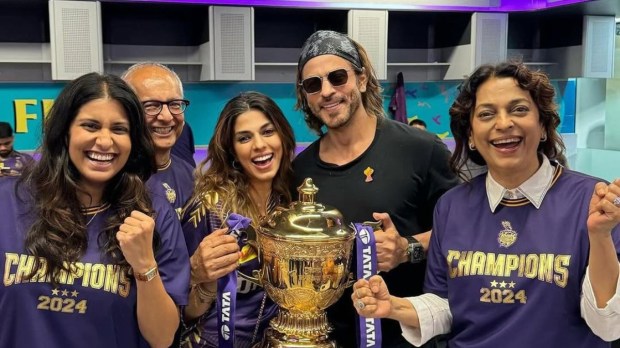
On The Kapil Sharma Show she recalled how, whenever things went badly, she would start chanting quietly whatever she knew, slipping from Gayatri Mantra into any prayer that came to her mind, to all the Gods that existed in the world, while Shah Rukh snapped at her like she had been dropping the catches herself.
Somewhere between those schoolyard taunts that her children suffered and the manic evenings in the stadium sits the central fact of her balance sheet.
As per the Hurun Rich List 2025, Juhi Chawla is now India’s richest female actor, with an estimated net worth of about Rs 7,790 crore, depending on how you value KKR and family assets – ahead of younger headline names like Deepika Padukone and Alia Bhatt.
This makes her wealthier than many male superstars who still headline big ticket films.
She has achieved that while having no major film release in the last couple of years and only the odd streaming role.
The girl audiences remember running through mustard fields has quietly become the woman whose wealth moves with team auctions, cement demand, and the price of sea-facing real estate in Malabar Hill.
You just do not see it on screen.
How Shah Rukh Khan became her most lucrative co-star
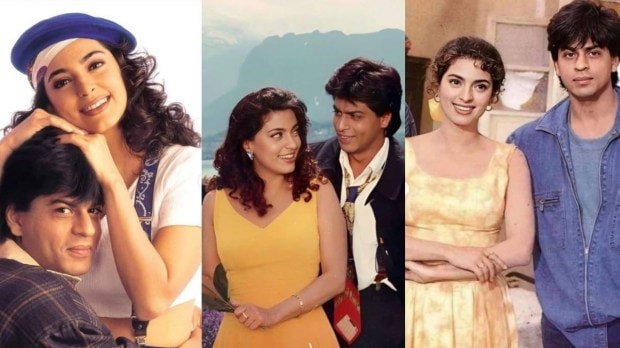
Long before team auctions and franchise valuations, the partnership that transformed her money story started in a much smaller universe. A film set.
In the nineties she and Shah Rukh were practically office colleagues, working in almost a dozen films together. Darr, Raju Ban Gaya Gentleman, Yes Boss, Duplicate, Phir Bhi Dil Hai Hindustani, are just some of them.
By the time that decade closed, they were not just co-stars. They were a habit. He knew exactly how she would land a comic beat. She knew exactly when he would undercut a moment with a joke.
The third point in that triangle was director Aziz Mirza, who had watched Shah Rukh climb from television and seen Juhi move from being a Miss India to becoming a bankable lead.
When the three of them set up a company called Dreamz Unlimited at the end of the decade, it felt almost inevitable. The actors would bring the faces and the fees. Mirza would bring the films.
On paper it looked clever. In cinemas it hurt. Phir Bhi Dil Hai Hindustani and Asoka underperformed. The company never became the studio they had imagined, and Shah Rukh eventually shifted his energy into Red Chillies Entertainment with Gauri at the centre.
What Dreamz Unlimited did build was something subtler. It put Juhi and Shah Rukh through their first real business storm together.
They wrote cheques, watched a passion project bleed money, and learnt how unforgiving the Friday box office could be when you are both on the screen and are also calculating the balance sheet. Then they did what working actors do.
They went back to set on Monday.
So when the IPL idea arrived years later and the cricket board went looking for star owners, this was not a cold call. Shah Rukh came in through Red Chillies. Juhi came in through her marriage to Jay Mehta and the Mehta family’s industrial capital.
The old friendship quietly turned into a formal business alliance, this time in a sport where the seasons are longer, the contracts are tougher and the rewards for patience are far larger.
That is the through line from a film co-star to a co-owner of a franchise now worth several thousand crore. Not a single dramatic leap, but a decade of shared work, one bruising production company and the knowledge that if things go wrong in public, this is a person you are willing to lose money with.
The $75 million gamble: Why experts said ‘No’
The first KKR auction feels routine in hindsight. Today the league is a global entertainment engine with its own calendar, politics and valuation tables. When that first auction happened, it was a wild experiment.
Jay Mehta has spoken about how crazy the deal looked at the time. He and Shah Rukh agreed to pay roughly $75 million for the Kolkata franchise.
The league itself was an idea on paper. There was no proof that this mix of short format cricket, cheerleaders and prime time drama would work in a country used to five-day Tests and endless one day matches.
Industry friends apparently told Jay he had lost his mind.
Juhi quietly signed up for the ride.
It is worth pausing to see what that meant in her personal timeline. This was not a woman at the peak of her film stardom looking for a toy. By the time KKR came along, her leading lady years were already behind her.
She had done her run of romantic hits, tried her hand at production and seen up close how a joint venture with Shah Rukh could go wrong when Dreamz Unlimited folded.
Most people in her position pull back after one bruising business lesson. She walked into a much larger bet with the same partner and this time the cheque was in dollars. The risk sat partly on her own balance sheet and partly on the Mehta family one.
As IPL valuations have climbed from curiosity to the absurd, that early leap now looks less like a gamble and more like a generational transfer of wealth into a new asset class.
Recent estimates put KKR at well over Rs 9,000 crore in value, which means every good season and every broadcast cycle quietly lifts her personal net worth, regardless of whether she is doing a film or not.
From Miss India to Malabar Hill
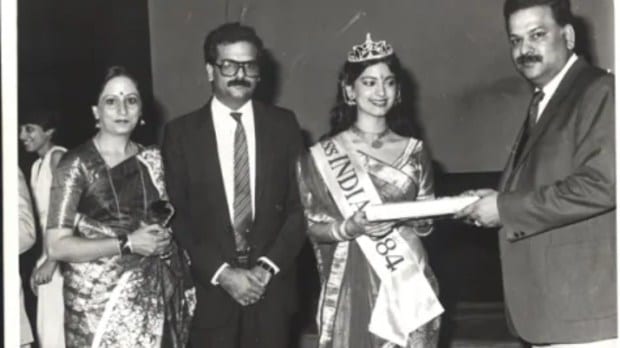
Juhi’s public story starts in 1984 when she won Miss India. It moves quickly after that.
Advertisements. Modelling. A small role in Sultanat. The real lift off with Qayamat Se Qayamat Tak with Aamir Khan.
By the early nineties she was one of the most bankable heroines in the industry. She had that perfect mix of girl next door charm and sharp comic timing.
Producers loved her because she was reliable. Co-stars liked her because she matched the energy without making every scene a tug of war.
Somewhere in that same window there was another fork in the road that could have changed her career entirely.
She had been almost finalised to play Draupadi in B R Chopra’s historic television show Mahabharat, after an impressive screen test, and then Qayamat Se Qayamat Tak materialised.

Not sure of what to pick, she asked the legendary filmmaker for advice, Chopra told her to focus on films rather than television.
As her luck would have it, the film turned into a cultural landmark and launched both her and Aamir into the film history books.
That is the cinematic record. The money story runs under it.
Over time Juhi and Jay have built a large personal real estate portfolio on top of the industrial base that already existed as a family business for him.
They live in a luxury building at Malabar Hill, one of the most expensive locations in Mumbai, and hold prime property in several other cities.
The exact number of flats, plots and bungalows is private, but every serious list that tries to estimate her fortune points to real estate as one of the three big pillars.
The other two are KKR and a quieter clutch of businesses where she and Jay are owners rather than brand faces.
Turning humiliation into a unicorn: The KKR turnaround
Those first KKR seasons were painful.
The turnaround took years. Changes in management. A different captain. Some smart picks at auction. A conscious decision to stop treating the team like a variety show and start treating it like a sporting enterprise.
The league grew as well. Broadcasting deals swelled. Digital rights came in. Franchise values moved from ambitious to absurd.
The results sit in the rich lists now. Each fresh assessment of IPL team values pushes Kolkata higher. Each increase in value lifts her personal net worth even though she has not had a major theatrical hit in ages.
There are very few film stars in the world whose wealth is tied less to their last Friday and more to how well their cricket team does each season. She is one of them.
You could call that lucky timing. It is also what happens when you hold your nerve through seasons of humiliation and continue to sign player cheques while your kids cry about classmates who support the winning side.
Pizza, cement & real estate: The ‘boring’ wealth builders

To understand the rest of her portfolio you have to leave the stadium and walk into a very particular version of Mumbai.
Start in Kala Ghoda. The business district that now doubles as an art crawl. Tucked into one of its lanes is Rue du Liban, a restaurant that sells a polished Levant fantasy.
Brass, marble, shisha, mezze. It is the sort of place where young bankers take clients who want to feel international without leaving Fort.
Move to Bandra and you will find Gustoso, an Italian dining room that takes its pizza very seriously. Proper Neapolitan crust, wood fired ovens, a menu that reads like it has been translated directly from a trattoria.
They are not fan cafes with framed posters of her films on the wall. They are real hospitality businesses with chefs, staff, rent and risk.
Over the years these restaurants have built their own reputations in a city that is brutal to mediocre food. They sit quietly as another line in the family ledger.
Then there is the completely unglamorous bit.
Saurashtra Cement is one of the group companies where her name appears directly in the shareholding pattern. Buried in filings you will find a sliver of the company held in her own name, plus a tiny additional slice through a family trust.
The percentage is small in the context of the group but the signal is clear. She is not an ornamental spouse who is kept away from the paperwork. Her name sits on actual shares in a real industrial outfit.
Put these elements together and the picture sharpens. A sports franchise in a league that prints money. Serious restaurants in very specific Mumbai neighbourhoods. A direct listed equity position in the family cement company. A stack of property.
It is a portfolio designed for slow compounding rather than quick headlines.
The public interest case that went wrong
No balance sheet story is complete without the odd misstep.
In recent years the most visible one has come from a place of concern that turned into a public embarrassment.
Juhi became the face of a petition in the Delhi High Court that questioned the health impact of fifth generation telecom towers in India. The court was not impressed.
The judges dismissed the plea, called it an abuse of process and slapped a hefty cost on the petitioners. The virtual hearing itself turned farcical when strangers crashed the video link and began singing songs from her films.
Later she released a video to say that she was not against new technology at all. She said she only wanted authorities to certify that the radiation levels were safe.
It did not matter. The clip from the hearing, the jokes and the fine became a permanent part of her public record.
For someone whose wealth is rooted in serious business and who sits, however informally, inside an industrial decision matrix, it was a reminder that using courts and social media to fight complex policy wars needs a different sort of preparation.
What Juhi Chawla’s balance sheet really tells you
On paper, there are richer names in the industry. Younger faces with hotter streaming deals and brand retainers. People whose selfie output would fill several cloud servers and whose contracts look futuristic.
On fundamentals, she looks more insulated.
She used her best earning years to keep working when marriage could easily have cut her career short. She signed a cheque for a cricket team at a time when even seasoned business people were calling it foolish.
She backed restaurants in a city where rent kills weak ideas. She holds a stake, however small, in a cement company whose product will literally sit under other people’s lives for decades.
None of it is flashy. Most of it is invisible from the outside unless you read filings and franchise valuations for fun.
That is the quiet twist in the story of one of Hindi cinema’s most beloved leads.
The dimpled girl audiences remember from films is now the woman whose fortune rides with team auctions, cement demand and the price of sea view real estate in Malabar Hill.
Ankit Gupta has spent almost two decades working with India Today, NDTV and Times Internet. He is a senior creative lead at Hook Media Network within the RP Sanjiv Goenka Group. He writes on the business of entertainment, fashion and lifestyle, bringing a producer mindset to reporting and analysis.