



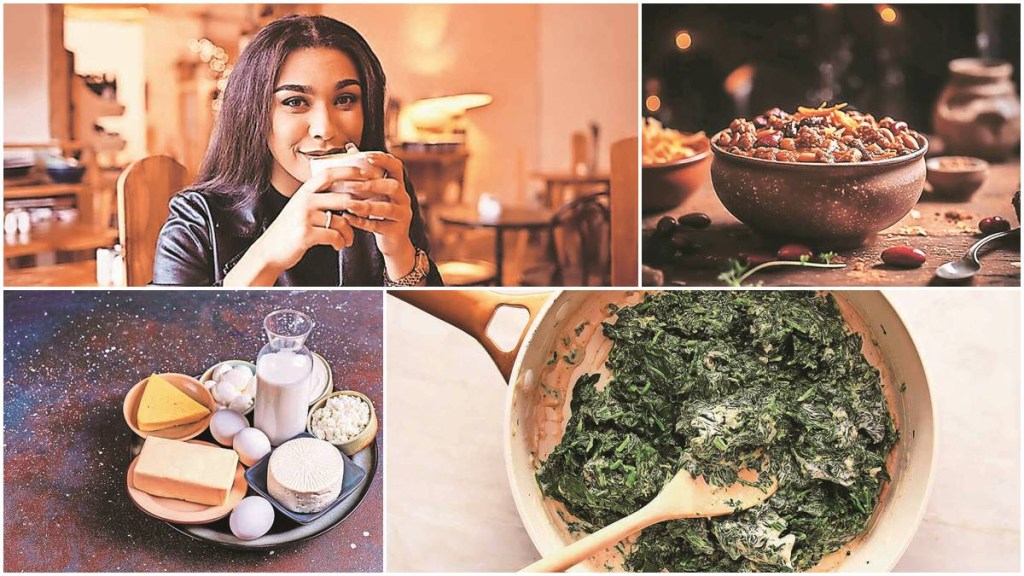
Have you ever wondered why it is recommended to have certain food items only in the raw form and others cooked, or some with a certain amount of ghee or oil and yet others simply taken with water or in combination with other food items?
The way we eat food, central to all the optimal functions and potentials of the human body, is vast, varied and endless. But the answer to these is somewhat simple — the bioavailability of nutrients. For instance, if you cook your poha made with veggies after you have squeezed lemon, you have wasted the vitamin C that you might have probably gotten in the first place. Reason? Vitamin C is heat labile (sensitive to heat) and loses its nutritional value if heated. It’s best absorbed raw.
But heating is not a villain here. Let’s say, if you want your body to absorb the potent antioxidant lycopene that helps protect cells from damage, then you might want to have your tomatoes cooked because it enhances the bioavailability of that antioxidant. But there’s a catch — the bioavailability of vitamin C is lowered. At the same time, when certain vitamins and minerals are taken together, their bioavailability increases. Vitamin C helps in iron absorption, while vitamin D helps in calcium absorption. Thus food and nutrient absorption is all about permutation and combination, affected by bioavailability of those nutrients. “Understanding bioavailability helps optimise nutrient intake for better health,” says Anita Sargara, a dietitian at Sterling Hospitals in Ahmedabad.
So, what’s bioavailability? “It refers to how quickly and to what extent the body absorbs and uses a particular nutrient. It can be influenced by factors like food processing, cooking methods, and nutrient interactions,” explained Fiona Sampat, clinical dietitian at Mumbai-based Kokilaben Dhirubhai Ambani Hospital. Deepti Khatuja, chief clinical nutritionist, Fortis Memorial Research Institute, Gurugram, says, “It’s a technical term used to convey the fact that not 100% of nutrients ingested will be absorbed, irrespective of whether consumed in the form of food or supplements.”
How does it work?
Bioavailability is the effect of a sequence of metabolic events, including digestion, solubilisation, absorption, organ uptake and release, enzymatic transformation, secretion and excretion, on nutrient utilisation. The supply of nutrients to the human body, thus, not only depends on the amount of the nutrient in a food, but also on its bioavailability. It can be influenced by numerous factors, including physiochemical properties such as chemical binding form, the matrix in which the nutrient is incorporated, the presence or absence of other food components that enhances or inhibits absorption, metabolisation after absorption, host related factors (including state of health, genetic factors, age and lifestyle) as well as other individual factors.
Dietitians and nutritionists explain that the chemical shape and interactions of vitamins and minerals affect the bioavailability of those nutrients to variable degrees.
“For example, oxalates, which are found in foods like spinach and rhubarb, restrict the absorption of calcium, yet vitamin C improves the absorption of non-heme iron from plant-based sources like spinach,” says Sampat of Kokilaben hospital. Vitamin C helps in iron absorption through its capacity to keep iron in its reduced form (ferrous form) while amino acid binds with iron to form a readily absorbable complex. “Consumption of meat, fish, poultry (MFP) along with meals increases iron absorption. It releases amino acids and polypeptides which chelates with non-heme (ferric) iron to form soluble, absorbable complexes,” explains Khatuja of Fortis.
Vitamin D helps in calcium absorption. Inhibitors, on the other hand, can reduce nutrient bioavailability by binding the nutrient in question into a form that is not recognised by the uptake systems on the surface of intestinal cells, rendering the nutrient insoluble and thus unavailable for absorption, or competing for the same uptake system. For example, phytic acid is highly abundant in certain plant foods (like pulses, whole-grain cereals, seeds, nuts) and strongly binds with minerals such as calcium, iron and zinc in soluble or insoluble complexes that are unavailable for absorption, say experts.
Ways to reduce the phytic acid content of foods include fermentation (extensive leavening of whole meal bread dough) or the soaking and germination of pulses, says Khatuja of Fortis.
Bioavailability of nutrients such as protein also depends on their source. “Animal proteins have higher bioavailability than plant proteins, necessitating diverse plant sources for vegetarians,” says Sargara of Sterling Hospitals. Vitamin B12 has high bioavailability in animal products and requires fortified foods (plant milk, such as soy, almond, oat, cashew, and coconut milk, breakfast cereals and spreads) or supplements for those on plant-based diets, she adds.
Calcium in dairy products has high bioavailability while calcium in spinach gets hampered by oxalates. Iron
absorption, too, varies. Heme iron from meat is more bioavailable than non-heme iron from plants. Pairing non-heme iron sources like lentils with vitamin C-rich foods like oranges enhances its absorption.
Beverages & bioavailability
Many people don’t mind having a cup or coffee or tea around their meals. Experts highlight that they can inhibit abortions of nutrients like iron and calcium. Having tea or coffee with iron rich foods or calcium rich foods or with healthy meals and snacks inhibit bioavailability of nutrients as tannins and caffeine bind with iron and calcium and make them unavailable for absorption, says Khatuja of Fortis.
Sargara of Sterling Hospitals says drinking tea or coffee with meals must be avoided as polyphenols in them inhibit non-heme iron absorption, reducing its bioavailability by up to 64%.
Too much caffeine can affect the balance of calcium in the body, while too much salt can lead to calcium excretion from the body through urine. Fizzy drinks contain a lot of phosphate, which is used to improve its flavour but too much of it may cause the body to breakdown calcium to balance levels, the experts warn.
Cooked or uncooked?
Nutrient absorption can get enhanced or inhibited depending on whether the food is cooked or uncooked. Certain minerals, including beta-carotene in carrots and lycopene in tomatoes, can become more accessible by cooking. Eating certain nutrients uncooked helps store them better, such as vitamin C found in vegetables. Eating cooked spinach improves iron absorption, whereas eating raw bell peppers preserves their vitamin C content and makes them more nutritious. “The precise nutrients you want to enhance will determine whether you choose raw or cooked,” says Ginni Kalra, head of dietetics at Aakash Healthcare, Delhi.
Kalpana Gupta, clinical nutritionist at Max Smart Super Speciality Hospital in Saket, Delhi, says boiling beans can decrease the anti nutrients like phytate content and enhance the mineral bioavailability, while cooking meats, eggs, and certain vegetables denatures proteins, making them easier for digestive enzymes to break down.
At the same time, some nutrients such as vitamin C, B and polyphenols in vegetables are heat-sensitive and can be lost during cooking, she adds. “For example, boiling vegetables can cause water-soluble vitamins like vitamin C and some B vitamins to leach into the cooking water,” she points out.
With water or with fat?
Fat-soluble vitamins (A, D, E and K) in foods like avocados and nuts require dietary fats for their optimal absorption and can be stored in the body while water soluble vitamins like B and C are easily absorbed with water but cannot be stored in the body.
For instance, the fat content of avocado increases the absorption of beta-carotene when eaten alongside carrots, says Sampat of Kokilaben hospital. Khatuja of Fortis says since carotenoids (found in bell peppers, broccoli, carrots) are fat-soluble, hence adding small quantities of fat or oil to the meal (3g to 5g per meal) improves their bioavailability. “Eating carrots (vitamin A) with a bit of oil enhances absorption, while vitamin C from citrus fruits is easily absorbed with water,” says Kalra of Aakash Healthcare.
Water-soluble nutrients – vitamins C and B – can be eliminated if ingested in excess and are easily absorbed in the presence of water. Kalra of Aakash Healthcare also says water soluble nutrients are easily absorbed into the tissues of the body and get metabolised more quickly than fat-soluble vitamins. On the downside, since they cannot be stored in the body, they need to be consumed regularly to maintain adequate levels, she adds.
How to take supplements
Nutrients themselves compete with each other for absorption, says Khatuja of Fortis. She gives examples of how iron and calcium supplements, if taken together, can compete with each other and either one being absorbed. Hence, it is advised to have a minimum 4 hours’ gap between iron and calcium supplementation, she adds.
Sampat of Kokilaben hospital also says enhancing absorption can be achieved by selecting supplements in forms similar to those found in whole foods, such as methylated folate rather than folic acid. Experts also suggest that offering a source of dietary fat or other nutrients that facilitate absorption, taking supplements with meals might enhance absorption.
Iron supplementation should be taken with drink or food rich in Vitamin C while calcium supplement should be taken along with Vitamin D fortified milk or foods rich in vitamin D. Tea, coffee and aerated drinks should be avoided with nutritional supplements as they impact their bioavailability, advises Khatuja of Fortis.
The forms of supplement also impact bioavailability. “It is generally recommended to choose forms that are more easily absorbed by the body. Liquid forms of supplements often offer better absorption rates compared to pills or capsules because they are already in a readily available form,” says Sargara of Sterling Hospitals. Gupta of Max suggests taking fat soluble vitamins A, D, E, and K with meals that contain fat for better absorption.
Good combinations
Vitamin C and Iron
Poha with lemon slices
Why: Vitamin C enhances the absorption of non-heme iron (found in plant sources)
Healthy fats and fat-soluble vitamins (A, D, E, and K)
Extra virgin olive oil (healthy fats) in a salad
Why: Fat-soluble vitamins require dietary fats for proper absorption
Calcium and Vitamin D
Fortified milk (calcium and vitamin D)
Why: Vitamin D aids in the absorption of calcium, essential for bone health
Some bad combinations
Iron and calcium
Iron supplements with dairy products
Why: Calcium competes with iron for absorption, reducing bioavailability of both minerals
Oxalates and calcium
Spinach (high in oxalates) with dairy products (high in calcium)
Why: Oxalates can bind to calcium and form insoluble compounds that the body cannot absorb
Tannins and iron
Tea or coffee with meals rich in iron
Why: Tannins in tea and coffee can bind to iron, particularly non-heme iron, reducing its absorption
Phytates and minerals
Rajma (high in phytates) with meals rich in zinc, iron, or calcium
Why: Phytates can bind minerals and reduce their absorption in the digestive tract
— Kalpana Gupta, clinical nutritionist, Max Smart Super Speciality Hospital, Saket