



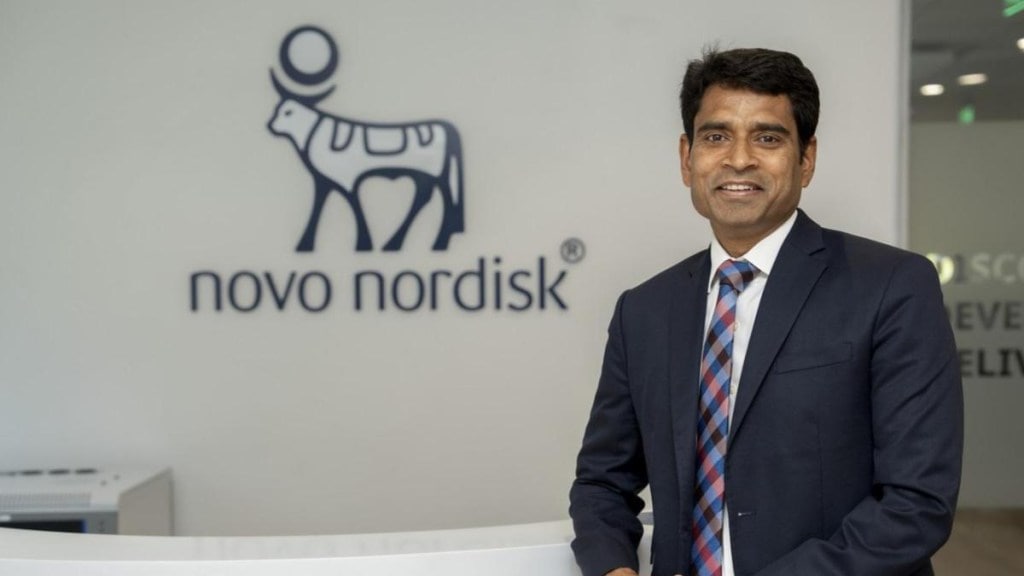
Ozempic may have become synonymous with weight-loss but it is essentially a type 2 diabetes medication. It is for Type 2 diabetes patients for glycemic control. Along with glycemic control it offers weight benefits, CVd and CKD in people with Type 2. “This has been approved in India apart from the weight-loss benefits,” explains Vikrant Shrotriya, who leads the India operations of the drug maker as the managing director, Novo Nordisk India.
Speaking to this writer on the morning after enough and more verbiage both online and in print of the India launch of Ozempic, he responds to a range of questions from future pricing to potential side-effects for a class of drug globally used by over seven million people.
Life after patent expiry
We began by asking what happens after the drug patent runs out in March 2026 and generic players enter the fray, so will the company lower the price further? “It is not that we are reacting post patent loss of exclusivity after March because price is only one component, many other things matter for patients. We have all along been sensitive to what patients and physicians say about the right price at which they will opt for the drug originator’s reliability and quality.”
Picturing a track record on patient-centric pricing, he says, “even in the case of our insulin, there are several generic versions but people still prefer our product because these are all peptides and complex molecules we therefore try to make it available at a price that is reasonably affordable. Today, doctors are aware, we drive the science and we drive all the kind of research that is happening in this field and this holds value in the minds of the doctors and the patients. So, in short, we will drive the science, we will drive innovation and still stay competitive.”
The insulin Ryzodeg
Wanting to refrain from comparing the price of the drug in India as compared to the pricing abroad, he says, “I would rather prefer to listen to what the patient and physician says in India.
“We have a track record. Nearly five years ago we also reduced the price of our insulin without any new competition and this was purely based on our efforts at constantly trying to arrive at price at which innovation can be accessed. We have done this with with our new generation insulin Ryzodeg, where we reduced the price by 30 per cent and still today it is in the top 15 brands.”
Even in case of areas where there is generic competition in insulin, the company he says, retains a 25 per cent premium and maintains “a competitive edge.”
Pricing, premium & patient preference
“Price is only one of the many levers in a business. You do not buy something just because it is the cheapest. People also look for reliability, trust and quality. This is not say that others do not adhere to this but only to emphasise what we bring to the table.” Drawing an analogy from chocolate industry, he says, there are different price points for different players with different market share for each and it is not that the cheapest has the highest market share.
7.5 million users
In the case of semaglutide, we are taking of nine years of innovation, scalability of production and the promise to standard and quality. There are already 7.5 million people using it worldwide today (and this is just in the past four years) making it is unique case where the journey from innovation to early adopters to diffusion (widespread use) has happened at such a rapid pace.”
Enough research and inputs from the field force, has gone into the India pricing, he says.
People often say patient-centricity matters and this will be a hollow goal, he says, “if patients are not able to access the medicine and as an innovator company we want to ensure the best for the patient while also trying to recover the research and innovation cost which make commercial operations sustainable and you remain competitive. Therefore, the pricing is determined by the need to remain patient-centric while also remaining commercially viable and the cost of operations and socio-economic patterns vary across geographics.”
Why launch now and much later than the global launch? “When we notice huge rise in demand we never wanted to have a scenario where we launch a medicine and are not able to back it with enough supplies, hence the time taken for the launch.”
But then, while Ozempic is a type 2 diabetes drug with weight-loss benefits will it not cannibalise its other product focussed on weight-loss? He sees enough and more demand and a market that is constantly seeing more people gain access to medicines. “India is not a small country. Given its 100 million diabetic patients and 250 million obese, it is a unique country where access to new medicines keeps building and launch to peak sales happens overtime. Therefore, it is a country where a long-term commitment is required. Please remember, we have been supplying insulin for 40 years and this is serious commitment,” he says.
No quick-fix
He cautions against unmonitored and rampant use of the drug. “People should not see it as a quick-fix and should respect science and follow the advice of the physicians who are best placed to guide them,” he says.
On the side-effects, “the medicine globally has seen a quick transition from launch to adoption.” It is a point that even Dr Devi Shetty, leading cardiac surgeon and founder of Narayana Health says.
Breaking down the demand into two segments, Shrotriya says, there would be one set of people who genuinely need the medicine stay concerned about likely side-effects and there are those who are driven to take a rather non-ethical approach purely for cosmetic purposes and they do not really worry about the side-effects. Therefore, the challenge of adverse outcomes will be best addressed if people approach it with the right knowledge after proper doctor consultations and use the drug only for the rightful purposes. Albeit on the adverse reactions per se, he says, “we have not seen any causal relationship in our clinical trials other than nausea and vomiting in some cases and that too for a very short time period (about 15 to 20 days at the most) but we remain pharmacovigilant and watchful for any kind of unforeseen side-effect emerging but so far we have not seen any so far.”
The weight-loss journey
On the history of the launch of the drug globally and the journey thereafter, he says, as a semaglutide (the active ingredient in Ozempic) was first launched in the US in 2017 later after it received the USFDA approval for chronic weight management, Novo Nordisk launched Wegovy in 2021. He reminds that going purely by the label of the drug, Ozempic though seen popularly for its weight-loss benefits, is essentially a type 2 diabetes drug.