



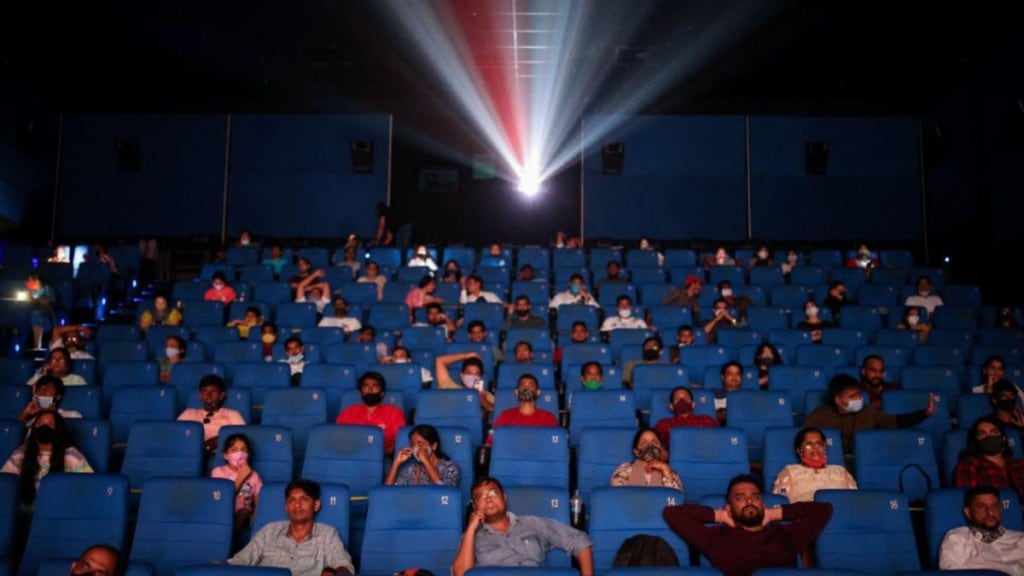
In the face of lower footfalls in cinemas and film collections taking a nosedive over the years, where hits are few and far between, re-releases have emerged as a silver lining. In 2025, re-releases have seen a particularly sharp rise, with more titles added over the previous year.
Beyond a Lull
The trend is now so strong that leading multiplexes PVR INOX and Cinepolis say re-releases have become a new programming category for them, demanding dedicated departments.
As for PVR INOX, re-releases account for 4% of revenues now, “a significant share by any benchmark”, as per Niharika Bijli, lead strategist, PVR INOX. In 2025, PVR INOX re-released over 200 films, an increase from about 150 in 2024, with Bijli foreseeing that 2026 will also see a steady consistent slate of re-releases. “Over the past year, re-releases have witnessed strong upward momentum at Cinepolis. The category has grown both in footfall as well as per-screen revenue contribution,” shared Devang Sampat, managing director, Cinepolis.
He said Cinepolis screened about 40 re-releases this year, and a far more extensive slate is being planned for 2026.
“Continuing the success of the strategy, our teams are still in conversation with major studios to re-release their iconic films. The immediate re-release that we have planned is for Sholay. Around 25-30 titles are confirmed, and another 25-30 are under discussion,” said Sampat, adding, “Like last year, this year too we are seeing a share of around 3.5% revenue from re-releases.”
Both Cinepolis and PVR INOX report having screened 1,200 new releases in 2025.
Streaming platforms have also had a string of old films added to the roster in 2025, dating back to classics from the late 1900s and early 2000s. Netflix brought back Robert De Niro-starrer Taxi Driver (1976), When Harry Met Sally (1989), Forrest Gump (1994), besides a whole spectrum of releases from the YRF studio, from Chandni to Lamhe to Darr, to capitalise on interest in older films. On JioHotstar, subscribers will first and foremost be able to stream the classic Sholay (1975), which is also being re-released for theatres, as well as Duck Soup (1933), Blue Velvet (1986) and A Shot in the Dark (1964), which are available to rent on the platform.
“Nostalgia isn’t just a passive feeling, it’s an active driver of consumption,” said Harikrishnan Pillai, CEO and co-founder of TheSmallBigIdea, a digital marketing agency shouldering clients like HBO, Marvel HQ, Warner Bros and others. He opines that besides the nostalgia factor, re-releases are doing exceedingly well in theatres because “the frequent film goer does not have a lot to look forward to on the big screens anymore”.
As per the 2024 The India Box Office Report by Ormax Media, the total box office collections for Indian films is on a downward slide compared to 2023 — going from Rs 12,226 crore to Rs 11,833 crore in 2024. The collections made by Hindi cinema have also seen a significant decrease — going from Rs 5,380 crore to Rs 4,679 crore in the same time period. Echoing Pillai’s theory, Sampat of Cinepolis, said, “While the base was modest initially, audience appetite for nostalgia-driven content has significantly strengthened.”
Cult Status & Data
However, “not every film can succeed as a re-release. It has to be a cult hit, something that has survived the test of time and remains culturally relevant even today,” said Pillai, adding that “Films that have transcended their original release to become part of pop culture. Those are the films to be considered for re-releasing.”
Sampat makes sure to add, “Re-releases have contributed incremental revenue outside the traditional new-release cycle, particularly during content gaps or unpredictable shifts in the theatrical calendar. They have improved screen utilisation, boosted concession sales during off-peak periods, and strengthened footfall consistency throughout the year.”
Pillai said re-releases solve the problem of “a lack of a good lineup or the fact that people who long for the theatre experience aren’t willing to pay premium prices for films they don’t believe are worth it.”
“The duration follows a structured and data-led process,” explained Bijli. “We track early bookings, monitor the first few days of footfalls, and analyse performance across shows, formats, and cities. If the film sustains momentum, we extend the run or scale up. If interest begins to slow, we shorten the run and release screens to support new titles. It’s a flexible system that ensures each film gets the right space.”
She added, “Re-releases often draw two groups — long-time fans who watched the film when it first came out and want to enjoy it again on the big screen, and younger viewers who may have missed the film in theatres and want to see what the buzz was about. The mix varies by title.”
Sampat agreed, saying, “The run duration depends on a blend of performance and programming feasibility.” He adds, “Usually, re-releases are planned for a fixed duration, like Andaz Apna Apna, Baazigar, etc. However, successful re-releases often go beyond initial weeks and last up to 4-5 weeks.”
At Cinepolis, among the rereleased titles that performed best are Sanam Teri Kasam drawing three lakhs footfall, Tumbbad also drawing three lakhs footfall, Yeh Jawaani Hai Deewani 2.5 lakhs footfall, Laila Majnu 1.5 lakhs footfall, and Rockstar drawing 1.2 lakhs. MD, Cinepolis, Sampat adds, “Films like Kal Ho Na Ho, Baazigar, and Om Shanti Om also delivered strong occupancy.”
Bijli shares of PVR INOX, “Some of our strongest-performing re-releases include Hindi titles like Rockstar, Tumbbad, Jab We Met, Yeh Jawaani Hai Deewani, Sanam Teri Kasam, Om Shanti Om, Devdas, as well as Interstellar, Pride & Prejudice, and The Godfather series. We also saw remarkable traction for films that may not have topped the charts but created significant buzz — such as Umrao Jaan, Dil Se, and Satyajit Ray’s Nayak, among others.”