



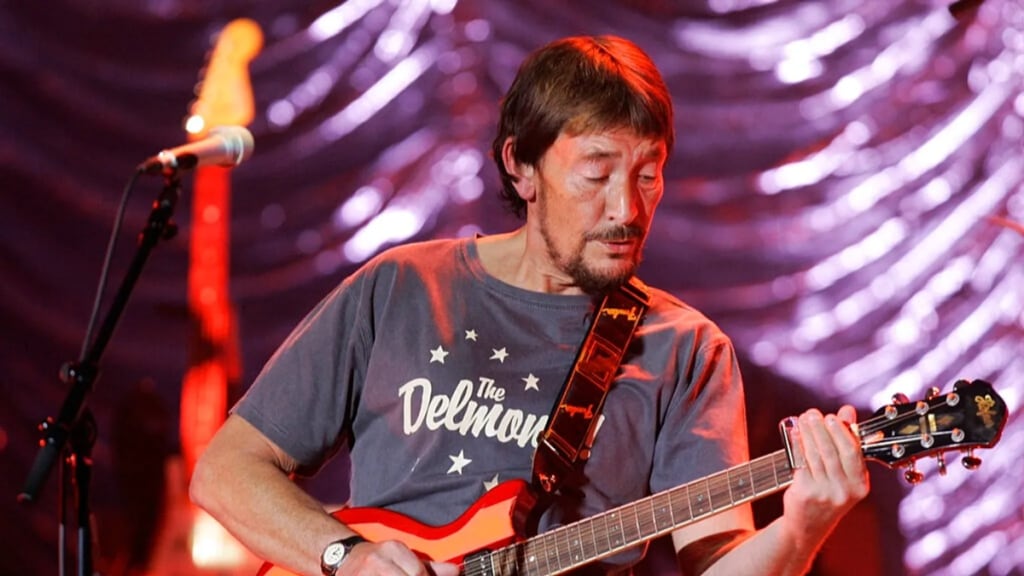
Chris Rea, the British singer-songwriter best known for the festive classic Driving Home for Christmas, has died at the age of 74. The musician passed away on Monday in hospital following a short illness, according to a spokesperson for his family.
A statement released on behalf of his wife and two children read, “It is with immense sadness that we announce the death of our beloved Chris. He passed away peacefully in hospital earlier today following a short illness, surrounded by his family.”
Tributes pour in for the Teesside icon
Following news of his death, tributes began pouring in from fans and institutions linked closely to his roots. Middlesbrough Football Club wrote on X, “We’re deeply saddened to learn of the passing of Chris Rea. A Teesside icon. Rest in peace, Chris.” Rea was closely associated with the region throughout his life and often spoke about how growing up in Middlesbrough shaped his outlook.
Rea’s 1980s hit Driving Home for Christmas tells the story of a tired traveller stuck in traffic, longing to get home. Though released years earlier, the song has grown into a seasonal staple.
In 2024, it reached new audiences after being featured in the Marks & Spencer Food Christmas advert.
In 2020, Rea’s social media accounts shared a conversation between the singer and fellow Middlesbrough native Bob Mortimer, in which Rea explained how the song came to be written.
At the time, Rea said he was on the dole, his manager had just left him, and he had been banned from driving. His then-girlfriend Joan, whom he met when they were both 16 and later married, picked him up from London in her Mini and drove him home. The song was written during that journey in 1978, though it was not released as a single until 1998.
A career shaped by success and setbacks
Chris Rea rose to fame in the late 1970s and 1980s with hits such as Auberge, On the Beach and The Road to Hell. His debut album Whatever Happened To Benny Santini? was released in 1978, and his early success came in the United States.
His song Fool (If You Think It’s Over) reached number 12 in the US charts and earned him a Grammy nomination for best new artist. Despite that early breakthrough, Rea struggled for several years to maintain momentum, later describing the music industry at the time as “a big manure heap of bubbling stuff. I had no control over it, I didn’t know what to do”.
His fortunes turned in Europe with the album Water Sign in 1985. By the late 1980s, Rea had entered his most commercially successful period. Albums such as Dancing With Strangers, The Road To Hell and Auberge made him a household name in the UK, with two of them reaching number one.
Health struggles that followed him for decades
Alongside his success, Rea faced serious health challenges. He was diagnosed with pancreatic cancer in 1994 at the age of 33 and later had his pancreas removed. In 2016, he suffered a stroke.
Reflecting on fame and illness, he told Saga magazine last year,
“I’ve always had a difficult relationship with fame, even before my first illness.
None of my heroes were rock stars. I arrived in Hollywood for the Grammy Awards once and thought I was going to bump in to people who mattered, like Ry Cooder or Randy Newman. But I was surrounded by pop stars.
The celeb thing has gone totally wrong in the sense that everyone has tried to top each other. They don’t put the work in.”
A quiet personal life and lasting love
In the same interview, Rea spoke warmly about his marriage to Joan, describing their daily routines together.
“Our golden moment is each morning when there is an elbow fight over whose turn it is to make the coffee.
Then there are the large mugs of fresh coffee, BBC Breakfast news or Sky and we gaze out of the window over the countryside for an hour and we are still 16. We are lucky to still have that feeling.”
The couple had two daughters, Josephine and Julia, both of whom Rea later named hit songs after.
Roots, blues and life beyond music
Born in 1951 in Middlesbrough to an Italian father and Irish mother, Rea grew up helping with his family’s ice-cream business before discovering the guitar. He later reflected on his upbringing by saying,
“To be Irish Italian in a coffee bar in Middlesbrough – I started my life as an outsider.”
In his later years, Rea returned to his blues roots, moving away from mainstream pop. After recovering from his stroke, he released Road Songs For Lovers in 2017 and returned to touring, though he had to cancel several shows after collapsing mid-performance in Oxford.
Beyond music, Rea was a passionate motor racing enthusiast. He raced Ferrari and Lotus models, competed in the 1993 British Touring Car Championship, and even joined the Jordan Formula One team as a pit mechanic in 1995.
A legacy that endures
Chris Rea’s music, especially Driving Home for Christmas, has continued to grow in popularity long after its release. Speaking to The Guardian in 2016, he said, “I used to be terrified the song would ruin any credibility I had left, but now we have a laugh with it. If I’m ever stuck on the M25, I’ll wind the window down and start singing, ‘I’m driving home for Christmas’ at people in cars alongside. They love it.”
Rea is survived by his wife Joan and their daughters Josephine and Julia. His music, shaped by roads, resilience and reflection, continues to resonate with audiences around the world.