



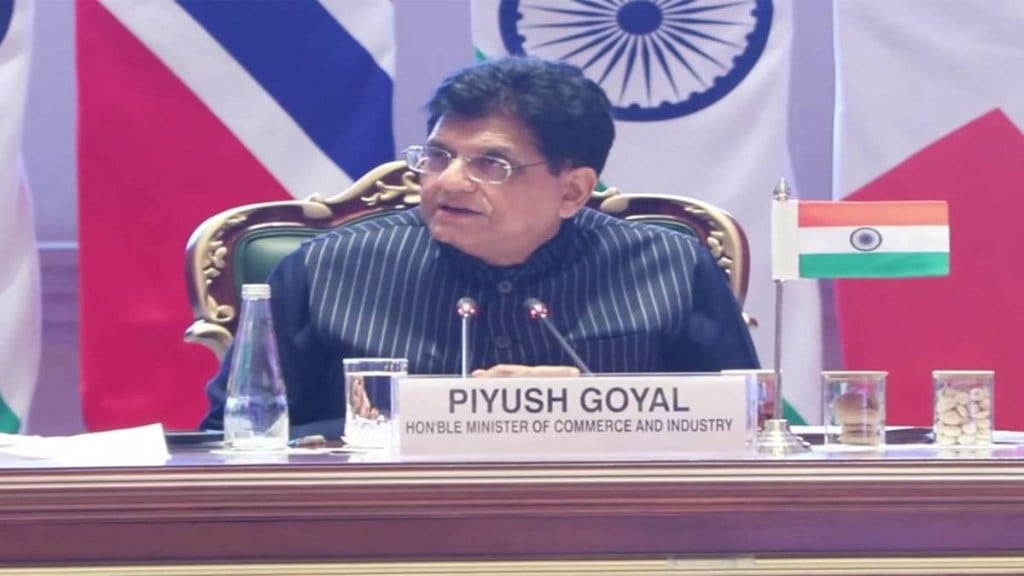
The Trump administration should sign the free trade agreement with India if it is happy with what has been offered by New Delhi, Commerce and Industry Minister Piyush Goyal said on Thursday. Goyal, who is leading the trade negotiations from the Indian side, was reacting to a comment by US Trade Representative Jamieson Greer, who said that the US has received the “best ever” offer from India.
Goyal welcomed the US’s views on India’s offer, but refrained from giving a deadline for the signing of the long-awaited free trade agreement between the two nations.
“His happiness is very much welcome. And, I do believe that if they are very happy, they should be signing on the dotted lines,” Goyal told reporters in Delhi.
Goyal, however, declined to specify India’s offer to the US.
India and the US have held five rounds of negotiations on the trade deal.
India must seek balance in trade talks: Global Trade Research Initiative
The Global Trade Research Initiative (GTRI), in a detailed note, has urged the Indian negotiating team to insist on balanced outcomes in the ongoing trade negotiations with the United States and remain extremely cautious about extending concessions on agricultural crops or genetically modified (GMO) products.
“New Delhi must insist on balance, not optics and should remain extremely cautious about giving concessions on agriculture crops or GMO products. If the US is serious about partnership, it should first cut the punitive tariff on Indian exports from 50 per cent to 25 per cent”, GTRI stated.
The GTRI’s detailed note came after Greer, while briefing the US Senate, stated that India continues to be “a very difficult nut to crack” in trade negotiations, particularly on accepting U.S. exports of certain row crops and meat products.
He informed senators that the US trade team is currently in New Delhi working with Indian authorities to expand market access, especially in agriculture.
Greer added that despite challenges, India has been “quite forward-leaning” in recent talks and that the offers currently on the table are “the best we’ve ever received as a country,” positioning New Delhi as a viable alternative market for American exporters.
He also said Washington is pushing to increase sales of biofuels derived from soybeans.
‘New Delhi must prioritise balance over optics in negotiations’
According to GTRI, row crops refer to globally traded, large-scale agricultural commodities grown in mechanised rows such as corn, soybeans, wheat, cotton, rice, sugarcane, barley, sorghum and canola.
Many of these products are politically sensitive in India due to their link with farmer livelihoods and food security.
GTRI noted that USTR’s testimony provides an authentic glimpse into the ongoing U.S.-India trade discussions, but the narrative so far largely reflects Washington’s expectations from India.
The talks appear heavily focused on opening India’s markets for US farm produce and biofuels, with little clarity on what the US is ready to offer in terms of market access for Indian exports.
The think tank said Greer’s remark that India’s proposal is “the best the US has ever received” is difficult to accept, especially when countries like Malaysia have conceded even core policy space in their trade agreements with Washington.
It added that New Delhi must prioritise balance over optics in negotiations. India should be extremely cautious about granting concessions on agricultural and GMO-related products, given their domestic sensitivity.
The note further advised that India should avoid making any binding commitments in the ongoing talks until the U.S. Supreme Court delivers its verdict on President Donald Trump‘s tariff authority.
The decision, GTRI said, could significantly reshape the entire negotiating landscape overnight, making premature concessions risky for New Delhi.
With inputs from agencies