



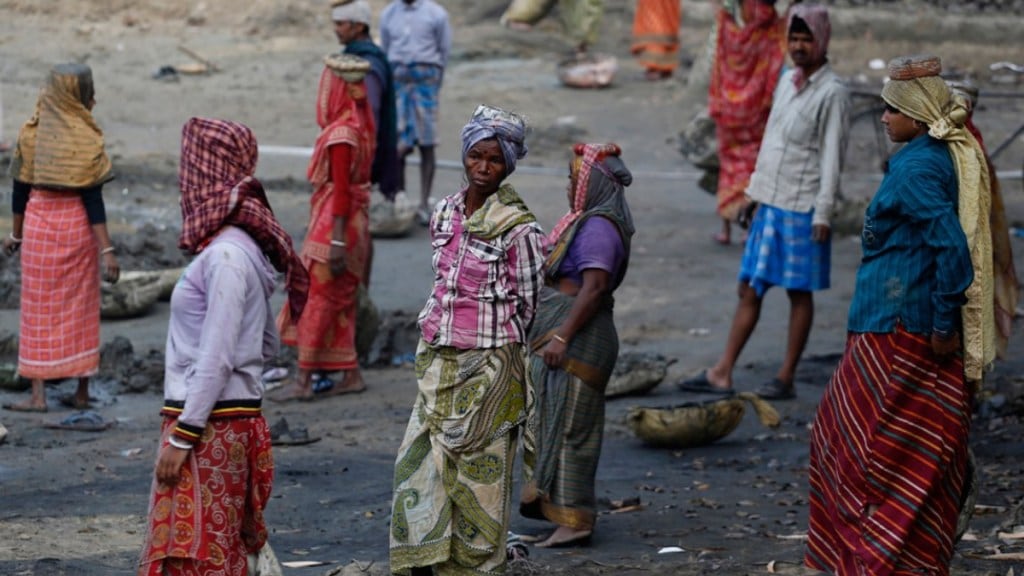
The Centre’s VB-G Ram G Bill, 2025, aims to increase the guaranteed rural employment from 100 days to 125 days per year. The new scheme will also share the cost of wages between the Centre and the states, which is expected to increase the financial burden on state budgets.
For the first time, the Bill also allows a pause in the employment guarantee for a total of 60 days each year, covering the peak farming periods of sowing and harvesting, during which no work under the scheme will be carried out. The bill if passed will replace the Mahatama Gandhi National Rural Employment Guarantee Act, 2025 (MGNREGA).
The key changes proposed in the new bill are as follows:
Number of guaranteed employment days per household to increase from 100 days to 125 days
The VB-G Ram G Bill proposes to provide 125 days of employment each year to rural households whose adult members volunteer for unskilled manual work. This is higher than the current MGNREGA, which guarantees 100 days per household annually.
Under MGNREGA, Section 3(1) allows “not less than 100 days” of work, but the system usually treats this as the maximum because the NREGA software does not record more than 100 days unless the state specifically requests it. The government can allow an extra 50 days in certain cases.
States and Centre will share the funding of the new bill
A major change under the VB-G Ram G Bill is that states will now share the cost of wages. Under MGNREGA, the central government pays the full wage bill.
The new scheme sets the cost-sharing ratio at 90:10 for Northeastern and Himalayan states and Union Territories like Uttarakhand, Himachal Pradesh, and Jammu & Kashmir. For other states and Union Territories with legislatures, the split will be 60:40. Union Territories without legislatures will continue to have the Centre bear the full cost.
Under MGNREGA, the Centre pays for unskilled worker wages, a portion of material costs, and some administrative expenses, while states cover unemployment allowances, part of material costs, and their own administrative expenses.
‘State-wise normative allocation’ based on objective parameters
The VB-G Ram G Bill introduces “normative allocation” to determine funding for each state. The Centre will set the allocation for every state each year based on objective criteria. Any expenses beyond this allocation must be covered by the state.
This is different from the current labour budget under MGNREGA, where states submit an annual work plan and budget based on expected demand for unskilled work. Normative allocation fixes the funding limit from the Centre, rather than leaving it open-ended.
Pause during peak agriculture season
The new Bill allows work under the scheme to be paused during peak agricultural periods to ensure enough labour is available for farming. States will notify a total of 60 days in a year, covering key sowing and harvesting periods, during which scheme work will not be done.
States may issue separate notifications for different areas based on local farming patterns, climate zones, or other factors. All authorities managing the scheme must ensure that work is carried out only outside the notified peak periods. This pause reduces the overall window for accessing the 125-day employment guarantee.
Wages to be paid weekly, unlike MGNREGA
Under the VB-G Ram G Bill, wages will be paid weekly, unlike MGNREGA, which has a limit of up to 15 days for payment.
The scheme retains the same wage rates as MGNREGA. While MGNREGA provides compensation for late payments (0.05% of unpaid wages per day beyond 15 days), the new scheme also keeps the provision for delayed payment, but focuses on weekly disbursement of wages.