



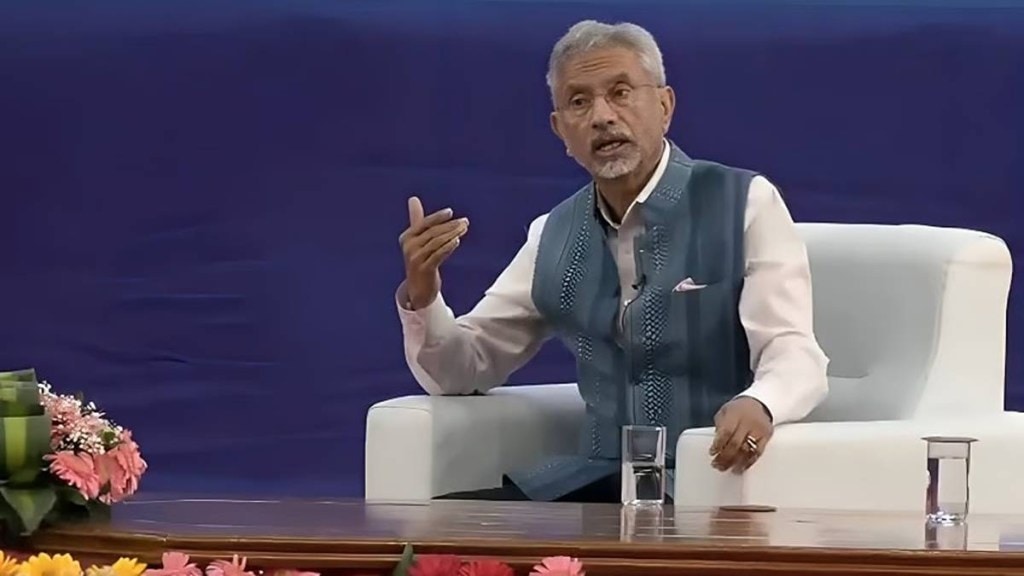
External Affairs Minister S. Jaishankar sent a blunt message to Pakistan from IIT Madras, stating that India will no longer de-link regional cooperation from security concerns.
External Affairs Minister S. Jaishankar has drawn a clear red line for India’s neighbourhood policy, warning that countries which “deliberately, persistently, and unrepentantly” back terrorism cannot expect to reap the benefits of normal neighbourly relations.
Speaking at the inauguration of the Shaastra 2026 fest at IIT Madras, Jaishankar—without explicitly naming Pakistan—referred to the “neighbour to the west” while asserting India’s right to defend its citizens. He emphasised that the era of compartmentalising terror from trade or cooperation is over.
“You can’t say, ‘I will continue terrorism, but I will also expect you to share water’. That’s not reconcilable,” Jaishankar said, a likely reference to the straining Indus Waters Treaty. He reiterated that if a country chooses terrorism as state policy, it cannot simultaneously demand the advantages of established arrangements.
Recalibrating the Neighbourhood Policy
In his address, Jaishankar outlined a recalibrated foreign policy that blends humanitarian support with firm security responses. India, he noted, has “naturally invested” more in neighbours that demonstrate cooperative intent.
“If there is no good neighbourliness, the benefits linked to it cannot be taken for granted,” he remarked, adding that while India believes in goodwill, experience has shown that reciprocity cannot always be assumed.
Cyclone Ditwah and ‘Operation Sagar Bandhu’
Contrasting Pakistan’s record with other neighbours, Jaishankar highlighted India’s role as a first responder in the region. He pointed to the recent Operation Sagar Bandhu, where India mobilised rapid relief for Sri Lanka following the devastation of Cyclone Ditwah in late 2025.
He also recalled the $4 billion financial lifeline extended to Colombo during its economic crisis, stating, “That is what good neighbours do.” These examples, he suggested, stand in sharp contrast to the cross-border terrorism emanating from the west, which has stifled normal ties despite multiple Indian gestures over the years.
On China, Bangladesh, and Afghanistan
The Minister also addressed other critical regional issues:
China & The Shanghai Incident: Jaishankar confirmed that India has officially protested the detention and harassment of Pema Wangjom Thongdok, a woman from Arunachal Pradesh, by Chinese immigration officials at Shanghai Airport. He reasserted that Arunachal Pradesh “is, and will always remain, a part of India,” and that India expects other nations to respect established laws.
Bangladesh Elections: With Bangladesh set for general elections on February 12, 2026, Jaishankar expressed hope for stability. He stated that India wishes the country well in its polls and hopes that the broader sense of neighbourliness in South Asia will deepen once the political situation settles.
Afghanistan: He reiterated India’s longstanding civilisational links with the Afghan people, acknowledging their hardships and expressing hope for gradual improvement in conditions.