



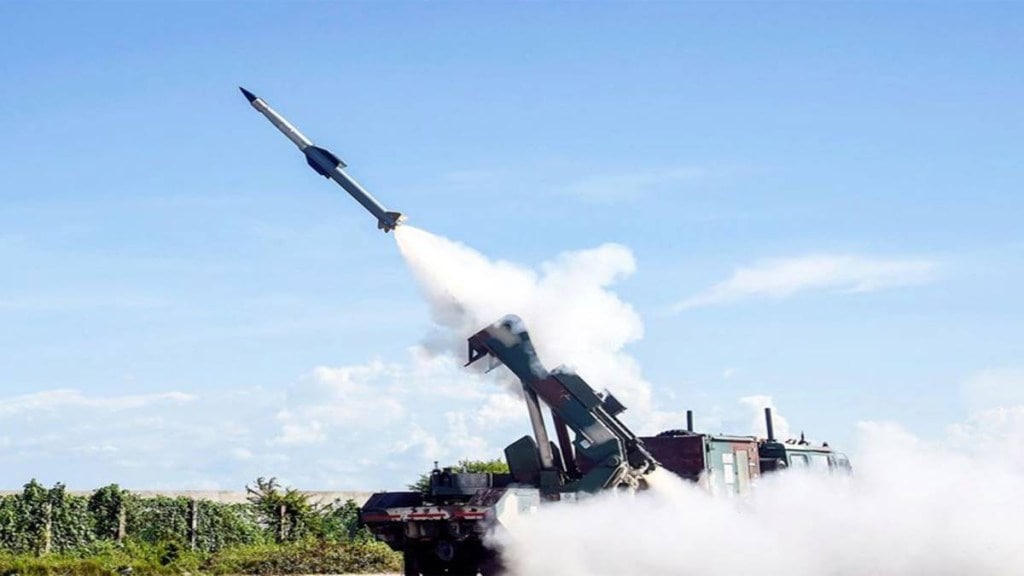
The Indian Defence Ministry had declared 2025 a “year of reforms” that would transform the armed forces into a ‘technologically advanced, combat-ready team’. Multiple curveballs emerged over the ensuing months as India launched Operation Sindoor and tackled skirmishes along the shared border with Pakistan. The Indian military also participated in numerous joint exercises with the US, France, Russia and other countries during this time.
The devastating Pahalgam terror attack that killed 26 civilians triggered significant changes in military policy — hastening reforms and even leading to nationwide civilian preparedness drills for the first time since 1971. New Delhi launched proactive strikes against terror infrastructure across the border in early May amid intense cross-border exchanges with Pakistan.
“We gave full freedom to the Indian forces to wipe out the terrorists. And today every terrorist, every terror organisation knows the consequence of wiping out the Sindoor of our sisters and daughters. Operation Sindoor is not just a name but a reflection of the feelings of millions of people of the country,” Prime Minister Narendra Modi reiterated during a national address on May 11.
Defence budget hits record high
Multiple reports indicate that the Indian government has also increased procurements, incorporated force multipliers, and focused on cyber and space-domain enhancements over the past year. India has also pursued indigenous capabilities and led multiple joint operations with allies to ensure deterrence and readiness. New Delhi had allocated a record budget of Rs 6,81,210 crore for military updation during the ‘year of reform’ and emerged as a growing defence exporter — with investments poured into AI, hypersonics, robotics and more.
India held its first-ever standalone Special Forces exercise (Op Tiger Claw) with the United States in June and joined Zapad 2025 with Russia and Belarus in September. The Armed Forces also held a massive tri-services exercise near the Sir Creek area close to the western border with Pakistan.
What was Operation Sindoor?
The Indian military launched a barrage of coordinated strikes soon after midnight on May 7 — targeting multiple terror camps within Pakistan and Pakistan-occupied-Kashmir. The swift 25-minute operation decimated Lashkar-e-Taiba, Jaish-e-Mohammed, and Hizb-ul Mujahideen strongholds in nine locations.
“I’ll find you through the dust and a storm. I’ll find you through these machines of carrying. The burden of my brothers and sisters’ pain. So, I will find you. You can hide in the distance between shadow and dust, but I’ll strike you down when you betray our trust. So, I will find you. That’s my job. That’s my mission. That’s my promise. I’ll find you,” the Indian Army vowed via X mere minutes before the attack went live.
Analysts have since described Operation Sindoor as a “turning point” in Indian military operations — refining the punitive strategy followed since the Balakot strikes to include multi-domain precision while avoiding full-scale war. The retaliatory attack had prompted four days of intense shelling — including a Pakistani attack on May 7 that killed 16 Indian civilians — before a ceasefire was announced.