



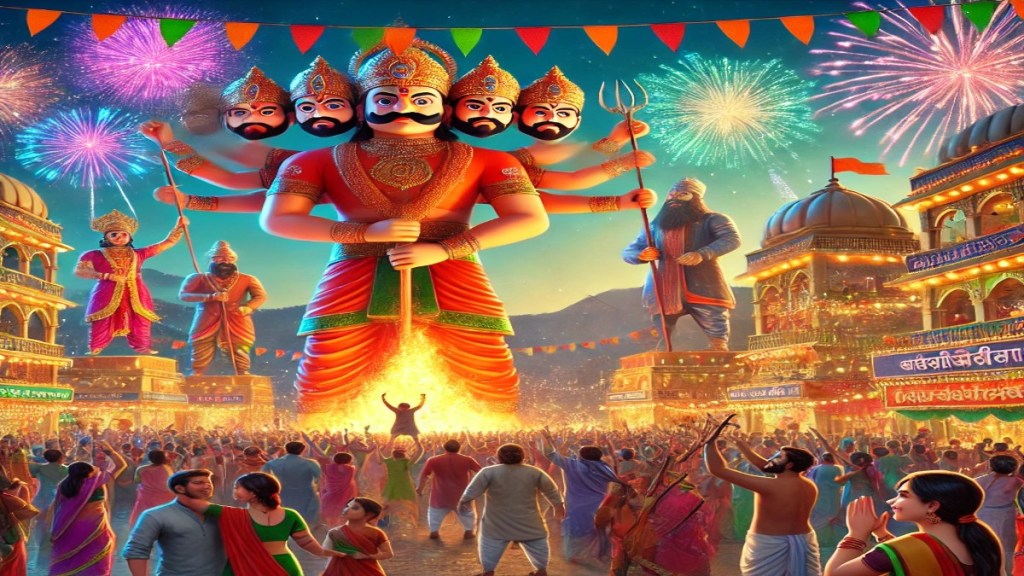
Dussehra 2024 Date and Time: Dussehra, also known as Vijayadashami, is one of the most important festivals in Hindu culture, celebrated with immense joy and reverence across India. This festival signifies the triumph of good over evil, reminding us that righteousness will always prevail. Dussehra is observed on the Dashami Tithi (the tenth day) of the Shukla Paksha (waxing moon phase) in the month of Ashwina, as per the Hindu lunar calendar.
In 2024, Dussehra is being celebrated today, October 12, which falls on a Saturday. This auspicious day is marked by grand festivities and serves as a powerful reminder of the ultimate victory of truth and justice over malevolence. People across the country gather today to celebrate with rituals, processions, and cultural performances, paying homage to the spirit of this significant festival.
Dussehra 2024: Date and Timings
– Dashami begins: October 12, 2024, at 10:58 AM
-Dashami ends: October 13, 2024, at 09:08 AM
– Shravan Nakshatra begins: October 12, 2024, at 05:25 AM
– Shravan Nakshatra ends: October 13, 2024, at 04:27 AM
– Vijaya Muhurat: October 12, 2024, from 01:30 PM to 02:17 PM
– Aparahna Puja Muhurat: October 12, 2024, from 12:43 PM to 03:04 PM
These timings are important for conducting various rituals associated with the festival, as Dussehra is marked by special prayers, offerings, and cultural festivities. The ‘Vijaya Muhurat’, in particular, is considered an auspicious time for initiating new beginnings and making important decisions, as it represents victory and success.
The cultural and religious significance of dussehra
Dussehra holds deep cultural, religious, and historical significance. The festival is celebrated differently across regions, but the central theme remains the same: the victory of good over evil. It is a time for reflecting on moral values, spiritual renewal, and the importance of truth and justice in life.
In Hindu mythology, Dussehra marks the culmination of two major legends:
1. The Victory of Goddess Durga Over Mahishasura
One of the most widely celebrated aspects of Dussehra, particularly in eastern India, is the victory of Goddess Durga over the demon Mahishasura. According to Hindu mythology, Mahishasura was a powerful demon who wreaked havoc in the world. He was granted a boon that made him nearly invincible, but after a fierce battle that lasted nine days and nights, Goddess Durga finally defeated him on the tenth day.
This story is celebrated during ‘Durga Puja’, a festival that overlaps with Dussehra. Durga Puja is especially grand in states like West Bengal, Assam, Odisha, and Bihar, where elaborate idols of Goddess Durga are worshipped before being immersed in water on the final day. The festival represents the triumph of feminine power, devotion, and divine strength.
2. Lord Rama’s victory over Ravana
In northern and western parts of India, Dussehra is more closely associated with the epic of ‘Ramayana’. The festival marks the victory of Lord Rama, the seventh avatar of Lord Vishnu, over Ravana, the demon king of Lanka. Ravana had abducted Lord Rama’s wife, Sita, which led to a great battle between the two forces. Lord Rama, aided by his devoted brother Lakshmana, the monkey god Hanuman, and an army of monkeys, ultimately defeated Ravana on the tenth day, which is commemorated as Dussehra.
The defeat of Ravana is celebrated with great fanfare in many regions, particularly in northern India, where massive effigies of Ravana, his brother Kumbhakarna, and his son Meghnath are set on fire. This act symbolizes the destruction of evil forces. The burning of these effigies, often accompanied by fireworks, is a major attraction in cities like Delhi, Varanasi, and Lucknow.
Regional variations in Dussehra celebrations
While the overall theme of Dussehra remains the same, the way it is celebrated varies greatly from region to region in India:
Northern India: Ramlila performances are staged in many parts of North India, where actors reenact episodes from the Ramayana. These plays often conclude with the burning of Ravana’s effigies on Dussehra, drawing large crowds.
Western India (Maharashtra, Gujarat): Dussehra is closely linked to Navratri, the nine-night festival that precedes it. In Gujarat, the nights leading up to Dussehra are filled with Garba and Dandiya Raas dances, while in Maharashtra, Dussehra is celebrated as a day to honor friendships and respect elders by exchanging Apta tree leaves, symbolizing gold.
Southern India (Karnataka, Tamil Nadu): In Karnataka, especially in Mysore, Dussehra is celebrated with grandeur. The famous Mysore Dussehra’ festival involves a royal procession of decorated elephants, horses, and soldiers, attracting tourists from all over the world. In Tamil Nadu, families arrange ‘Golu’ a display of dolls, to mark the festival. Temples are beautifully decorated, and various cultural events take place during this time.
Eastern India: In West Bengal, Odisha, and Assam, Dussehra coincides with ‘Durga Puja’, where devotees immerse the idols of Goddess Durga in water as a mark of farewell, celebrating her victory over Mahishasura.
Special traditions and rituals associated with Dussehra
Aside from the public celebrations, many households observe specific traditions during Dussehra. People often clean and decorate their homes, wear new clothes, and prepare special meals. Temples are adorned with flowers, and prayers are offered to Lord Rama, Goddess Durga, and other deities for prosperity and protection.
In several regions, the ‘Shami tree’ is revered on this day. According to legend, the Pandavas, from the Mahabharata, hid their weapons in a Shami tree during their exile. On Dussehra, they retrieved them and went on to win the battle of Kurukshetra. Therefore, the tree is considered auspicious, and people often exchange its leaves as a sign of goodwill and respect.