



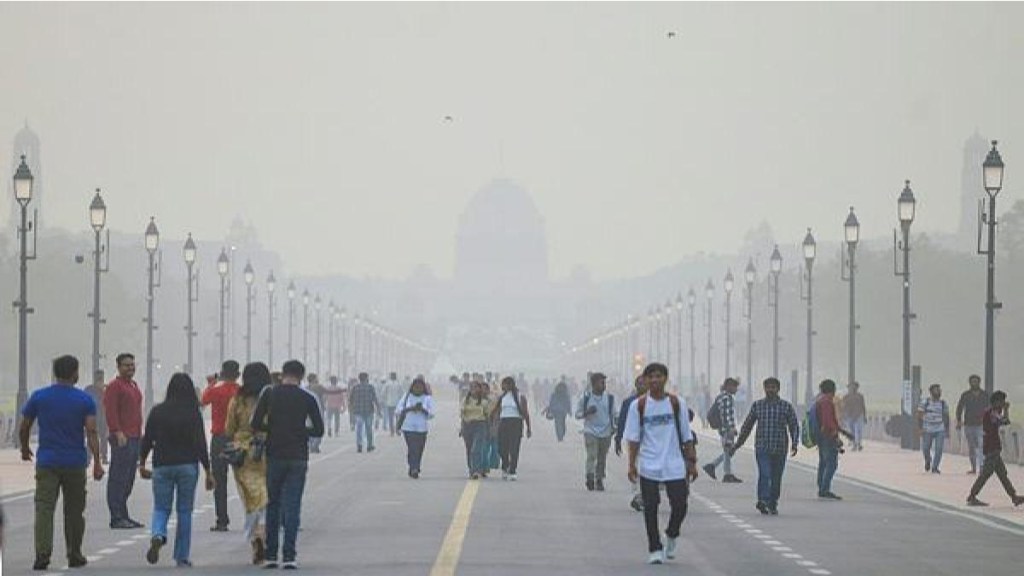
Delhi air quality index: A thick blanket of fog covered parts of the national capital on Saturday as Delhi’s Air Quality Index (AQI) plunged to 333, classified as “very poor” by the Central Pollution Control Board (CPCB). The worsening air quality is raising concerns about respiratory illnesses, particularly among residents with prolonged exposure.
According to Central Pollution Control board (CPCB), at the Indira Gandhi International Airport, the AQI surged to 218, while areas like ITO, Jawaharlal Nehru Stadium, and Lodhi Road recorded AQI levels of 229, 215, and 205, respectively, all falling within the “poor” category.
The AQI scale categorises air quality from 0-50 as “good,” 51-100 “satisfactory,” 101-200 “moderate,” 201-300 “poor,” 301-400 “very poor,” and 401-500 as “severe.”
In areas around AIIMS, a thin layer of smog was visible as the AQI dropped to 253. Residents are already feeling the effects of the deteriorating air, reporting common seasonal issues such as itchy throats and burning eyes.
“The people of Delhi should use public transport more,” said a local resident. “This will help reduce pollution and keep us all healthy.”
According to CPCB data, Friday’s average AQI was calculated using 36 of the city’s 40 monitoring stations. Fifteen stations reported “very poor” air, with Wazirpur being the most affected area, recording an AQI of 390. PM 10 levels remained the dominant pollutant, a sign of dust pollution.
The Centre’s Decision Support System (DSS) attributed 12.78% of the city’s pollution to the transport sector, while neighboring areas like Gautam Budh Nagar and Bulandshahr contributed 11.4% and 7.8%, respectively. Emissions from farm fires in Punjab and Haryana remained limited, contributing only 0.6% to Delhi’s PM 2.5 levels, although forecasts predict an increase in stubble burning over the weekend.
Calm easterly winds have kept pollution levels stable in the “poor” category for four consecutive days, but forecasts from the Early Warning System (EWS) indicate that conditions are expected to worsen, potentially slipping into the “very poor” range by Sunday.