



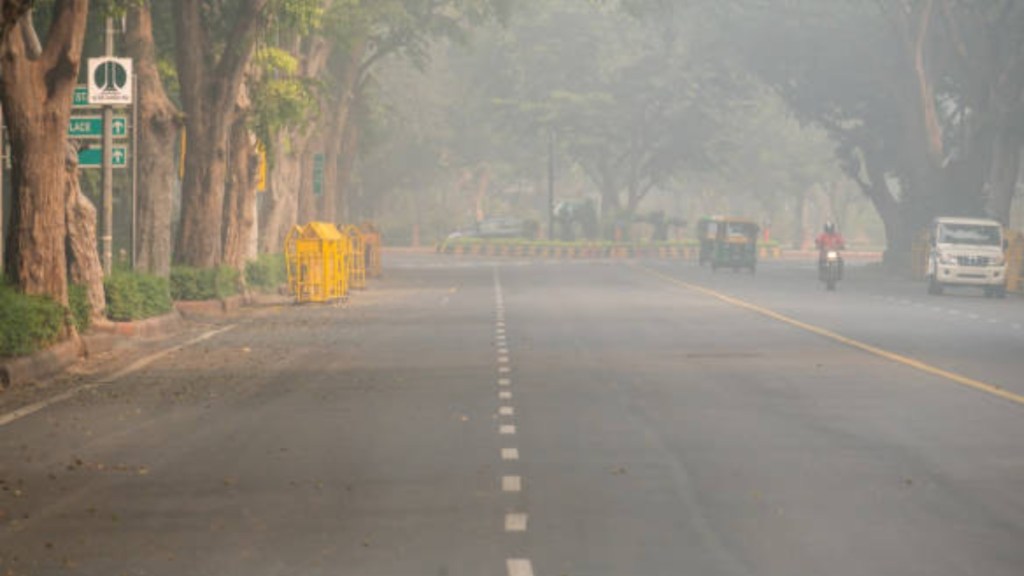
The Commission for Air Quality Management (CAQM) announced the revocation of Stage 4 restrictions under the Graded Response Action Plan (GRAP) across the National Capital Region (NCR) on Tuesday, citing improving pollution levels, as reported by ANI. However, measures under stages 1, 2 and 3 will remain in effect to manage air quality.
Stage 4 GRAP measures had been in force across NCR since December 16, following a sharp deterioration in air quality. These restrictions included a complete ban on construction and demolition activities, the entry of trucks and light commercial vehicles registered outside Delhi into the city, and the operation of BS-4 or lower medium and heavy goods vehicles.
Delhi enforces GRAP during the winter months, classifying air quality into four stages: Stage I (Poor, AQI 201-300), Stage II (Very Poor, AQI 301-400), Stage III (Severe, AQI 401-450), and Stage IV (Severe Plus, AQI above 450).
Improvement in AQI
Delhi’s air quality showed continuous improvement throughout Tuesday, with the AQI recorded at 369 in the “very poor” category by 4 PM. This was 31 points below the Supreme Court’s threshold for invoking Stage 4 restrictions.
Earlier in the day, the Central Pollution Control Board (CPCB) reported an AQI of 401 at 8 AM, placing the city in the “severe” category. On Monday, Delhi’s AQI measured 403 at 7 AM, indicating “severe” pollution. Several areas in the city also recorded alarming AQI levels, including Anand Vihar (439), Ashok Vihar (456), Bawana (473), CRRI Mathura Road (406), and Narela (430).
An AQI score between 0-50 is considered “good,” 51-100 is “satisfactory,” 101-200 is “moderate,” 201-300 is “poor,” 301-400 is “very poor,” and 401-500 is “severe.”
On December 22, the AQI in Delhi was 388, categorizing the air quality as “very poor” and causing reduced visibility. The previous day, it stood at 398, as per CPCB data.