



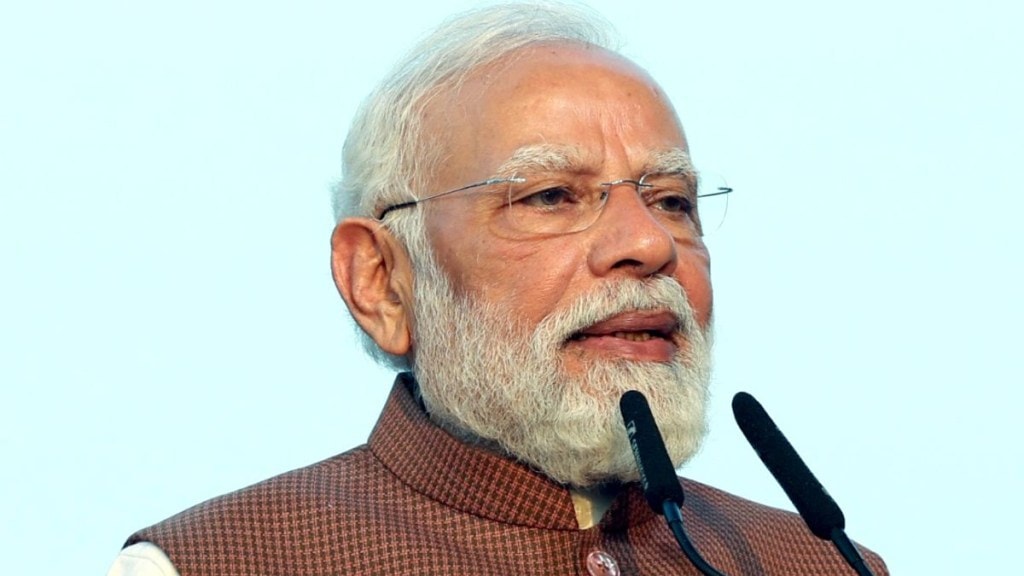
Prime Minister Narendra Modi on Monday will deliver the sixth Ramnath Goenka Lecture in Delhi, in honour of ‘India’s one of the most respected’ media persons. Sharing a post on X, the PM said he would be delivering the address on a platform that celebrates the “life and work of” country’s one of the most respected media pioneers.
“At around 8:15 PM this evening, will be delivering the sixth Ramnath Goenka Lecture in Delhi. This platform celebrates the life and work of one of India’s most respected media pioneers,” the Prime Minister said, a few hours before the lecture.
He added, “Shri Ramnath Goenka Ji stood for courage and integrity in public life. Glad to see this Lecture become a significant forum for ideas that shape our national discourse.”
The lecture, named after the founder of the Express Group, invites speakers who have shaped change and inspired critical thought on the most pressing contemporary challenges and issues.
“This lecture is not a ceremony but a commitment, to the values of truth-telling, accountability, and the power of ideas,” said Viveck Goenka, chairman, Express Group.
“This is a time when power equations of the world are being upended, when nations are redefining both their place and purpose and when uncertainty and volatility are the keywords of our times. That’s why listening to the Prime Minister, representing the highest elected office in the world’s largest democracy, has a deeper resonance,” he said.
Goenka added that the Prime Minister, speaking in Ramnath Goenka’s name, is “a reaffirmation that the dialogue between the state and the free press remains the heartbeat of a confident nation.”
About Ramnath Goenka lecture
The first in the Ramnath Goenka lecture series was delivered by Marianne Pearl, wife of The Wall Street Journal reporter Daniel Pearl, who was killed by terrorists in Pakistan.
Among key speakers who have previously participated in the lecture, are ex-RBI Governor Raghuram Rajan, who was prescient in his articulation of India’s role in the global economy; President Pranab Mukherjee, who reflected on the power of a free press in a democracy; ex-Chief Justice Ranjan Gogoi who urged the judiciary to be on the “front foot” to reinforce its moral and institutional leverage; External Affairs Minister S Jaishankar, who talked about moving away from the dogmas of Delhi to embrace the dramatically changing world; and, most recently, technologist and philanthroist Bill Gates, who laid out the contours of how technology is reshaping human lives and scripting social change.