



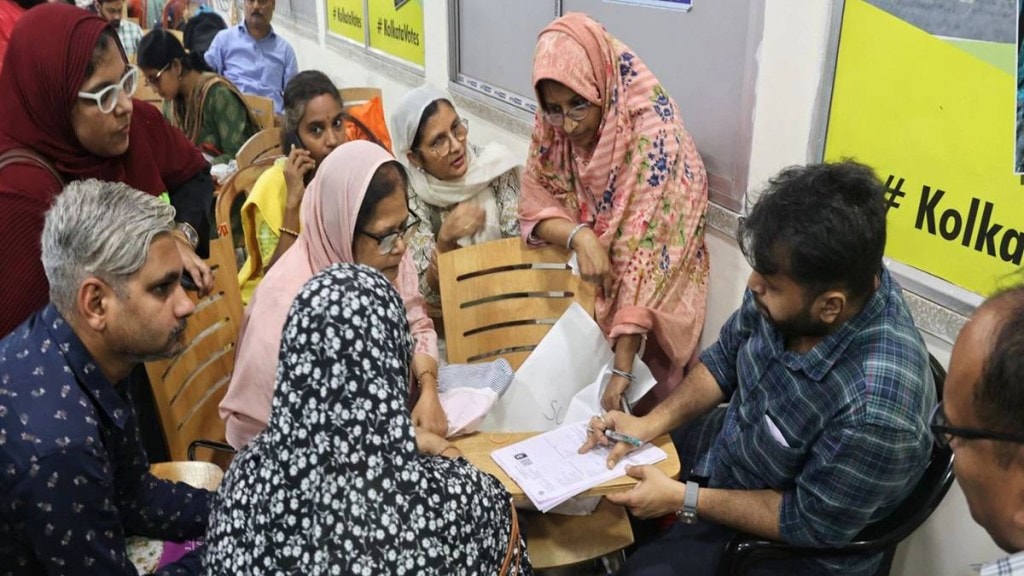
More than 58 lakh voters were removed from the West Bengal electoral rolls this month following an intensive revision process. The Special Intensive Revision has also affected several high-profile assembly seats and sharpened political fault lines ahead of the state Assembly elections. The state began a contentious verification phase on Saturday amid continued bias allegations from the ruling TMC.
Details shared by the Election Commission indicate that 58,20,898 names have been removed — with the bulk of deletions from “uncollectable SIR enumeration forms”. These included cases where voters were found to be deceased, had permanently shifted, were untraceable at their registered addresses, or were recorded as duplicate voters across constituencies.
Today marks a crucial day in West Bengal’s preparations for the elections as the state is beginning its second phase of the Special Intensive Revision (SIR) for its voter list. After the enumeration phase, the Election Commission of India (ECI) is holding hearings to address complaints and claims related to the draft voters’ list that was released on December 16.
The Electoral Registration Officer (ERO) and Assistant ERO (AERO) will be in charge of each hearing, as per a report by IANS. The ECI has hired around 4,600 micro-observers who are employees of the central government and public sector companies. They will be responsible for overseeing the hearings at every table and ensuring that the norms are followed. These observers will then directly inform the ECI about any issues they notice.
The first group of voters to watch are the “unmapped” ones, around 30 lakh people whose names have not been linked to previous voter lists through self or family mapping. In the next step, hearings will focus on about 1.36 crore “doubtful” cases that have been found through family tree analysis. This will include unusual relationships and age differences, like voters who have become fathers at a very early age or whose parents’ names are identical.
Here’s are the steps that need to be followed for checking your documents-
As per the Indian Express, the following checking process will take place:
1. Notice and submission-
Electors who have been called for hearings get notices and should bring certain documents to prove their eligibility, like birth certificates, educational certificates, land allotment papers, or government IDs. One can upload their documents digitally through the Booth Level Officer (BLO) app.
2. Data will be stored digitally-
A digital account is created for each voter to store their documents safely. This will ensure that all records are available for review.
3. First check-
Within five days of uploading documents on the ECINet platform, Direct Election Officers (DEOs) will conduct a verification to make sure they are real.
4. The verification process will be conducted across the district and states
The DEO will send a document electronically to the right district for verification that it was issued in a different district. The DEO will request documents that have come from outside of West Bengal to the Chief Electoral Officer (CEO) of the respective state where the document is located.
5. Making a decision-
After the verification process is complete, EROs verify where the voter is eligible and update the records as per the requirements. The results are then sent to the voters.
6. Making changes in the record
BLOs are also fixing spelling and typos in voter cards and at the same time also making sure the final is accurate before it gets published.
What’s the next process?
The final list of voters will be made public on February 14. By conducting these multi-step reviews, ineligible voters will be removed from the list, and we will also get rid of fake documents. The result will decide who can vote in West Bengal’s Assembly elections, which are soon to be held after this.