


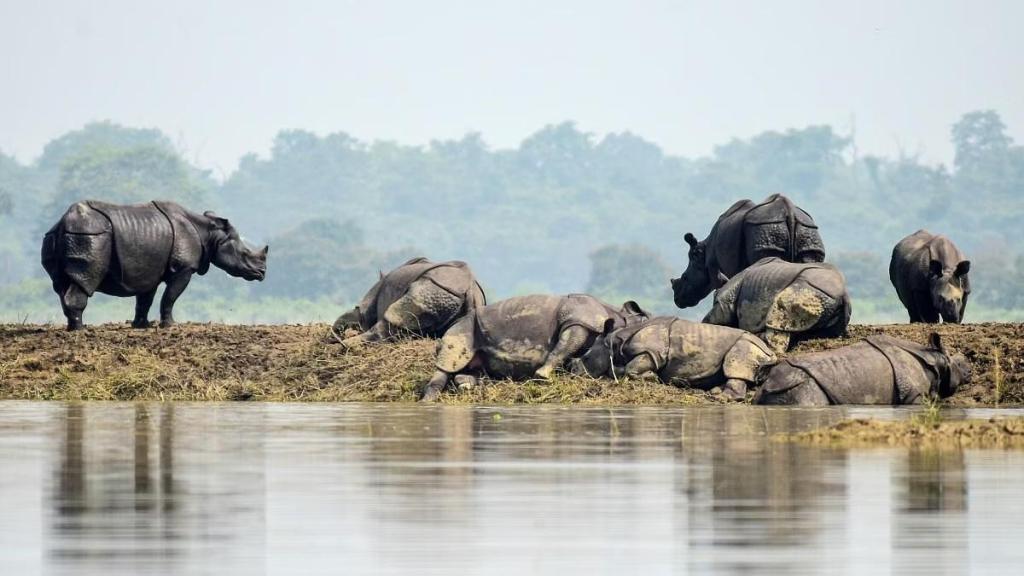

Assam has witnessed a fivefold increase in its population of one-horned rhinoceroses over the past six decades. The state, which had approximately 600 rhinos in the 1960s, now boasts over 3,000 of these majestic creatures, according to data revealed by the Assam government on World Rhino Day (on Sunday).
Assam Chief Minister Himanta Biswa Sarma attributed this resurgence to focused conservation efforts. “Rhinos are synonymous with Assam’s identity. They are our pride and the crown jewel of our biodiversity. Since taking office, we have launched several initiatives to protect and expand their habitats,” Sarma wrote on X.
In addition to habitat protection, Sarma underscored the significant reduction in poaching, with an 86% drop since the government took office in 2016. The combined efforts of the state government and local communities have made Assam’s rhinos safer than ever.
Kaziranga National Park, home to 80% of the country’s rhino population, remains the stronghold of these vulnerable animals, with smaller populations found in Orang National Park (4%), Pobitora Wildlife Sanctuary (3%) and Manas National Park (1%). Beyond Assam, rhinos are also found in West Bengal’s Jaldapara and Gorumara National Parks, as well as Uttar Pradesh’s Dudhwa National Park.
The Assam government’s habitat expansion initiatives have been crucial to this success. Chief Minister Sarma highlighted the addition of 200.7 sq km to Orang National Park and 195 sq km to Burachapori Wildlife Sanctuary. In Laokhowa-Burachapori, 12.8 sq km of rhino habitat was restored and cleared of encroachments, allowing the return of the species.