



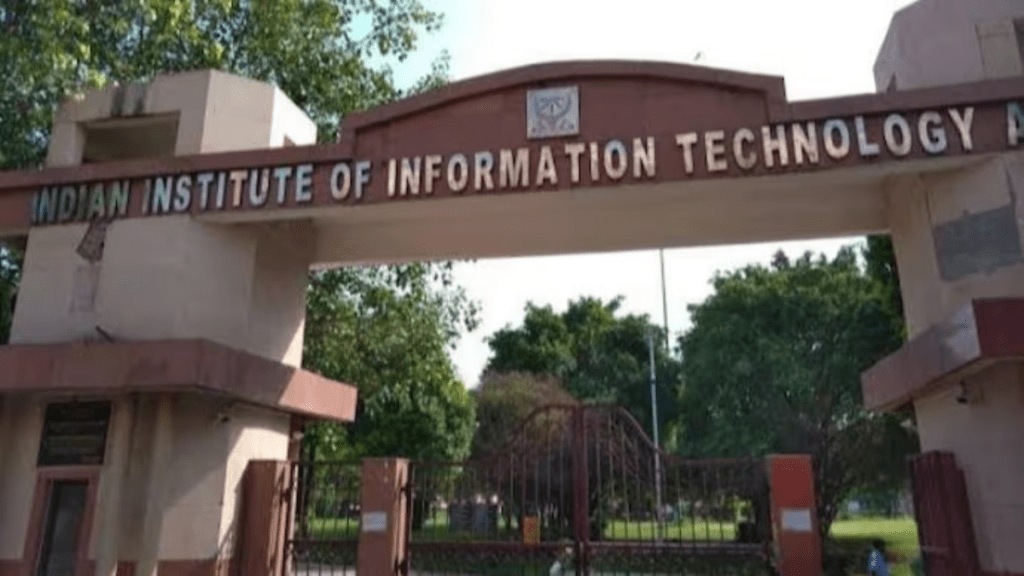
India’s top engineering institutes, especially the older IITs, have once again stayed out of the Times Higher Education (THE) World University Rankings, The Indian Express reported. It is a stand they first took five years ago. Their reason remains simple, they do not trust the transparency of the system.
This year too, most IITs kept their distance. This comes amid the global debate around university rankings, which grew louder, with top institutions like Sorbonne University in France also backing out.
Why IITs stopped participating
Back in 2020, IIT Delhi, IIT Kharagpur, IIT Madras, IIT Kanpur, IIT Bombay and IIT Roorkee said they would not take part in THE rankings because the process lacked clarity and transparency. According to the Indian Express, in the 2020 table, no Indian university appeared in the top 300. IISc and IIT Ropar were the highest-ranked, placed in the 301–350 bracket.
In the 2026 edition, only five IITs appeared, Indore, Ropar, Patna, Gandhinagar and Mandi. The top-ranked Indian institution was IISc (201–250 band).
Speaking to the Indian Express, former IIT Delhi Director Prof V Ramgopal Rao, explained the concerns. “There was no clarity, it was mainly a transparency issue on the metrics. The challenges with the rankings are of reputation and perception scores. Those are black boxes. What is the geographical distribution of those who are providing perception scores?”
He continued, “Another concern is institutional self-citations. What is happening in some universities is that one faculty member writes a paper, and they ask all other faculty members to cite the paper. At the institutional level, they’re increasing their own citation count. For rankings, papers with over 200 authors are also considered, and paper retractions are not accounted for properly,” Prof Rao said, referring to the different global ranking systems as a situation of being “between the devil and the deep sea.”
Why Sorbonne university also opted out
In September, Sorbonne University, one of France’s most respected research institutions, announced that it too would withdraw from THE rankings. Sorbonne, speaking to the Indian Express, said, rankings depend heavily on English-language journals, hurting fields like humanities and social sciences. Reputation surveys raise “scientific, methodological and ethical issues”. According to the University, these rankings act like “black boxes”, hiding full data and not allowing universities to question or reproduce the results.
Despite the boycotts, the Indian government wants stronger global visibility. Education Minister Dharmendra Pradhan said earlier this year that 54 Indian institutions appeared in QS 2026. He urged universities to aim for 25 Indian institutions in the global top 100, calling it a target under the National Education Policy (NEP).
In 2026, 163 Indian universities submitted data and 128 were ranked, making India the second-best represented country after the US. THE’s Chief Global Affairs Officer, Phil Baty, said India could become the world’s most represented nation if all eligible institutions participated.
There are three major international rankings:
QS World University Rankings: Run by QS Quacquarelli Symonds, London.
It uses 10 indicators such as academic reputation, citations per faculty, employer reputation, ratio of international students/faculty, and sustainability. The 2026 edition ranked 1,500+ institutions. IIT Delhi was India’s highest-ranked at 123
Times Higher Education (THE) World University Rankings: It uses 17 indicators, most of them in the research area. THE depends on surveys for reputation and requires universities to submit their own data. If they don’t, they are simply excluded.
Shanghai Ranking (Academic Ranking of World Universities): Uses six indicators, including Nobel winners (staff), Nobel winners (alumni) and highly cited researchers: 20%.It ranked 1,000 institutions in 2025. IISc and VIT were placed in the 501–600 band.