



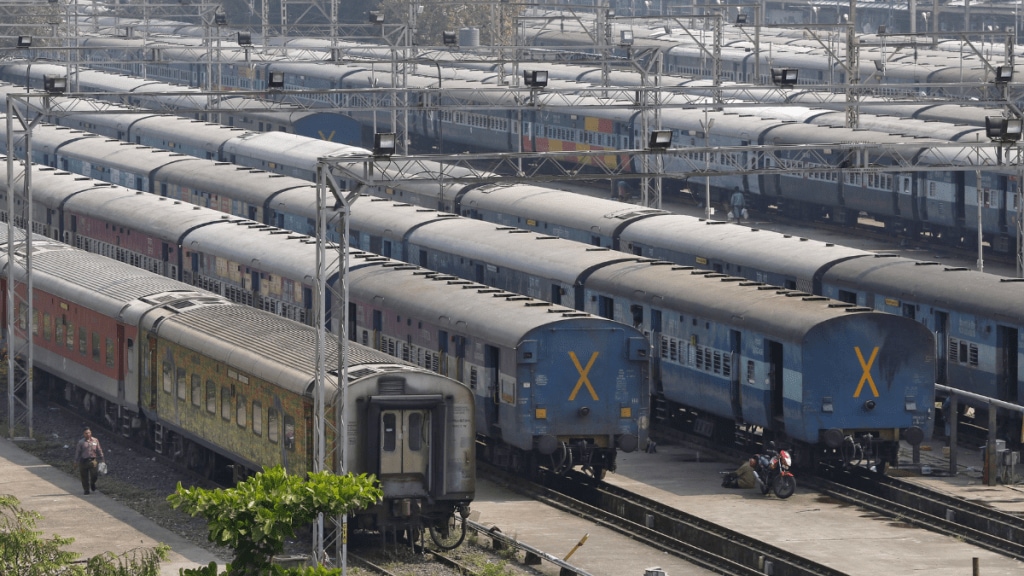
Indian Railways delivered a series of major announcements and structural changes throughout 2025, marking one of the most transformative years in its modern history. The moves spanned technology, sustainability, passenger comfort, safety and network expansion, reflecting the railways’ push to evolve into a world-class, digitally enabled, inclusive and future-ready transport system.
1. Expansion of Vande Bharat and High-Speed Trains
Railways aggressively expanded its Vande Bharat Express network in 2025, including plans for enhanced versions such as Vande Bharat 4.0 aimed at setting higher benchmarks in speed and comfort on major routes. Advanced semi-high-speed services were introduced, while pilots for upgraded trainsets continued to roll out, reinforcing India’s push towards faster and more efficient intercity mobility.
2. Technology and Safety Overhaul
A series of infrastructure and safety upgrades were charted during the year. These included the modernisation of century-old train control systems to improve safety and reduce delays, alongside the deployment of the Kavach automatic train protection system and the elimination of unmanned level crossings under broader safety reforms announced by the Ministry of Railways.
Near-complete electrification of the broad-gauge network was another major milestone, bringing Indian Railways closer to its goal of cleaner and faster operations.
3. Sustainability Milestone: Hydrogen-Powered Train
In a significant step towards green transport, Indian Railways completed manufacturing its first hydrogen-powered trainset, designed and developed domestically and readied for trial runs. The initiative positioned the national transporter among global rail systems experimenting with zero-emission traction and underscored a long-term commitment to sustainable mobility.
4. Passenger Experience and Digital Upgrades
Several passenger-centric and digital reforms were rolled out in 2025. A revamped Passenger Reservation System and digital platforms such as SwaRail were introduced to make ticket booking smoother and more transparent. Mandatory Aadhaar-based authentication for Tatkal bookings and changes in ticketing norms were implemented mid-year to curb fraud and ensure fairness.
As part of an anti-bot drive, IRCTC deactivated over three crore suspicious user IDs. Accessibility enhancements were also expanded, with priority lower berths and dedicated spaces provided for senior citizens, pregnant women, Divyangjans and visually impaired travellers.
5. Strategic Network Growth and Special Services
To manage fluctuating travel demand, Railways deployed 89 special trains in December to ease disruptions during the winter rush, highlighting a more responsive operational approach. New superfast services, including the Swarn Nagari Express, were also inaugurated to strengthen connectivity across key tourist and economic corridors.
6. Budget and Investment Push
The Union Budget 2025 reinforced the government’s emphasis on rail modernisation, allocating over Rs 2.7 lakh crore for infrastructure expansion, electrification, safety technologies such as Kavach and improved passenger amenities. The funding signalled sustained focus on long-term capacity building and system upgrades.
7. Record Freight and Modern Locomotives
Freight operations received a boost with the induction of high-horsepower electric locomotives and strong freight volume performance through the year, further cementing Indian Railways’ role in the country’s logistics and supply chains.
8. Lowest Number of Train Accidents in the Last Two Decades
Indian Railways recorded its lowest number of train accidents in the last two decades in 2025, officials said, attributing the improvement to enhanced safety protocols, technology-driven monitoring and stronger operational controls.
Railway accidents typically stem from derailments, collisions, technical failures, human error, fire incidents or sabotage, often leading to heavy casualties. However, the latest figures point to a sharp decline in such incidents nationwide.
Between April and November 2025, only 11 train accidents were reported across the country — the lowest tally seen in 20 years.
Despite the overall improvement, the year witnessed a few major incidents. In January, the Pushpak Express accident resulted in the death of 12 people. In February, a stampede during the Prayagraj Mahakumbh led to the death of 20 people at Delhi railway station.
2025 emerged as a pivotal year for Indian Railways, blending technology adoption, passenger comfort, sustainability initiatives and strategic expansion into a cohesive blueprint for the decades ahead. With electrification nearing completion and green mobility gaining momentum, the railways’ focus remains firmly on safety, efficiency and inclusive services for millions of travellers nationwide.