



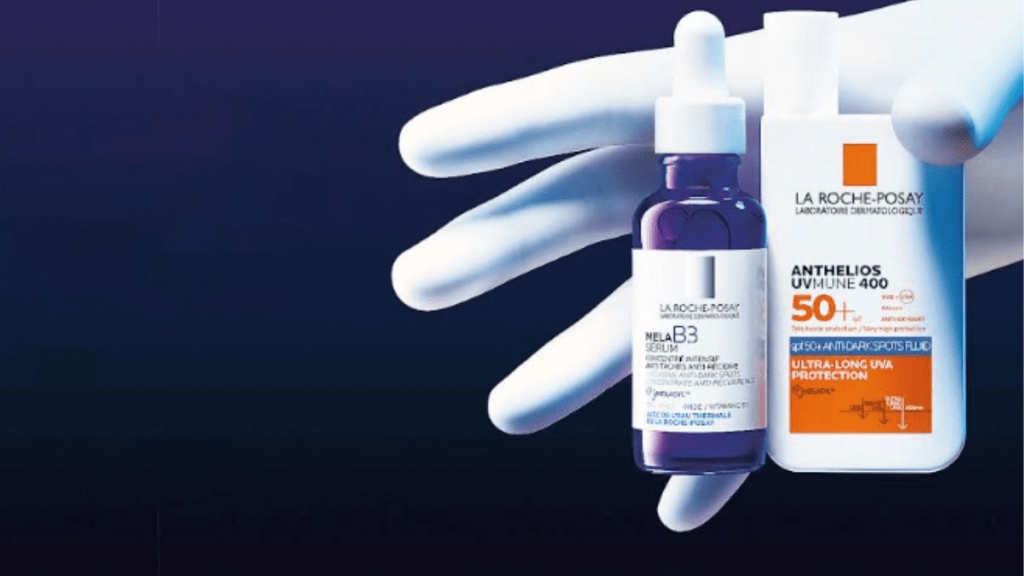
Increasingly, Indian consumers are aware of retinoids and ceramides, and know when to replace that face cream containing salicylic acid with the one that offers the benefits of hyaluronic acid. That’s a far cry from the scenario even five years back — something that gave L’Oréal India enough confidence to relaunch its global dermatological skincare brand La Roche-Posay in the country.
The French skincare major’s first attempt to enter the dermatological beauty — or dermocosmetics — segment with Vichy and La Roche-Posay was a non-starter, but Rami Itani, director at L’Oréal Dermatological Beauty, says the market is ready. “India’s dermatological beauty market has been very dynamic for the past few years and is one of the fastest-growing categories within beauty and personal care,” says Itani. At around 24%, the segment is growing at twice the pace of the overall beauty and personal care market.
Industry estimates peg the Indian derma cosmetics and beauty market at $570 million in 2024, and project it to reach $1 billion by 2030. Its share in India’s $20-billion beauty and personal care market is still rather small, but experts observe that it has been growing rapidly with higher disposable incomes among consumers, lifestyle changes and increased skin concerns around ageing and acne.
“Consumers recognise that effective skincare begins with expert guidance, from dermatologists and pharmacists who can accurately diagnose concerns and recommend the right formulations for specific skin types. This has led to a surge in demand for science-backed, credible solutions for concerns like acne, pigmentation, and sensitive skin – areas where our portfolio can lead,” says Itani.
Informed consumers
Rohan Agarwal, partner at Redseer Strategy Consultants, points out that for many consumers, investing in derma beauty products is a more cost-effective option than going to skincare specialists and spending far more on professional skin services. According to the Nykaa Beauty Trends report, in collaboration with Redseer, India’s premium beauty segment —of which dermocosmetics is a part — is expected to nearly double from $1.6-1.8 billion in 2023 to $3-3.2 billion by 2028, driven by Gen Z.
While he doesn’t share sales numbers, Itani adds that CeraVe, the derma division’s first launch in 2023, has seen a positive response since launch. L’Oréal now manufactures CeraVe products locally in facilities that meet global quality standards, enabling exports to more than nine international markets.
Globally, L’Oréal’s dermatological division also includes brands such as SkinCeuticals and Skin Better Science. India reportedly accounts for just over 1% of the company’s global revenue, and is its 15th-largest market. L’Oréal’s global CEO, Nicolas Hieronimus, in media interviews, has shared his ambitions to “more than double” the company’s business in the region in the coming years.
While consumers might be ready, growth for La Roche-Posay will not come easy.
Best face forward
Though the Indian beauty and personal care market has seen exponential growth, with a CAGR of 10-12%, brands face major challenges, primarily stemming from intense market competition, rapid technological change, and evolving consumer behaviour. For L’Oréal too, the rapid growth of homegrown brands like The Derma Co, Plum and Foxtale, coupled with the rise of global players such as Cetaphil and Sebamed, offers serious challenges.
Pricing is another key factor that would impact purchase. La Roche-Posay’s products are being sold at a starting price of 450 for its Effaclar Duo+M Gel’s 7.5ml pack for acne-prone skin, and go all the way up to3,300 for its Mela B3 Serum (30 ml) that targets uneven skin tone. The high price range is likely to limit purchase to affluent and urban cohorts.
Gen Z consumers are emerging as a key demographic for dermocosmetics. Unlike previous generations, this cohort has grown up with access to vast amounts of online information about skincare, fostering a strong interest in preventative care and long-term skin health. But they are also value conscious, skeptical of hype, and laser-focused on whether products deliver.
According to Supriya Kalla, assistant professor of marketing at IMI Delhi, the task before dermatological beauty brands is to invest in must-have innovations, creating new subcategories and offering real differentiation. “Driving sales growth beyond urban centres is currently a challenge. However, consumer confidence can be strengthened through dermatologists’ endorsements and authentic user-generated content,” she adds.
Global brands must adopt a mass customisation strategy, adds Kalla. These may include development of products for Indian skin, formulations for hot and humid conditions and the use of valued therapies such as Ayurveda to appeal to a wider consumer base.
Redseer’s Agarwal adds that the real challenge for global derma beauty giants is to ensure long-term product use. “Most of these products address specific skin concerns like acne or pigmentation. But once the consumer’s problems are addressed, the brand must find a way to retain the consumer, ideally through a wide range of products that will maintain skin health,” he adds.
Itany argues that L’Oréal’s differentiation lies in its close partnerships with the medical community. La Roche-Posay is a strong example, he says, adding that it is the leading dermatologist-recommended skincare brand worldwide. “This credibility translates directly into behaviour. Once consumers adopt La Roche-Posay, they stay with the brand, reflected in high repeat rates across key franchises such as pigmentation, acne care, and suncare.”
What also works for derma-beauty brands like La Roche-Posay is the fact that the ratio of dermatologists to consumers is reportedly among the lowest in the world — 0.7 dermatologists to every 1,000 people.