



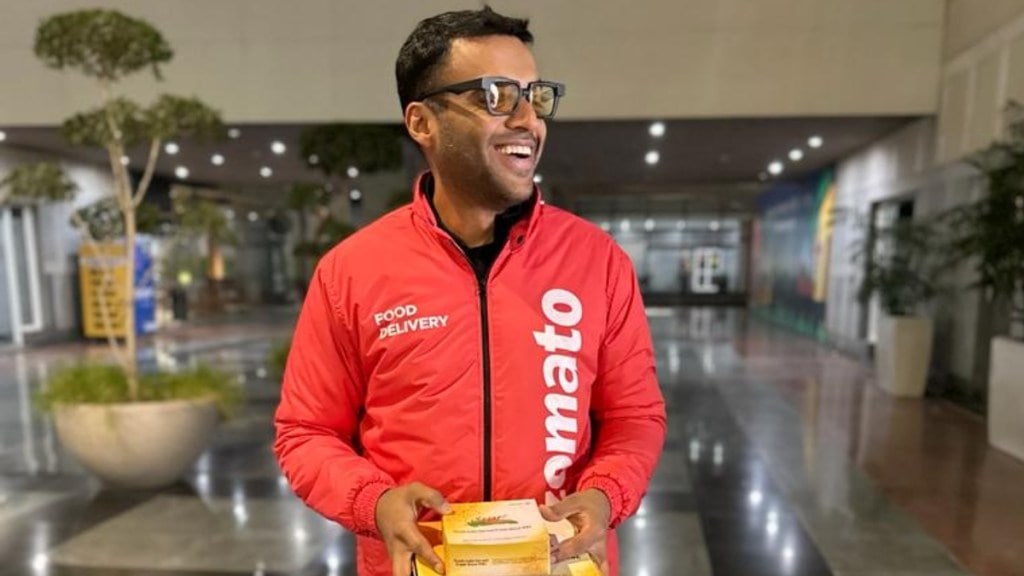
Zomato CEO Deepinder Goyal revealed on Friday that delivery partners had earned an average of Rs 102 per hour in 2025 — insisting they were not ‘overworked’ or exploited by the company. The social media post prompted a sharp rebuttal from the gig workers’ union amid continued debate iThe remarks came even as gig workers led nationwide protests against exploitative work practices and pushed for an end to 10 or 20-minute deliveries. Goyal had also sparked fury earlier this week with calls for “less regulation” of the gig economy and his assertion that “miscreants” had joined the protests.
“Most delivery partners work for a few hours and only a few days in a month. But if someone were to work for 10 hours/day, 26 days/month, this translates to approximately Rs 26,500 per month in gross earnings. After accounting for fuel and maintenance (~20%), the net earnings for the partner are Rs 21,000 per month,” Goyal wrote in a lengthy X thread.
“Mr Deepinder Goyal and Zomato claim Rs 102 earnings per hour in 2025. But at 10 hours per day for 26 days, the gross amount is approximately Rs 26,500. After fuel and maintenance (approximately 20%), the net is around Rs 21,000 per month— for 260 hours of work. That’s around Rs 81 per hour net, with no social security, no paid leave, no accident cover. Tips? Just Rs 2.6 per hour. And only around 5% orders get tipped. This is not decent work,” the Telangana Gig and Platform Workers Union countered.
What did Deepinder Goyal say?
The lengthy X post from Goyal indicated that the company had seen earnings increase by approximately 10.9% year on year. He also explained that tips were transferred instantly without deductions and averaged around Rs 2.6 per hour on Zomato during 2025. About 5% of Zomato orders and approximately 2.5% of deliveries via Blinkit receive tips. Goyal added that the company absorbed the payment gateway processing costs.
‘Delivery partners are not overworked on our platforms. The average delivery partner on Zomato worked 38 days in the year and 7 hours per working day in 2025…Only 2.3% of partners worked more than 250 days in the year. Demanding full-time employee benefits like PF, or guaranteed salaries for gig roles doesn’t align with what the model is built for,” he added.
The 10 minute delivery model
The gig workers’ association has painted an alarming picture of the scenario — noting that such employees had “no social security, no paid leave, no accident cover”. The protesters have also flagged declining pay rates and the growing hazards posed by the 10 minute delivery model.
“Quick commerce’s 10-minute promise DOES NOT put pressure on gig workers, and it DOESN’T lead to unsafe driving. Firstly, delivery partners are not shown customer-facing time promises. There is no ’10-minute timer’ or countdown in the delivery app. 10-minute or faster deliveries are primarily due to our stores being closer to customers and not by higher speeds on the road,” Goyal insisted.