



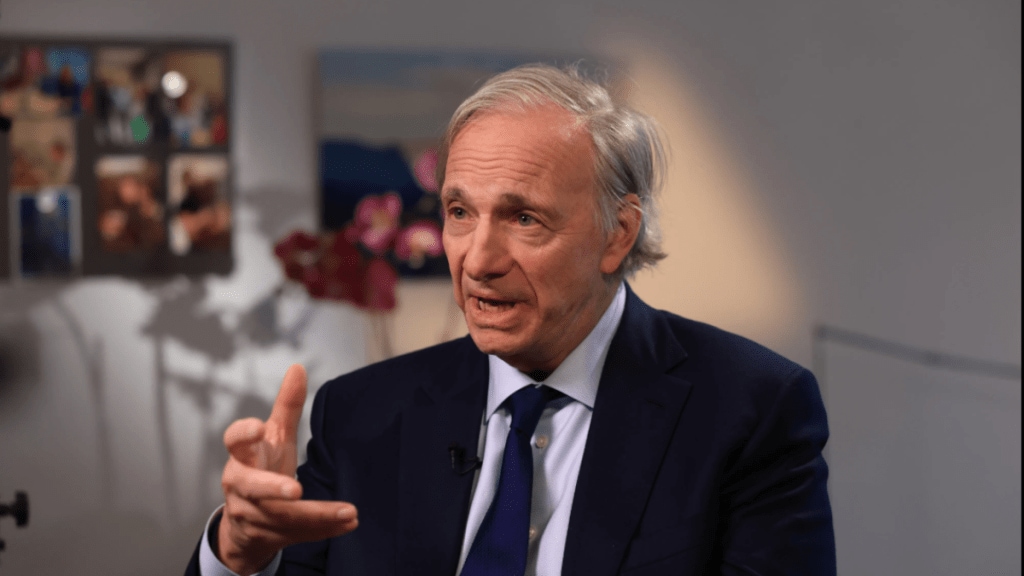
How does India stack up compared to its global peers? Billionaire investor Ray Dalio said India has “the best ingredients” among major economies for growth over the next decade, even as the global order enters what he describes as a turbulent and unfamiliar phase.
In a wide-ranging podcast with Zerodha co-founder Nikhil Kamath, the Bridgewater Associates foundersaid when he looks at India, he does not talk in the language of stock tips or short-term trades, he talks in cycles.
Advice for a 25-year-old Indian investor
For young Indian investors and entrepreneurs, Dalio’s advice was less about chasing returns and more about understanding the mechanics that shape money, markets and power. Asked what a young Indian with limited capital should do, Dalio’sfirst instruction was “Play the game.” Markets, he said, are unusually democratic because participation does not require large capital. Dalio himself started investing at 12 with $50 earned as a golf caddie. The point, he said, is not the size of the bet but learning the mechanics.
His second emphasis was on proximity to professionals. “You can find somebody who helps you and says, ‘Hey, here’s this little job you can do.’ Whatever it is, that small germination is what eventually creates empires. That’s the process, whether you’re starting in India or, like me, caddying on a golf course in the United States, that allows things to grow and develop over time,” Dalio explained.
On portfolio construction, Dalio was blunt: most people should not try to time markets. Instead, they should focus on diversification and asset allocation, assuming they cannot consistently beat the market.
That philosophy shapes his views on gold and crypto. Dalio described gold as the most reliable “storehold of wealth” because it is not a liability on anyone else’s balance sheet. “In India, many people understand that gold is a store of wealth. Money, after all, is about perception; it can be used as a medium of exchange, so that you can take it from one country to another and turn it into value to buy things. Throughout history, gold has been the most widely used and accepted form of money. Fiat money is different. Gold is an asset that is not a liability on anyone else’s balance sheet,” Dalio noted. He suggested that most investors should hold 5–15% of their portfolio in gold or alternative money, particularly as protection against debt crises or stagflation.
Dalio on risks in Bitcoin
Bitcoin, in his view, is a form of money with a limited supply, but one with structural risks. Governments can monitor transactions, interfere with usage, and competitors could emerge. Dalio said he holds “a little bit” of Bitcoin, but prefers gold.
For those with very limited capital, Dalio’s answer was unequivocal: invest in yourself. Education, skills and tools that enable future earning power offer far higher returns than any financial asset at that stage.
What makes a successful trader
Dalio was careful to distinguish trading from gambling. The archetype of a successful trader, he said, is not someone chasing tips, but someone obsessed with cause-and-effect relationships. “You get into it like a game, at first, you don’t know anything. Then, through experience, you have to get curious about the mechanics: what causes markets to go up or down. Whether you’re a day trader or a long-term investor, you need to understand cause-and-effect. If you’re just gambling, you won’t have an edge. The edge comes from knowing those relationships and organising your bets well, because diversification lets you reduce risk without reducing returns,” Dalio added.
Curiosity matters. So does writing down decision rules. Dalio said he learned early to document why he was making a trade and test how those criteria would have performed historically, a process that removes emotion from decision-making.
Diversification, he argued, is one of the most underappreciated ideas in finance because it can reduce risk without sacrificing returns. Leverage, meanwhile, is not inherently bad but only works when the investor has a clear edge.
Above all, Dalio said, successful investors treat markets as a game with rules and mechanics, not as a casino. For India’s young investors, Dalio’s message was clear but demanding: understand the forces, know yourself, and play the game patiently. The returns, he suggested, come later.