



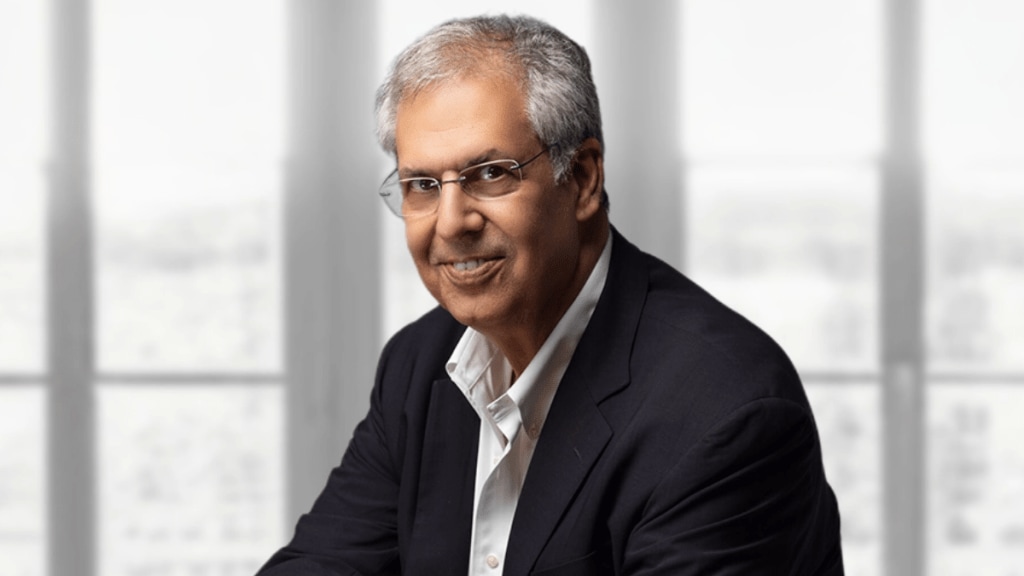
Even for an ace driver like Noel Tata, Tata Trusts chairman, 2025 turned out to be a bumpy drive. But few were surprised. With the late Ratan Tata staying firmly at the helm until his passing — without naming a successor — the moment of transition was always going to be fraught. Suspense was inevitable. So was the expectation of boardroom turbulence.
What did surprise many was that the storm did not break immediately.
For a while, Noel Tata appeared the natural, almost default choice. He was the only eligible Tata by surname, the son-in-law of the Mistry family, and uniquely positioned at the intersection of the two families that together own 100% of Tata Sons. If anyone could bridge legacy and continuity, it was him.
Yet Noel Tata has lived with the shadow of succession for over a decade. Back in 2012, when the Tata Group was searching for Ratan Tata’s successor at Tata Sons, he was widely seen as a serious contender. That possibility faded after Ratan Tata told a foreign publication that Noel lacked the requisite experience — a comment that was widely interpreted as a signal to the selection committee. What followed is well documented history.
Read FE 2026 Money Playbook: Your Ultimate Investment Guide for the new year
Fast forward to September 2025, when fault lines finally surfaced — at a Tata Trusts board meeting no less. The long-simmering rift between the Tata and Mehli Mistry factions spilled into the open.
September Storm
Mistry had long been a formidable presence within Tata Trusts, owing to his close relationship with Ratan Tata — despite being part of the Shapoorji Pallonji Group, which owns 18.37% of Tata Sons, the holding company of the Rs 15.24 lakh crore conglomerate. Notably, Mehli had stood firmly with Ratan Tata during the bruising battle with Cyrus Mistry, his own cousin. That history gave him moral heft within the Trusts.
After Noel Tata assumed the chairmanship, however, the Mistry bloc began to feel increasingly marginalised. They argued that key decisions were being taken without adequate consultation and sought greater access to Tata Sons board agendas and deliberations during Trust meetings.
The first open salvo came when the Mistry faction blocked a resolution to reappoint 77-year-old Vijay Singh, former defence secretary, as nominee director on the Tata Sons board. The vote split the Trusts 3-4 — an unprecedented fracture. The Tata bloc retaliated by opposing Mistry’s appointment. Singh subsequently chose to resign voluntarily from the Tata Sons board, but the damage was done.
With board appointments paralysed and governance questions mounting, the dispute took an extraordinary turn — it reached the government’s doorstep. For a 156-year-old group famed for quiet consensus-building, this was uncharted territory.
Many say this was an irony. One of the reasons cited for Tata Trusts’ reluctance to list Tata Sons, the group’s holding company, is that it does not want external scrutiny into its business operations. While Noel Tata wants to fiercely retain Tata Sons’ private company status, he didn’t find it odd to seek the government’s help for an internal affair. The Tata Sons listing issue still remains unresolved — an important agenda for Noel in 2026.
For now, the pressure has worked as the Mistry faction appears to have retreated. But the truce came at a cost. Mistry resigned from multiple Tata institutions — starting with Tata Trusts, followed by the Small Animal Hospital Trust, and most recently, the National Centre for the Performing Arts.
Yet the acrimony surrounding Vijay Singh’s exit continues to rankle. In a letter to the board in November, Darius Khambata — believed to be in the Mistry camp — sought to calm nerves, writing, “We felt absolutely nothing against Vijay (Singh), and regretted that he was not present at the meeting so that we could explain our position face to face.” He also rejected suggestions that the events of September 11 were an attempt to seize control of the Trusts. Few in the Tata camp, however, are convinced about this.
Rise of Neville Tata
Ironically, it was Khambata who proposed the induction of Noel’s 32-year-old son, Neville Tata, to the Tata Trusts board. With that move, the atmosphere is expected to ease. For the first time in history, a father-son duo now sits on the Trusts board — potentially smoothing succession planning and reducing future flashpoints. Noel is also now the first Tata to hold 1% stake in Tata Sons after his mother Simon Tata’s death. There is also quiet speculation that when re-nomination cycles come around, the Mistry bloc could face the axe.
For Noel Tata, the first year as chairman has been a sobering initiation. Power at the Tata Group has never been merely institutional; it is deeply personal, shaped by legacy, loyalty and lineage. As Gita Piramal wrote in Business Maharajas decades ago: “It’s hard being a Tata. The surname doesn’t permit failure.”