



Four years after the launch of nano urea and nano-DAP, the use of these items continues to seriously lag targets. The sale of these items by Indian Farmers Fertilizer Cooperative (IFFCO) is 10-15% of the installed capacity.
“Nano-fertilizers utilisation or knowledge among farmers and the outreach programme by us have remained inadequate,” K J Patel, managing director, IFFO said.
However, IFFCO will be launching nano granular NPK containing nitrogen, phosphorus and potash by early 2027 for providing more choices to farmers, Patel said
It is a granular form of nano that will target the roots and not the foliar. “Against the requirement of a 50-kg bag of NPK, nano NPK would do the same work in less than 5 kg,” Patel said.
Low Adoption and the Need for Farmer Outreach
Against the current total annual manufacturing capacity of 289.5 million bottles (500 ml each) of nano-fertilisers, the cooperative sold 18.77 million bottles of nano urea and nano-DAP respectively during April-November, 2025-26. It has set target for selling 80 million bottles of nano urea for FY26
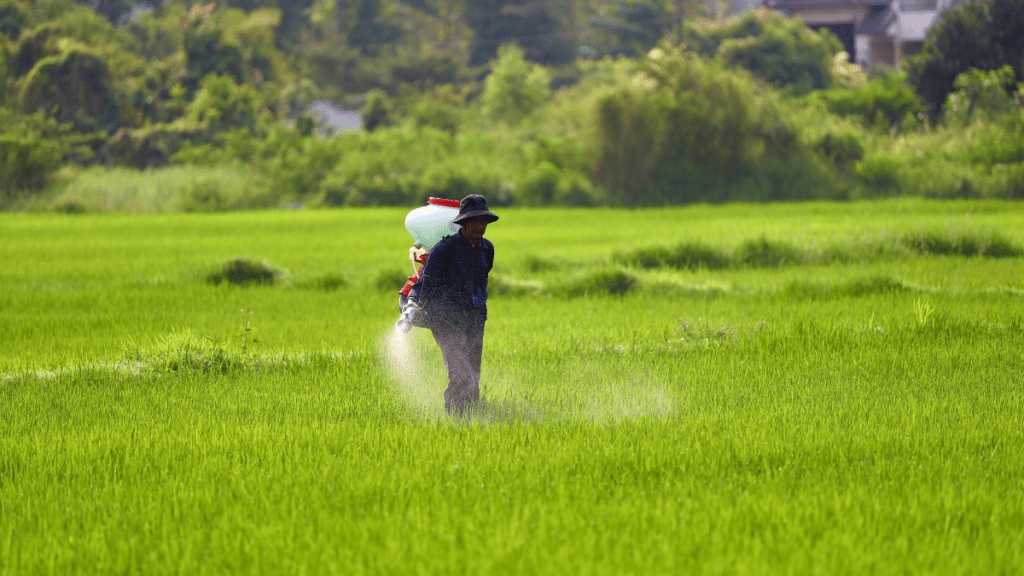
Patel also said that liquid nano-urea is not meant for basal application (to the soil), its for the foliar (liquid application directly into leaves).
IFFCO had sold 26.5 million and 9.7 million bottles of nano urea plus and nano-DAP respectively in FY25, which is 31% and 118% more than 2023-24.
According to industry sources, the large-scale adoption of nano variants of urea and DAP, may take at least three more years.
Push to Cut Subsidies
The government has been giving priority to nano fertilisers with a view to cutting extensive use of highly subsidised conventional fertilizers.
In June 2021, cooperative IFFCO launched nano urea in liquid form as an alternative to conventional urea. In April, 2023 the fertiliser cooperative major had launched nano-DAP, which aimed at decreasing the country’s import dependence on soil nutrient variety.
Currently IFFCO is exporting the nano fertilizers to more than 25 countries and the effectiveness of nano fertilizers has been encouraging, Patel said.
IFFCO is setting up its first plant abroad for manufacturing nano-soil nutrients in Brazil.
The plant will be set up under a 7:3 joint venture between IFFCO subsidiary IFFCO Nanoventions, and Brazilian company NANOFERT. It will be producing 4.5 million litres of nano-fertilisers annually.
The cooperative has sought the government approval for launching nano granular NPK. The manufacturing facility is being set up in Kandla. Gujarat.
For 2025-26, the fertiliser subsidy is projected to cross Rs 1.95 lakh crore (Rs 1.2 lakh crore for urea and Rs 75,168 crore for nutrient based subsidy regimes) for 2025-26, marginally higher than Rs 1.91 lakh crore incurred in FY25.
In case of urea, farmers pay a fixed price Rs 242 per bag (45 kg) against the cost of production of around Rs 2,650 per bag. The balance is provided by the government as a subsidy to fertiliser units.
The retail prices of phosphatic and potassic (P&K) fertiliser, including DAP were ‘decontrolled’ in 2020 with the introduction of a ‘fixed-subsidy’ regime as part of Nutrient Based Subsidy mechanism announced by the government twice in a year.
IFFCO posted a 4.5% growth in its total sales turnover at Rs 41,244 crore in 2024-25. The cooperative reported a 16% increase in net profit to Rs 2,823 last fiscal on year.
In the last fiscal, IFFCO produced 9.31 million tonne of nitrogenous and complex fertilizers and sold 11.37 MT of soil nutrients.