



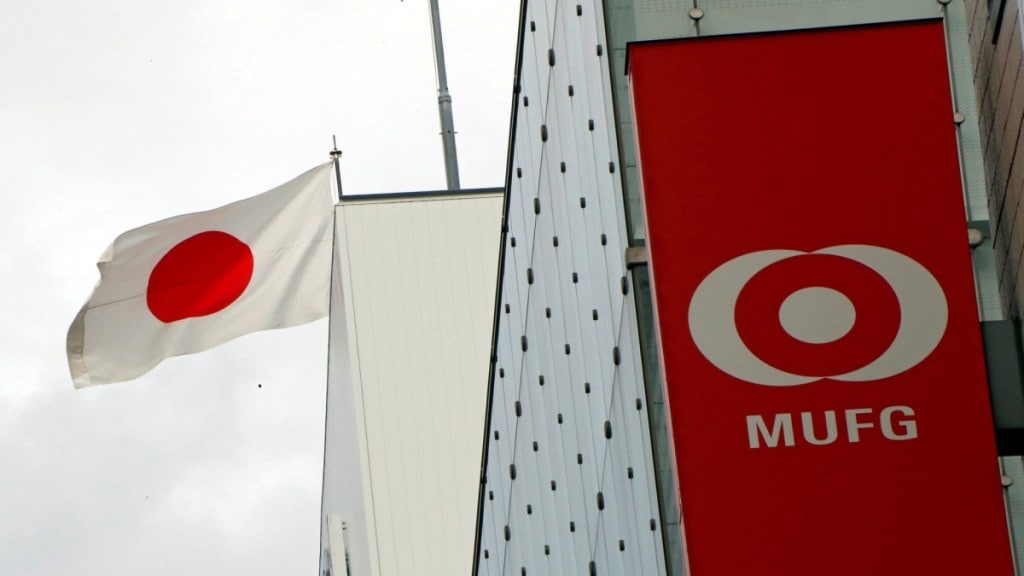
Japanese investment via mergers and acquisitions (M&A) in India surged to a historic high in 2025, marking one of the strongest years for foreign capital inflows into the country. Japanese firms deployed over $9 billion this year—led by MUFG’s landmark $4.4 billion investment in Shriram Finance, followed by JFE Holdings’ investment in Bhushan Power & Steel for $1.75 billion. The last time we saw such a huge investment by Japanese firms in India was in 2019, when ArcelorMittal and Nippon Steel acquired Essar Steel for close to $7 billion.
In the last 10 years, since 2016, Japanese investors have pumped close to $20 billion in 48 M&A deals, of which the top 10 accounted for $18.2 billion. Five of the top 10 investments by Japanese firms in India since 2016 were reported in 2025, accounting for close to $8 billion.
Redefining India’s Financial Landscape
The year 2025 has emerged as a turning point, with Japan’s largest financial institutions aggressively expanding their presence in India. MUFG’s December announcement of a nearly Rs 40,000‑crore deal for a 20% stake in Shriram Finance—the biggest FDI in India’s financial sector to date—set the tone. In December 2025, Mizuho Financial Group’s acquisition of a controlling stake in Avendus for Rs 4,720 crore and Sumitomo Mitsui Banking Corporation’s (SMBC) Rs 13,483‑crore purchase of a 20% stake in YES Bank earlier in May.
Why Japanese Capital is Betting on the “Asian Century”
Ramakrishnan Kalyanaraman, senior managing director–strategic relations at Spark Capital, attributes this surge to Japan’s structural economic challenges. “Japan has faced 30 years of deflation, an ageing population with an average age above 60, and abundant liquidity but limited growth opportunities. India, in contrast, is poised for strong expansion over the next decade and fits squarely into the ‘Asian century’ narrative,” said Kalyanaraman. He further added that “Global dynamics are also shaping Japan’s capital flows. Europe is increasingly viewed as economically stagnant, with geopolitical uncertainty rising amid shifting US security commitments.”
Meanwhile, Japan’s strained historical ties in Southeast Asia and its difficult experience in China have narrowed its investment comfort zone. “Barring China, no Asian economy other than India can absorb such large investments,” said an investment banker with a foreign bank, adding that Japanese investors feel culturally and operationally aligned with India.
Geopolitics and business imperatives are converging. “With the US and China both pushing their economic and political agendas forcefully, institutions need a diversified footprint,” said Vikas Sharma, former director and executive chairman of Nomura India. He noted that India’s capital markets now offer reasonable liquidity—an essential factor for global investors seeking smooth entry and exit options.
Japan’s ultra‑low interest rate environment is another catalyst. “Even at its 30‑year high of 0.75%, Japan offers limited returns amid demographic headwinds,” said Pratik Shah, National Financial Services Leader at EY India. “Japanese investors are targeting emerging markets like India’s BFSI sector for alpha, deploying long‑term capital during India’s growth phase.”
EY estimates that India’s banking system will require $170–200 billion in capital over the next five to six years to support expansion. Japan has already committed $68 billion over the next decade—capital that aligns well with India’s need for patient, long‑duration funding to sustain near‑double‑digit economic growth.
Japan’s interest in India’s financial sector is not new. In 2012, Nippon Life acquired a 26% stake in Reliance Capital’s asset management and mutual fund business for Rs 1,450 crore, setting an early precedent for long‑term Japanese participation.
Regulatory openness is further strengthening investor confidence. “The regulator is indicating openness to foreign capital for financial services,” said Vijay Mani, Partner and Banking & Capital Markets Leader at Deloitte India. “Foreign investors see the resilience and growth potential of India’s financial sector, making financial institutions a compelling macro bet.”
Japanese capital is an indicator, when their financial firms invest in India, their corporates inevitably follow the money, said a senior investment banker with a domestic bank, adding that this opens the door, giving Japanese corporates the funding runway they need to expand in India.
Experts expect the momentum to continue, particularly in mid‑sized institutions that offer both growth and scalability. “With India’s fundamentals strong, its financial sector expanding, and Japan seeking stable, high‑growth destinations for its capital, the partnership between the two economies appears set for a deeper, more strategic phase,” Kalyanaraman added.