



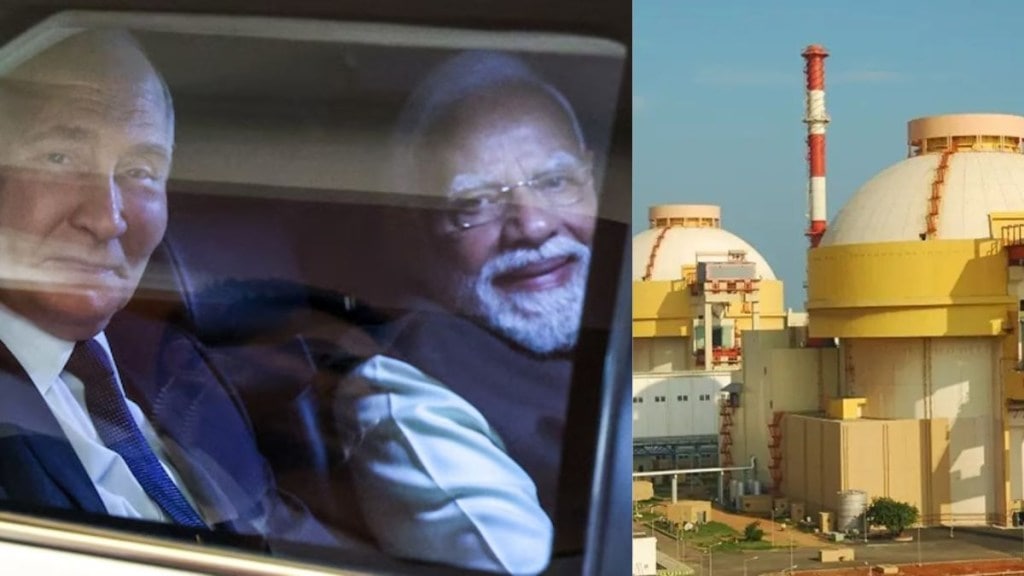
Following the arrival of Russian premier Vladimir Putin in Delhi for a two day annual India-Russia summit, Bharat’s largest nuclear facility that is the Kudankulam Nuclear Power Plant (KKNPP) is set to receive a major operational boost.
Located in the Tirunelveli district of Tamil Nadu, the Kudankulam Nuclear Power Plant presents itself as one of the ‘key energy projects’ between the two countries that underscores their strategic technical partnership.
Presenting evidence of Russia’s commitment to continue ‘uninterrupted’ fuel and energy based shipments to India, Putin announced the development of the Kudankulam Nuclear Power Plant as a flagship project between the countries aimed at building India’s energy infrastructure.
“We’re conducting a flagship project to build the largest Indian nuclear power plant, Kudankulam,” Putin told the press on Friday from Hyderabad House in Delhi in a joint statement with Indian PM Narendra Modi.
Talking about the present operational status of the nuclear facility, Putin told reporters that two out of six reactor units have already been connected to the energy network, and four are still under construction. “We could also talk about cooperation in construction of small modular nuclear reactors and floating nuclear power plants. Getting this nuclear power plant to full power output will make an impressive contribution to the energy requirements of India,” he added.
What are Small Modular Reactors (SMRs); Why are they important?
A major topic of discussion between the two leaders was also cooperation on Small Modular Reactors (SMRs). Small modular reactors (SMRs) are advanced nuclear fission reactors that are significantly smaller than current conventional nuclear power plants (typically under 300 MWe capacity).
During the visit, Russian officials pitched their SMR technology as an ideal solution for India’s diverse energy needs. The joint statement posted by both countries earlier today noted that both sides agreed to “actively explore” localisation of SMR technologies in India.
Why is the KKNPP project important?
Originally conceived in 1988 through an agreement between Prime Minister Rajiv Gandhi and Soviet leader Mikhail Gorbachev, the KKNPP was one of the few projects between the international bodies that survived the collapse of the Soviet Union.
Today, it stands as the only foreign-built nuclear power plant producing electricity in India. The importance of the project stems from its capacity to generate humongous amounts of clean power at a time when India is looking to cut its emissions. When completely developed with all six units operational, the plant will have a total installed capacity of 6,000 Megawatts (MW), making it the largest power generating station of any kind in India.
Coinciding with Putin’s arrival on Thursday, the Russian state atomic energy corporation, Rosatom, delivered the first batch of nuclear fuel for Unit 3 of the Kudankulam plant. Following his comments on developing the nuclear facility, Putin also announced a large Russian–Indian pharmaceutical facility in the Kaluga region to produce advanced anti-tumour drugs using Indian technology.