



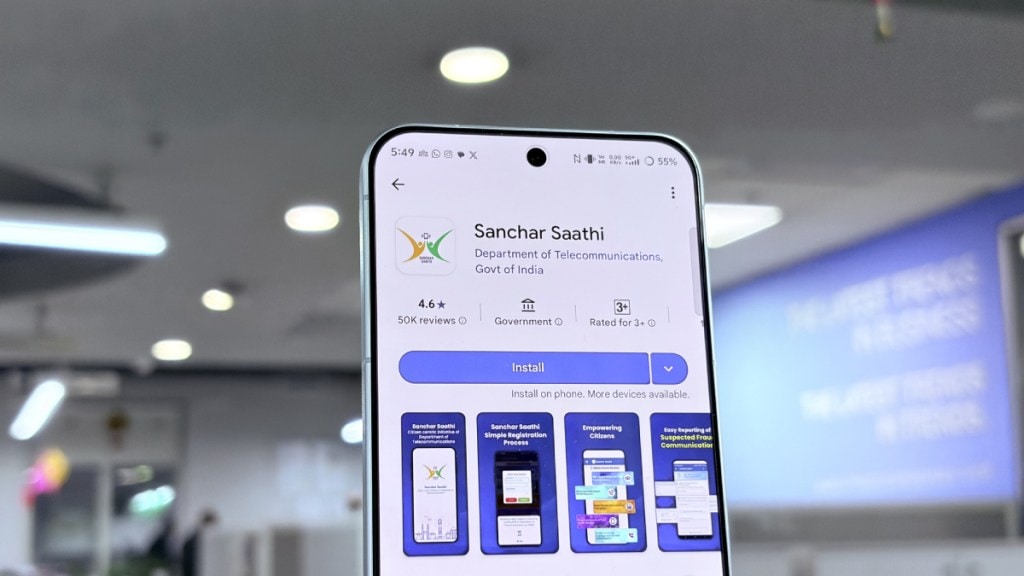
Two days after issuing the directive and following a storm of protest from opposition parties and digital rights activists, the government on Wednesday withdrew its order requiring smartphone makers to pre-install the Sanchar Saathi cybersecurity app on all new devices, citing the sharp rise in voluntary downloads.
Communications ministry in a statement said that the app has now crossed about 15 million downloads, with nearly 6 million new registrations added in just one day, which proves that the platform is gaining traction without enforcement. The app will continue to remain available on app stores for users who wish to download it.
Announcing the rollback, the statement said the surge in uptake showed that mandatory bundling was no longer necessary. It reiterated that Sanchar Saathi is a secure consumer-protection tool meant to help track and block stolen handsets, verify device authenticity and report cyber fraud.
What did the communications minister say?
According to Communications Minister Jyotiraditya Scindia, the system has so far traced around 2.6 million stolen handsets, returned about 700,000 to consumers, disconnected roughly 4.1 million fraudulent mobile connections and blocked about 600,000 fraud attempts.
As reported by FE in its Wednesday edition, handset makers including Apple and Samsung had opened channels with the government urging withdrawal of the mandate, stating that while they were ready to promote the app to users, compulsory installation at the manufacturing stage would be impractical.
The companies suggested the directive be turned into an advisory, with brands actively encouraging voluntary downloads instead of bundling the app into hardware.
Controversy stoked by the prior mandate
The now-revoked order had sparked protests from opposition parties and activists who alleged that compulsory pre-installation would lead to surveillance by the government.
Congress and other Opposition leaders accused the government of attempting “brazen snooping”, while digital rights groups said enforced embedding violated user consent and created potential for misuse.
Scindia, however, strongly rejected such allegations in Parliament, asserting that Sanchar Saathi neither allows nor enables snooping and becomes operational only after a user chooses to register. He maintained that permissions sought by the app are limited to functions such as verifying an active SIM, sending a one-time SMS for registration or capturing photos of handset details for genuineness checks. He said that the app can be deleted at any time and that users retain complete control over permissions.
For handset manufacturers, the original mandate would have posed major operational complications. Brands that run large-scale production lines in India, such as Apple and Samsung, would have been forced to create parallel manufacturing streams: devices meant for domestic sale with the app baked in, and export units without it. Imports would need to be opened locally to add the app, creating new layers of handling, logistics friction and certification delays. Companies would also have been required to push software updates to inject the app into millions of devices already circulating in the market, adding further compliance pressure.
Industry executives said that these disruptions would not improve adoption or trust and that user outreach, through SMS links, retail communication and brand-led campaigns, would be far more effective. With voluntary downloads already climbing, the government accepted that compulsory installation was unnecessary.