



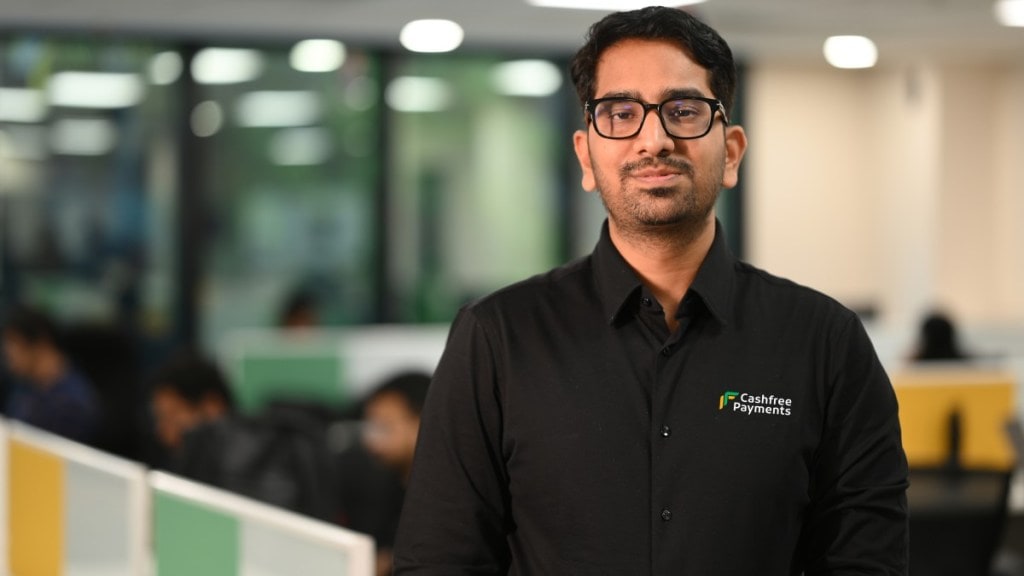
After a year spent regaining momentum following a regulatory freeze, Cashfree Payments is starting to see payoffs from investments it made earlier, particularly in cross-border payments. In an interview with Ayanti Bera, co-founder and CEO Akash Sinha speaks about the company’s recovery and how cross-border payments now account for a tenth of revenues. Excerpts:
2025 seems to have been an inflection year for Cashfree.
Yes, we had two big goals. One was to regain the momentum in domestic merchant acquiring after coming out of an embargo early last year. The focus was on rebuilding market share and onboarding large internet-first brands. The second, and perhaps more meaningful, achievement was on cross-border payments, where we’ve been investing in since 2021, and they are now beginning to show results.
How has been the top line growth this year?
We are expecting transaction volumes and overall top line to grow 70-80% in FY26. We’ll have better clarity by March, but the trend is clear. Domestic acquiring volumes are growing 80-90% year-on-year, while cross-border volumes have grown over 3x in the same period. Merchant sign-ups almost doubled year-on-year.
FY25 revenue growth appeared muted. What happened there?
FY25 needs to be seen in context. We had just come out of the RBI-imposed halt on new merchant onboarding, and effectively operated at scale only in the second half of the year. So, the full-year numbers don’t reflect the run-rate we exited with.
Cross-border payments now contribute meaningfully to the business. How large is it now?
Cross-border currently contributes close to 10% of our revenue. While it’s a high-margin business, which includes both transaction fees and forex spreads, it’s also complex to build. You need deep compliance capabilities, banking partnerships and reliable infrastructure. Our early traction came largely from Tier-1 hubs like Delhi, Hyderabad, Mumbai and Chennai, but we’re now seeing a surge across Tier-2 export hubs such as Surat, Ahmedabad, Jaipur, Tirupur, and Kochi. Some of the leading export categories are ecommerce, edtech, travel, digital goods, and insurance.
What kind of merchants are using your cross-border platform?
There are two major categories. One is Indian D2C brands that sell domestically, but also want to collect payments from customers in the US or Europe. The second is global SaaS firms that want to sell into India without setting up local entities. Earlier, that path was extremely broken.
Why is there so much interest among fintechs to get the cross-border licence?
Earlier, the OPGSP framework had a lot of ambiguity, and every bank interpreted it differently. The newer licence brings clarity and comfort for both fintechs and banking partners. But a licence alone doesn’t make you competitive. You still need years of investment in product and partnerships.
So, how competitive will this market become?
Cross-border will consolidate into a few serious players, much like domestic merchant acquiring has. It’s a much harder product to build. Understanding global customer behaviour, managing risk, compliance and FX – these aren’t things you can solve overnight. Smaller players will find it difficult to commit the required resources.
Within cross-border payments, you’ve spoken about focusing more on exports.
Export payments, especially high-value ones, are still very inefficient. Small exporters, such as someone in a Tier-2 town exporting rice or furniture, struggle with paperwork, compliance, and even basic banking support. Many banks don’t have the expertise at the branch level. Our focus is to not just move money, but simplify compliance, so these exporters can do it at a higher frequency.
Where will Cashfree’s focus be in 2026?
Domestic merchant acquiring will continue to grow, and we believe market share will consolidate further towards a few strong players. Cross-border should become a much larger opportunity. New verticals like PPI (prepaid instruments) and secure ID will also scale up. Ultimately, the goal is to build infrastructure that allows Indian businesses to sell seamlessly, both locally and globally.