



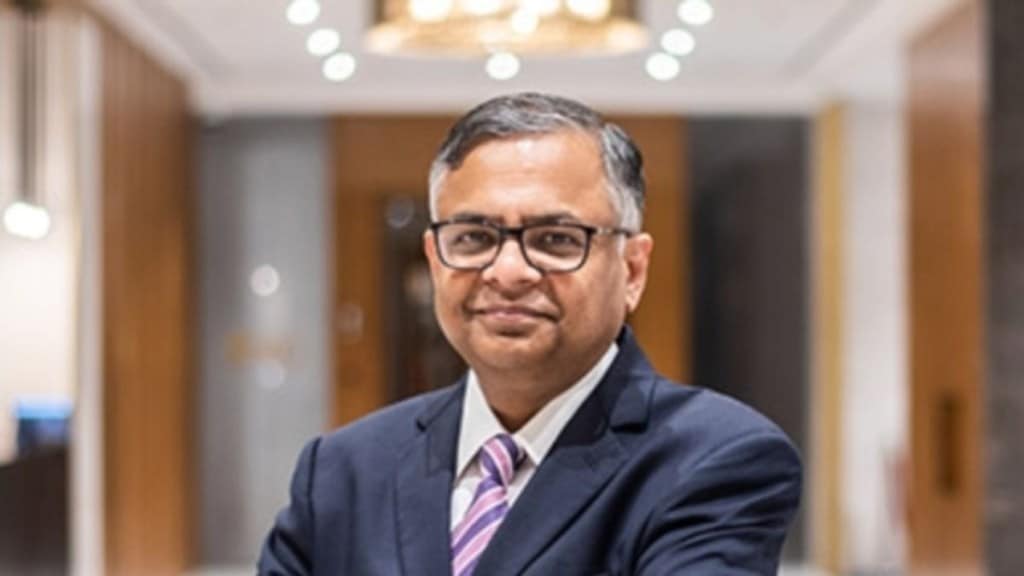
Tata Sons chairman N Chandrasekaran set a clear tone for 2026 in his New Year’s message to employees, highlighting execution discipline, teamwork and risk-taking as the defining imperatives for navigating what is likely to be another year of volatility.
He also defined five pillars for Tata Group that will shape its resilience as new technologies emerge. “Data, AI infrastructure and applications need to come together—they cannot be implemented in silos. This becomes a huge opportunity for us as a large Group,” Chandrasekaran said.
Five Pillars
The five pillars he flagged include building an AI-led culture within our organisations, redefining a Bridgital approach with a human + AI model across our work, building a future-ready talent model, fluent in AI and new methods of working, developing industry-tailored data, AI infra and applications, and collaborations and partnerships across institutions.
Chandra highlighted that performance in an unsettled global environment will depend less on external conditions and more on how well organisations deliver on what they control. “When the world is in flux, those who execute well create their own stability,” he said.
Clear targets, follow-through on commitments and systems that enable consistent performance, he said, will be central to how Tata companies approach the year ahead.
Beyond execution, he pointed to collaboration as a decisive advantage. “Decades in the corporate world have taught me that teamwork beats talent every time. A group of skilled people working together will achieve far more than a solitary genius working alone,” he wrote. Long-term success, he said, is shaped by how effectively teams work together across functions and businesses.
Boldness Over Caution
Chandrasekaran also urged Group companies to take measured risks in a persistently unstable environment. “When volatility is constant, caution can be tempting. But half-measures rarely succeed in times like these. Boldness, meanwhile, has outsized payoffs,” he stressed. He called for a longer-term view on decision-making, including a willingness to back bold investments in research and scholarship that may take time to yield results.
Looking back at 2025, Chandrasekaran described the year as a humbling one, marked by geopolitical tensions, rapid technological change and operational challenges. He also addressed the AI 171 crash saying, “In a year full of difficult moments, the devastation wrought by the crash of Air India 171 affected us all. I want to thank you for the way in which so many of you from across the Group came together, in the midst of anguish, to help.”
Despite these headwinds, he said the broader environment continues to present strategic opportunities for both India and Tata Group. India’s economic momentum remains intact, reinforcing expectations that it is on track to become the world’s third-largest economy this decade. For the Group, he said the current phase of global realignment could prove to be a pivotal period.
During 2025, Tata companies expanded their footprint across advanced manufacturing, electric vehicles, defence production, retail, hospitality and AI-led digital infrastructure, while also stepping up investments in sustainability. At the same time, Chandrasekaran underscored the importance of resilience, noting that rapid technological progress has also heightened vulnerabilities for large corporations.
He closed his message by reflecting on stories of women empowered through Tata initiatives, spanning literacy programmes, entrepreneurship, advanced scientific research and leadership roles across operations. While such stories are not new, he said their growing scale remains a powerful source of optimism.
“None of these stories of women stepping up and succeeding are new. But they always inspire,” Chandrasekaran said.