



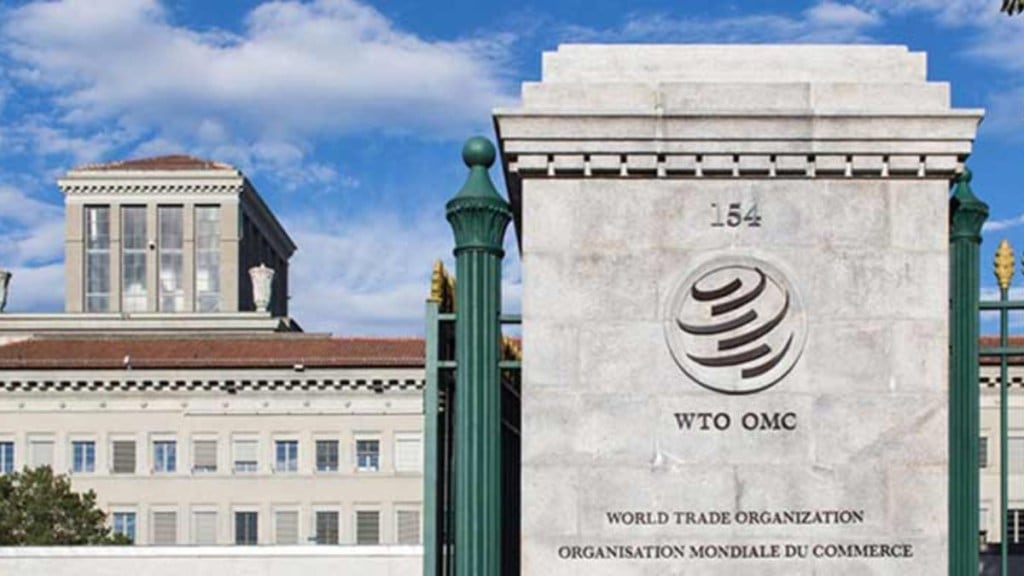
China on Friday filed a petition with the World Trade Organisation (WTO), requesting consultations with India over New Delhi’s tariffs on information and communication technology (ICT) products subsidies in the solar sector, escalating trade tensions between the two of the world’s biggest Asian economies.
In its petition, Beijing has accused India of imposing tariffs on ICT products that allegedly violate WTO commitments, including the national treatment principle. Beijing has also challenged India’s solar sector subsidies, claiming they amount to import substitution subsidies, which are prohibited under WTO rules.
Motivation behind China’s claims
This move marks China’s latest efforts to protect its exports by flagging India’s manufacturing push as a violation of WTO’s trading principle. China remains a major exporter of ICT hardware and solar components to India whose exports have been threatened by India’s protectionist policies.
Post 2020, India has raised tariffs on ICT products and adopted phased manufacturing programmes to boost domestic electronics production including smartphones and telecom equipment as a part of its broader Make in India campaign. India’s Production Linked Incentive (PLI) schemes in particular aim to reduce reliance on imported solar modules.
India’s push for self-reliance in electronics and renewable energy directly impacts Chinese firms. Beijing has increasingly used WTO mechanisms to counter what it sees as discriminatory industrial policies. A ruling against India could limit policy space for industrial subsidies and localisation strategies.
What does the consultation process entail?
Consultations are the first formal step in WTO dispute settlement. They allow both sides to discuss and possibly resolve disputes without litigation. If consultations fail within 60 days, China can seek the formation of a WTO dispute panel.
According to China’s Ministry of Commerce, these measures give unfair competitive advantages to Indian domestic manufacturers while harming Chinese exporters. The request marks China’s second WTO petition against India this year, underscoring growing friction over industrial policy, manufacturing incentives and localisation measures.
India has argued that its measures are consistent with WTO rules and necessary for energy transition, supply chain resilience and domestic manufacturing.