



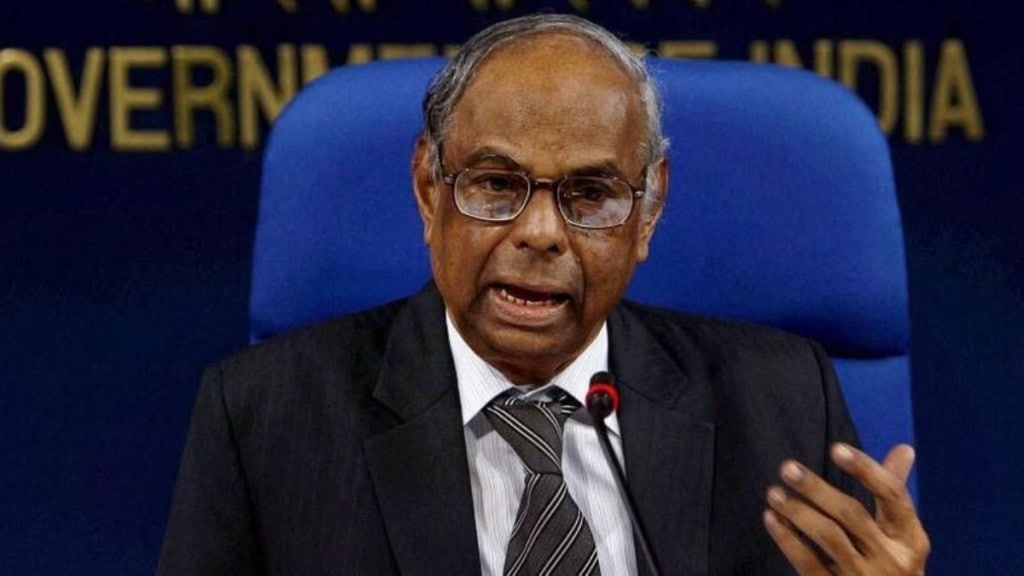
Unlike most economists who tend to find it tough to clamber off the fence, Dr C Rangarajan is always clear on the key issues on hand and hardly hesitates to state them. These, even as, he maintains the study in caution that one may expect from a numbers-driven former central banker. Economist and former governor of the Reserve Bank of India, Dr Rangarajan, has for some time now maintained that if India aspires to be counted among the developed nations, it will need to grow at over 7 per cent each (if not 8 per cent) year consistently for the next two decades.
But for this, he feels, it will first need to raise the investment rate in the country to 35 per cent of the GDP, which is two per cent more than the current rate but till such time, the central government much keep up the tempo of its capital expenditure.
Sharing his thoughts with this writer on what he hopes to see in the new year and beyond, Dr Rangarajan says, “we should get the nation prepared for becoming a developed country by 2047. This means attending first to the important element of accelerating the investment rate in the economy.”
The real Gross Fixed Capital Formation Rate or GFCFR (used interchangeably as investment rate) has been more or less stable at 33.6 per cent of GDP (in 2022-23), 33.5 per cent (in 2023-24) and 33.7 per cent (in 2024-25).”
At the present moment, he says, the incremental capital output ratio (ICOR) is around 5. One problem, he finds each time with the ICOR “is that it is very volatile and linked to the growth rate numbers. The ICOR cannot be estimated independently. It is derived from dividing the real GFCFR by real GDP growth rate.”
Also, he reminds, “the GFCFR of around 33 per cent partly because of the increased capital expenditure by the central government. This is good and needs to continue but at the same time it is important that the private investment – and in particular the corporate investment – picks up.
Seeking Sector-Specific Solutions
How to ensure this? “I think the government needs to look at why private investment rate is not picking up backed by a detailed analysis of the factors behind it, both in terms of the aggregate investment and also industry-wise (sector-specific) investments,” says Dr Rangarajan. This could help get a better fix on the sector-specific issues and the factors that are helping or holding back private investment. These could be useful inputs for the policy-setting with suitable enablers to boost the investment rate while addressing sector-specific issues.
One of the early economists to note the merits of the stance taken by the central government to focus on raising capital expenditure, he says, “I would suggest that the capital expenditures of the central government should continue to grow as long as or until the private investment picks up.”
Therefore, apart from focus on raising the investment rate in general and looking at it specifically in terms of industries where the investments are lagging, he also sees the need for a more clearer picture backed by detailed analysis by the government on the linkages between government capital expenditure and its impact on private investment. For instance, he explains, “consider a pick up in government investments in railways,” it will help if we know “the extent to which there is a favourable effect of these on the steel industry and other related industries,” which in turn could aid future policy-design.
Factory to the world
What about the manufacturing sector, where many have often argued about the stickiness of the share in GDP to around 17 per cent as against the aspirational number of 25 per cent? Dr Rangarajan feels the proportion of manufacturing in the GDP of the country is not really an issue that needs to be fixed “because if the services sector grows at a faster rate then the ratio of manufacturing in GDP will naturally reduce. While it is true that impact of manufacturing on employment is somewhat different from the way growth on services sector could enable and therefore manufacturing gains importance in terms of its share in the GDP.”
However, to Dr Rangarajan, what should not be missed out is the need to find a better grip on what constitutes manufacturing and how we define services. This, he feels, is becoming increasingly hazy with the expansion of the services sector. “For example, over a decade ago, packaging was also done by manufacturers, today it done independently and to a large extent handled by the services sector. Therefore, there are issues around what constitutes manufacturing and what makes up the services sector,” he says.
It is just around a month from now that the Economic Survey would be out as also the Union budget and hopefully there will be more than flickerings of optimism. Sanjay Malhotra, RBI governor, has already signalled that the new year is being approached with hope and vigour and that the central bank will aim to remain “growth-supportive.”