



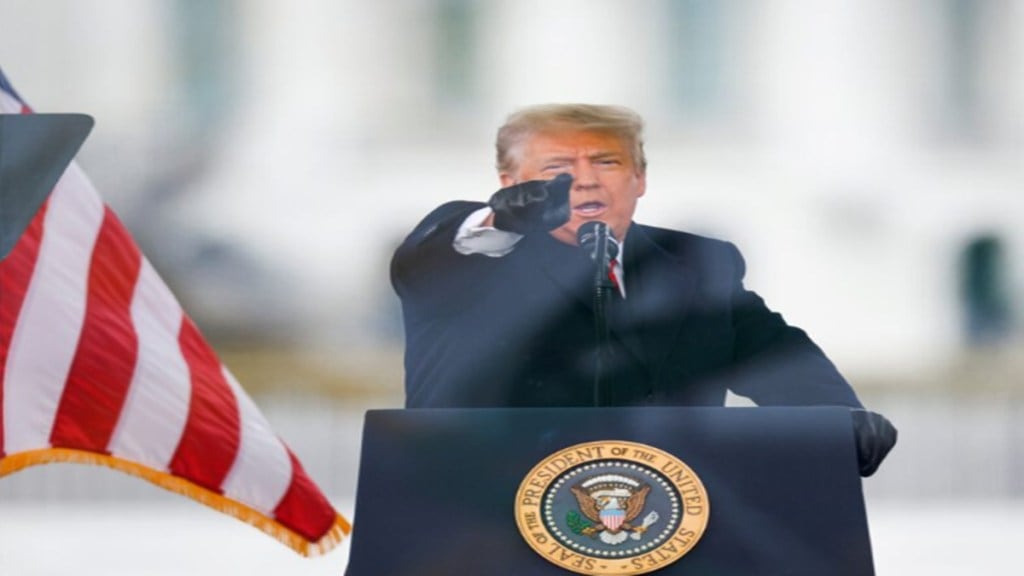
2025 has been a watershed year for non-citizens in the United States of America. Since Trump assumed office as President of the United States, both legal and illegal immigrants, as well as non-immigrants, have borne the brunt of his administration’s actions.
Here are some key policy changes for green card holders, H-1B visa holders, immigrants, students and travelers to the US in 2025 that will shape their presence in 2026 and beyond.
Social Media Review
The US Department of State had announced that beginning December 15, all H-1B and H-4 visa applicants must complete an ‘online presence review’ to meet application standards. As part of the ‘online presence review’, starting December 15, all H-1B applicants are required to change the privacy settings on all their social media platforms to “public”. This rule is applicable to all H-1B and their dependents worldwide.
Indian H-1B holders faced a bigger setback. On December 9, the U.S. Embassy in India announced the cancellation and rescheduling of visa appointments. This announcement left all of those who had arrived in India to get their H-1B visa stamped stranded in the country.
Visa Interview Waiver
The Visa Interview Waiver, also known as Dropbox, which eliminates the need for in-person visa interviews at US Embassies and Consulates for eligible individuals, has been updated.
The US has amended the interview waiver list, requiring most non-immigrants to attend in-person immigration interviews. Most applicants under 14 and over 79, who were previously excluded from interviews, must now appear in person unless they are on the Visa Interview Waiver list. Only certain B1/B2 visa holders will be eligible for the Interview Waiver benefit.
H-1B and F-1 student visa holders who previously had a visa that expired less than 12 months before the current application will be ineligible for the Interview Waiver benefit. These rules have been in place since September.
Interview Location Policy
The US Department of State has announced a modification in its interview location policy for immigrant visa applicants. The Department of State is now requiring immigrant visa applicants to interview in the consular district designated for their place of residence, or in their country of nationality if requested, with limited exceptions.
Effective November 1, 2025, the National Visa Center has scheduled immigrant visa applicants in their country of residence or, if requested, country of nationality.
Green Card Holders’ Reentry to the US
Trump’s immigration enforcement agencies are now targeting lawful permanent residents or green card holders. After traveling overseas, green card holders are having difficulty reentering the US. The Permanent Resident Card becomes technically invalid for reentry into the United States if Green card holders are absent from the United States for 1 year or more. Click here and here to know the rules.
Employment Authorization Document (EAD) Fee
The United States has imposed new fees for certain immigrants who were previously barred from paying to apply for permission to work in the country. Any form submitted without the required fees will be rejected by USCIS.
To start working in the US, all foreigners need to have an Employment Authorization Document (EAD). The fee for filing Form I-765, Application for Employment Authorization, is $470 online and $520 in paper form. However, foreigners under asylum, parolee, and Temporary Protected Status (TPS) categories were exempted under the rules. From now on, they will have to pay the fees.
Travelling to the US
US has introduced two new visa fees in addition to the visa processing fee for U.S. visas. Nonimmigrants will be required to pay two additional fees: the Visa Integrity Fee and the fee for Form I-94 Arrival/Departure Record.
US has also introduced certain new immigration fees and increased existing fees for certain immigration-related actions of foreign travelers and immigrants.
The immigrants will have to pay fees applicable to the application of CBP Form I-94 Arrival/Departure Record, a higher fee for travel authorizations via the Electronic System for Travel Authorization (ESTA), and for enrollment in the Electronic Visa Update System (EVUS).
Visa Integrity Fee
President Donald Trump’s ‘One Big Beautiful Bill,’ signed into law on July 4, 2025, has introduced a mandatory ‘Visa Integrity Fee’ for non-immigrant visa applicants.
The new ‘visa integrity fee’ is to be paid upon the issuance of any non-immigrant visa. This would apply to the issuance of any non-immigrant visa, including, for example, F-1 and F-2 visas, J-1 and J-2 visas, H-1B and H-4 visas, tourist B-1/B-2, etc.
Green Card Holders a Risk
Green card holders who have obtained US citizenship face the risk of losing it, as the US Department of Justice has emphasized denaturalization as a top priority in an earlier memorandum to enforcement authorities. There have been reports that under-reporting income on a tax return could also result in being declared a non-US citizen, under President Trump’s administration.
H-1B Visa New Rule
Starting February 27, 2026, and applicable for the FY 2027 H-1B cap registration season, the H-1B lottery system will be replaced with a new process that will prioritize foreign workers with higher skills and higher wages.
H-1B Visa Petition Fee
President Trump has signed a proclamation to significantly reform the foreign work permit program, introducing a $100,000 fee for H-1B visa petitions effective September 21, 2025. Every US employer hiring a foreign worker must pay a $100,000 H-1B fee to the US government.
However, this $100,000 H-1B fee applies only to new visas, excluding renewals and current visa holders. Also, this is a one-time fee applicable only to the petition, not an annual fee.
OPT Program Under Threat
The Optional Practical Training (OPT) program allows foreign students holding F-1 visas to work and gain experience in American companies after completing their education in the US. This OPT program is under threat as several lawmakers are raising their voices to end it.
Visa Bond Countries
The list of countries whose nationals must post a visa bond in order to enter the United States has been updated by the United States. On December 17, the Department of State revised the visa bond list by adding seven more nations, bringing the total to 13. The visa bond pilot program applies to foreigners applying for visas as temporary visitors, nationals of countries with high visa overstay rates, or those countries offering Citizenship by Investment plans to foreigners.
Green Card Lottery
The Diversity Immigrant Visa Program, also called the Green Card Lottery, has been suspended by President Donald Trump. The Diversity Immigrant Visa Program (DV Program) makes up to 50,000 immigrant visas available annually, drawn from random selection among all entries to individuals who are from countries with low rates of immigration to the United States. The DV Program is administered by the U.S. Department of State (DOS).
Birthright Citizenship
On January 20, 2025, President Donald Trump signed an executive order restricting birthright citizenship to infants born to illegally present parents or temporary visa holders, such as students or tourists. According to President Trump’s executive order, American citizenship can only be conferred to children whose parents are US citizens or have a US Green Card.
The birthright citizenship case remains a hot topic for non-immigrants in the US. The case is now in the highest court in the US and the US Supreme Court has agreed to hear the birthright citizenship case, but the dates for the hearing of arguments have not been decided.