



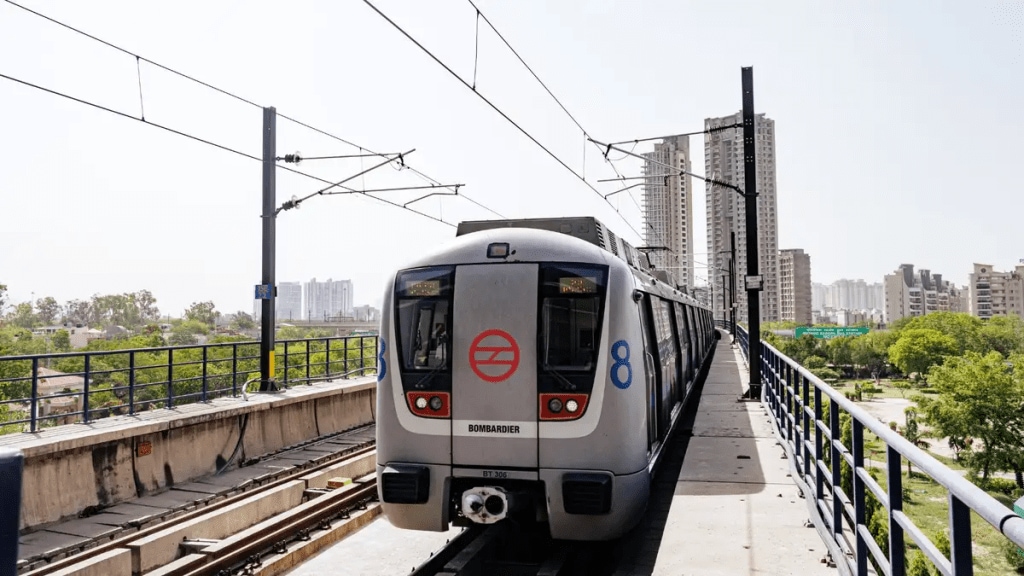
The Union Cabinet chaired by Prime Minister Narendra Modi on Wednesday approved a Rs 12,015 crore project to expand Delhi Metro under Phase–V (A), adding 16.07 km of new tracks and 13 stations across three corridors. The move is aimed at improving connectivity in Central Delhi, South Delhi and the domestic airport zone while easing congestion on some of the city’s busiest road stretches.
The three new corridors approved include R.K. Ashram Marg to Indraprastha (9.913 km), Aerocity to IGD Airport Terminal-1 (2.263 km), and Tughlakabad to Kalindi Kunj (3.9 km). Funding for the project will come from the Government of India, the Government of Delhi and international funding agencies, according to an official statement.
Central Vista, airport connectivity to get major boost
A key highlight of the expansion is improved access to the Central Vista area. The R.K. Ashram Marg–Indraprastha corridor will extend the existing Botanical Garden–R.K. Ashram Marg line, providing direct Metro connectivity to Kartavya Bhawan and surrounding government offices. Officials estimate that around 60,000 office-goers and nearly two lakh visitors will benefit daily from this corridor alone.
The Aerocity–IGD Airport Terminal-1 and Tughlakabad–Kalindi Kunj stretches will extend the Aerocity–Tughlakabad corridor, enhancing airport access from South Delhi areas such as Saket, Chhattarpur and Kalindi Kunj. Of the 13 stations planned under Phase–V (A), 10 will be underground and three elevated.
Network expansion, pollution reduction in focus
The approved extensions will push the Delhi Metro network beyond the 400-km mark once completed, a milestone expected to be achieved within the next three years. Officials said the project will help reduce traffic congestion, cut dependence on private vehicles and lower pollution levels, with an estimated saving of 33,000 tonnes of carbon dioxide emissions.
“With this expansion, a new chapter will be added to the Delhi Metro. For this purpose, a project worth Rs 12,015 crore has been sanctioned,” Union Minister Ashwini Vaishnaw told journalists after the Cabinet meeting.
At present, Delhi Metro operates 12 lines spanning about 395 km with 289 stations across Delhi and NCR. The network handles an average of 65 lakh passenger journeys daily, reinforcing its role as the city’s primary mass rapid transit system.