



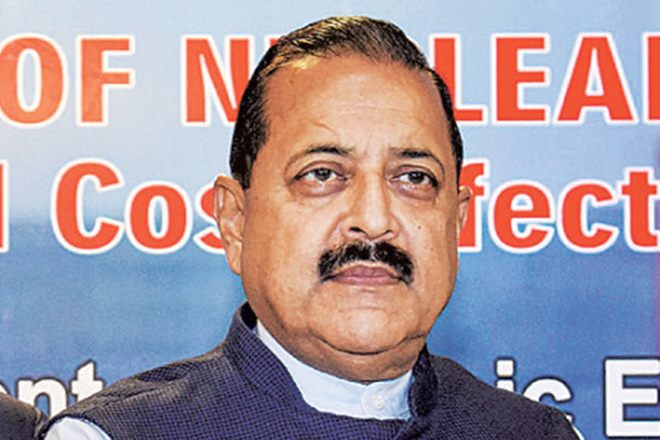
With rising focus on reducing the dependency on carbon-based fuel for electricity generation, nuclear power should be given more importance, and awareness needs to be created among the public to bust the myths associated with the use of nuclear energy, Jitendra Singh, Union minister for atomic energy and space, said on Friday.
“I have been trying to sensitise states about nuclear energy, making them aware of its diverse benefits,” Singh said at the India Energy Forum 11th Nuclear Energy Conclave held here.
The current installed nuclear power capacity in the country is 6,780 MW, and is expected to reach 13,480 MW by FY25. KN Vyas, secretary, department of atomic energy (DAE), said nuclear energy is an “undeniable” option to fight global warming and given the huge land requirements of solar and wind energies, the country should utilise the country’s “large experience in the construction and commissioning of reactors”.
More than `1 lakh crore was approved in 2017 to set up nuclear power plants with a cumulative capacity of 7,000 MW. These are scheduled to be completed by 2031. These plants include the Mahi Banswara project in Rajasthan, Kaiga project in Karnataka, Gorakhpur project in Haryana and the Chutka project in Madhya Pradesh. Applicable basic customs duty has been completely waived for import of goods required for setting up these units.
The DAE carries out indigenous research, in line with the country’s ‘three-stage nuclear power programme’, to utilise the country’s vast thorium reserves. The costly and complex three-stage plan was chalked out in the 1950s, when people thought there would be uranium shortage. India has large reserves of thorium which can produce U-233, a variant of uranium.
The DAE imports uranium ore concentrate from firms in Kazakhstan and Canada and a Russian company supplies enriched uranium pellets and fuel pellets of natural uranium dioxide. The country had spent around `1,800 crore in FY17 in buying these items. India has signed inter-governmental agreements with 17 nations, some of which are nuclear supplier countries.