



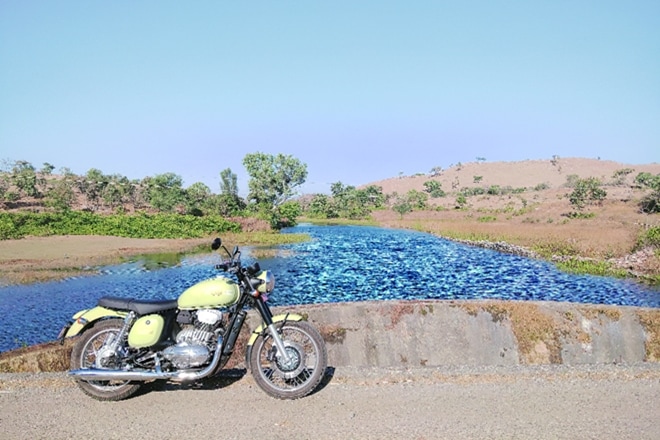
If motorcycle design is art, the new Jawa motorcycles can very well be described as art galleries. The way, or the passion, with which these new machines have been designed seems exceptional. Both the Classic and the Forty Two—that’s what these two are called—are the ‘youngest’ motorcycles available in India today, with perhaps the longest legacy. We ride them on the winding roads of Rajasthan.
What is Jawa?
Jawa motorcycles date back to early 20th century. These were born in Europe, and from 1960s to 1990s were quite popular in India. With the coming of new emission norms and increased competition in the 1990s, and the fact that the company couldn’t transition from two-stroke to four-stroke bikes, meant it had to shut down operations. Now, Jawa is reborn, with the promise that it will retain that one characteristic it was always known for—a pure joy to ride on the road, and off it.
What defines Jawa Classic?

Its polished chrome, clean retro lines and chiselled curves are just so 1950s—and these help the Jawa Classic stand out among today’s crop of motorcycles. Its unitary headlamp assembly, flat seat, twin exhaust pipes and an almost-parallel-to-the-road stance make it look handsome and balanced. It has only a side-stand. The Jawa engraving on the engine and fuel tank is neat. It’s not a very tall motorcycle, and yet the seat position and ride stance is such that both short as well as tall riders will find it comfortable when astride. Its engine provides a flat torque curve, and that translates into an engrossing ride. The Jawa Classic is priced Rs 1,64,000 (ex-showroom, Delhi).
What defines Jawa Forty Two?
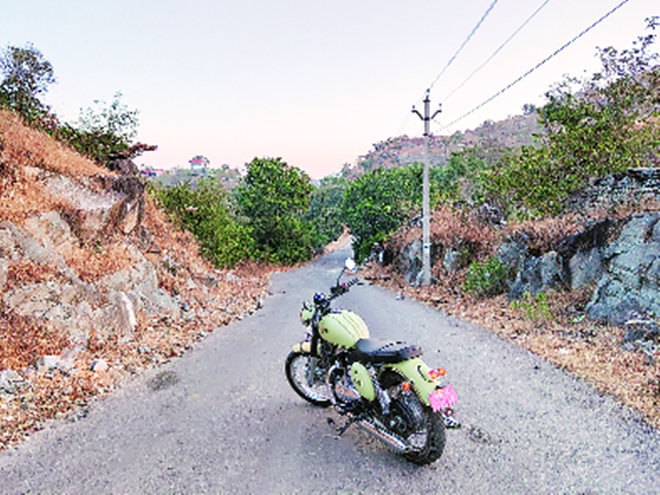
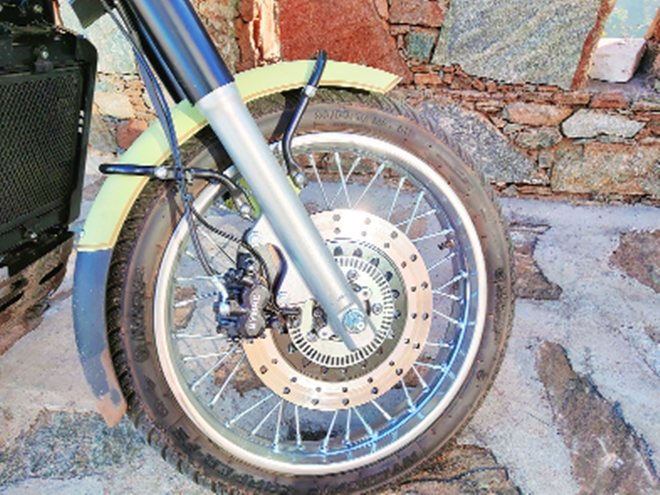
Well, it’s a Jawa, and yet not a Jawa as you and I have known it. It’s a Jawa with a fresh and 21st century outlook. First, it gets both matte finishing and chrome detailing. Unlike the Classic’s unitary headlamp assembly construction, the Forty Two has a headlamp ‘connected’ to the frame and a speedometer set slightly towards the right. It also has only a side-stand. The paint quality is very good, and the two calipers that join the front mudguard to the suspension are artsy. The Forty Two is also not a tall motorcycle and yet a rider of any height will feel comfortable once astride. Its build quality, in particular, feels very robust. The Forty Two, which would be my pick of the two and is the more youthful Jawa, is priced Rs 1,55,000 (ex-showroom, Delhi).
Which engines power these?
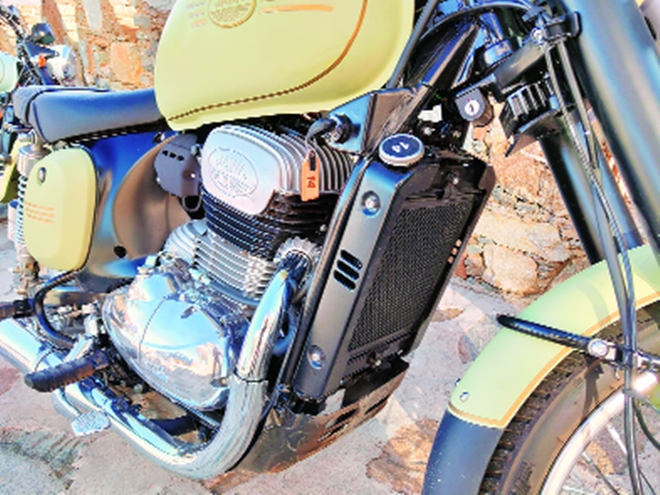
It’s the 293cc engine that produces peak power of 27bhp and torque of 28Nm.
How do these ride?
From standstill to three-figure speeds, from first gear to sixth, and from any speed to any speed, the engine never feels lacking in power. There is enough torque to simply breeze past long vehicles on highways, or to easily manoeuvre a sandy trail. But while both the ride and handling is very good on smooth roads, the ride, in particular, turns rough, and slightly uncomfortable, on bad roads. The riding position, however, is good for long trips and the bikes won’t tire you out. Vibrations are minimal at least till about 100kpl, but at higher speeds even the speedometer needle starts to shake. Also, we were unable to test these bikes for fuel-efficiency during our two-day ride, so can’t comment on the same.
How do these sound?
A lot of effort has gone into making both the Jawa motorcycles sound sexy, and that is apparent from the moment you fire the engine. The exhaust note, at idle, is soft yet powerful, and at high engine speeds it produces a throaty growl.
How good a buy are these?
They are priced very well, no doubt, and will compete primarily with the Royal Enfield Classic 350. If you consider the price-to-value equation, these are tough to beat, but motorcycles like these aren’t only bought on price-to-value, these are ‘owned’ because that rider in your heart wants them. (When I was riding the Forty Two, the speedometer needle lost its orientation. Instead of being set at the 0kph mark, it somehow jumped to 60kph even as the bike was standstill. After riding a short distance, the needle magically returned to its original position. We really hope it was a one-off case and that these machines don’t have any niggling issues.)