



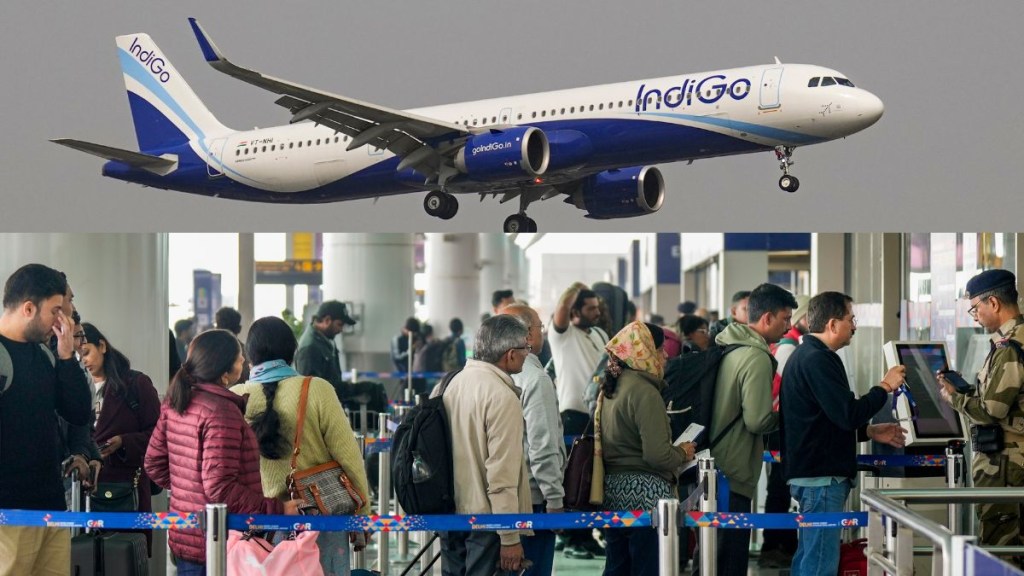
The operational chaos at IndiGo continues- It has been hit hardest by new FDTL rules, which cut pilot duty hours and raised crew needs, testing its lean, high-utilisation model. The rule change coincided with capacity expansion, tech issues, & congestion, triggering cascading disruptions. The carrier, which holds 65% of India’s domestic aviation market, has drawn criticism for its handling of the current disruptions.
IndiGo, operating under InterGlobe Aviation, has been facing heat from both the government and the passengers for cancelling hundreds of flights since December 2, citing regulatory changes in the pilots’ flight duty and regulation norms. As per Reuters, it has cancelled 2,000 flights over 5 days. The market cap for IndiGo has now fallen below the Rs 2 lakh crore mark. In fact the contrast is easily understandable if we compare its Q2 reports. The airline reported a dispatch reliability of 99.89%, an on-time performance of 89.8% and a cancellation rate of just 0.5% in its Q2FY26 earnings.
When was the new FTDL rules notified?
The new rules increase weekly rest periods to 48 hours, extend night hours and limit night landings to two, down from six earlier. It was rolled out in two phases — on July 1 and November 1 and the notification was issued in 2024 initially.
Flight disruptions expected to dent annual revenue; refunds top $68 million – Reuters
The ongoing disruptions, however, are expected to hit its annual revenue, with customer refunds reaching $68 million (according to Reuters) as of Sunday and likely to increase.
One of the largest airlines by market share, which operated up to 2,244 flights a day and served 94 domestic and 41 international destinations during Q2FY26, is facing financial hurdles because of the disruption.
“This seems to be the lowest point in the company’s history. Disruptions are hurting the brand image,” said an IndiGo executive, according to Reuters.
In the second quarter, IndiGo reported a consolidated net loss of Rs 2,581.7 crore, while revenue from operations stood at Rs 18,555.3 crore in Q2FY26. The company had attributed the loss to the sharp depreciation of the rupee.
IndiGo has scaled up operational plans for the second half: CEO Elbers
Here is how Indigo performed in Q2. The airline carried 2.88 crore passengers in Q2, a 4% YoY rise. Passenger Revenue per Available Seat Kilometer (PRASK) rose 3% YoY to Rs 3.87 in Q2FY26.
The Airline said, it continued to lead in on-time performance, customer appreciation and network expansion. “Looking ahead, we have scaled up our operational plans for the second half to meet demand and continue driving growth. With that we have nudged up our capacity guidance for full financial year 2026 to early teens growth,” CEO Pieter Elbers said.
DGCA issues show-cause notice, IndiGo says operations improving
In a regulatory filing on Sunday, IndiGo said it was on track to operate more than 1,650 flights and expressed confidence that operations would stabilise by Wednesday. “Growing confidence for stabilisation of the network by December 10, earlier communicated timeline was between December10-15.” The crisis however has drawn warnings from politicians and aviation experts. On Saturday, aviation regulator DGCA issued a show-cause notice to IndiGo CEO Pieter Elbers and Chief Operating Officer and Accountable Manager Isidro Porqueras. On Sunday evening, the regulator extended the deadline to Monday 6 pm for the airline to respond.
The DGCA said the large-scale operational failures pointed to “significant lapses in planning, oversight and resource management” and asked the company’s top executives to explain within 24 hours.
For the first three days of disruptions, IndiGo did not publicly acknowledge the scale of cancellations. It was only on Friday — when it cancelled 1,600 flights, the highest-ever single-day number in Indian aviation — that CEO Elbers released a video apologising for the inconvenience caused to passengers.
Share price of Indigo
The share price of Indigo has fallen 12.4% in past one week.