



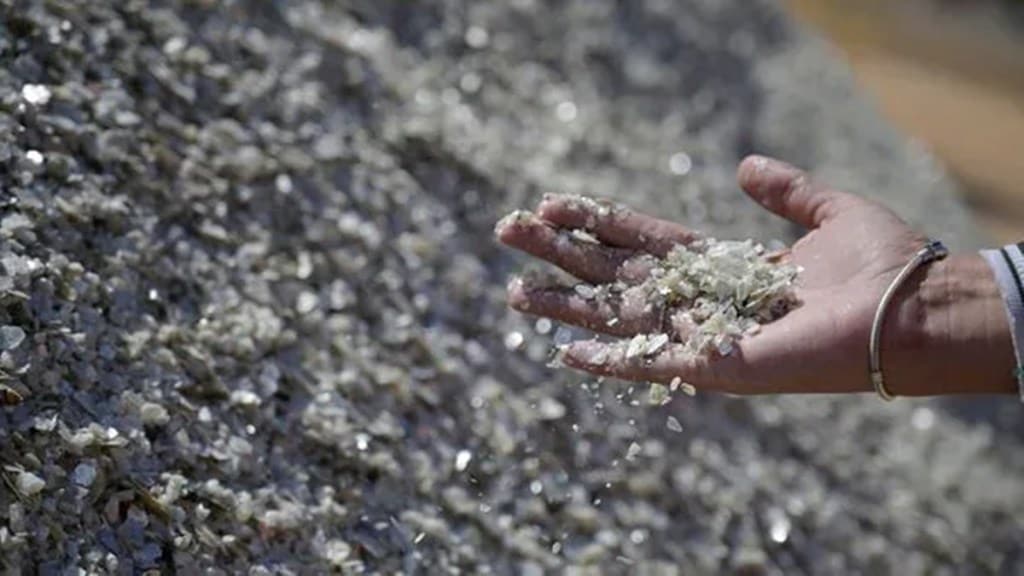
Ashvini Rare Earth is seeking to catalyse domestic magnet manufacturing by supplying Neodymium–Praseodymium (Nd-Pr) metal from the country’s first such facility, even as the plant awaits firm commercial orders to begin operations. The company believes that creating downstream magnet capacity is essential to unlocking demand for the critical rare-earth metal and reducing India’s dependence on imports.
The Pune-based company commissioned the 15-tonne-per-annum Nd-Pr metal facility in October, marking the country’s entry into rare-earth metal production outside China. At full utilisation, the plant could meet nearly a quarter of India’s Nd-Pr metal requirement, a key input for permanent magnets used in electric vehicles, wind turbines, electronics and defence applications. However, commercial production has yet to commence due to the absence of confirmed buyers.
What did Vikram Dhoot say?
Managing Director Vikram Dhoot told Fe that the immediate focus is on enabling domestic magnet manufacturing, either by supporting existing players or by building capacity alongside partners. The strategy is aimed at creating a steady domestic offtake for Nd-Pr metal. “Unless magnets are made here, there will be no sustained demand for the metal,” he said.
Ashvini is also exploring partnerships with large industry players to set up a 600-tonne-per-annum Nd-Pr metal plant under government incentive schemes, leveraging its technical capabilities. If such partnerships do not materialise, the company plans to establish a smaller, integrated magnet manufacturing line capable of producing around 100 kg per day of high-coercivity, EV-grade magnets using metal produced in-house. Dhoot estimates this transition would take about 18 months.
Key constraints
One of the key constraints is access to magnet manufacturing equipment, most of which is controlled by Chinese suppliers. Equipment sourced from Japan, the US or Europe can cost three to four times more, undermining project viability. Dhoot said the company is evaluating alternative engineering approaches to overcome this barrier if it proceeds independently, drawing on domestic design and fabrication capabilities.
The Nd-Pr metal project was developed through a collaboration combining research support from Bhabha Atomic Research Centre, raw material access from Indian Rare Earths Limited and industrial execution by Ashvini Rare Earth. The facility was set up under a memorandum of agreement with BARC and IREL and received a grant from the ministry of mines and the Jawaharlal Nehru Aluminium Research Development and Design Centre.
Magnet manufacturing remains capital-intensive, and Dhoot acknowledged that Ashvini cannot participate in the government’s incentive schemes on its own. The company is therefore in talks with strategic investors or joint-venture partners with experience in scaling industrial operations. “We are looking for a partner who can help us scale and add strategic value,” he said.
Investor sentiment has shifted since Ashvini last attempted to raise capital five years ago, when China’s dominance over rare-earth magnets deterred interest from OEMs and large industrial groups. Following recent supply disruptions and tighter Chinese controls, interest has picked up, though project costs have risen sharply. Dhoot cautioned that many investors underestimate the long gestation involved. “They expect returns within months, but meaningful outcomes can take three years,” he said.
Ashvini Magnets, the group’s flagship company, is India’s largest maker of injection-moulded and bonded magnets, with an estimated 80% market share. Founded in 1984, the group has built capabilities across ferrite and rare-earth magnets and now supplies permanent magnets for motors, automotive systems, pumps and sensors.