



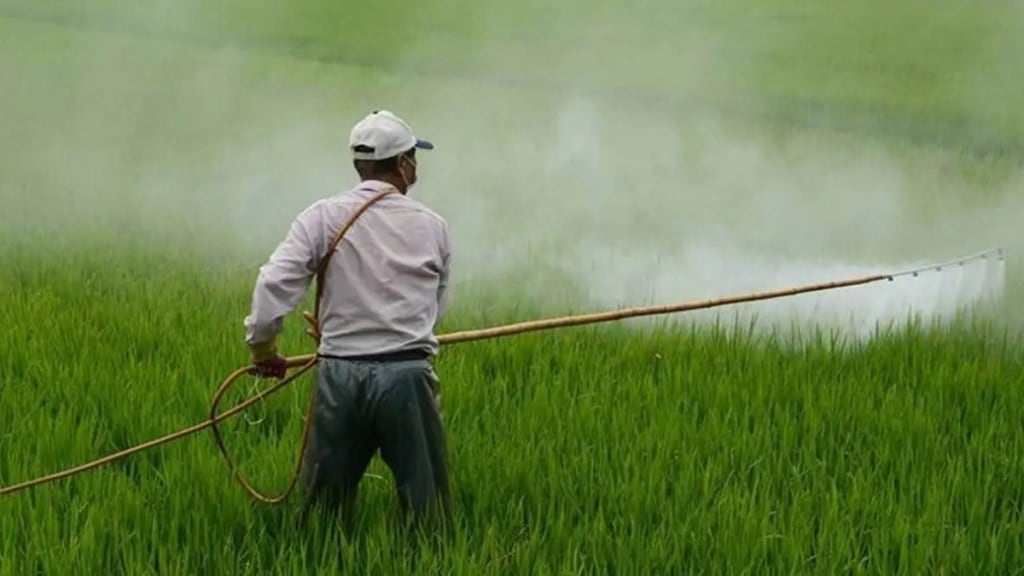
In a pre-Budget meeting with Finance Minister Nirmala Sitharaman, agriculture experts and farm organisations demanded an end to the practice of routing the fertiliser subsidies via manufacturers, and direct transfer of these sops to the farmers. They also suggested that all farm inputs be exempted from GST, and building agri infrastructure to deal with climate change.
Currently, fertiliser subsidy includes the open-ended one for urea, the most commonly used fertilier, and a “fixed subsidy” for phosphatic and potassium nutrients. There is nutrient-based subsidy regime in place, and increased use of nano urea for efficiency. While sale price to the farmers for urea has not been revised since 2018, even as the costs have risen, elevated international prices of imported P&K fertilisers forced the government to enhance the subsidy for them, despite these being restricted, under policy.
Farmers’ organisation Bhartiya Kisan Sangh (BKS) suggested to “combine” all fertiliser subsidies, and transfer the amounts directly to the farmers’ (including tenant farmers) bank accounts through direct-benefit-transfer (DBT). At present, not all farmers are able to get the subsidy, as they are using different sources of fertilisers, implements and power.
Agricultural Economist Ashok Gulati told FE that the issue of onboarding tenant farmers on digital platforms is the need of the hour. “It requires joint efforts of the Centre and states on the lines of the GST Council,” he said.
Experts at the meeting also called for increasing the retail price of urea, which has remained unchanged since 2018, and urged promotion of biofertilisers and foliar fertilisers through subsidies. Currently, subsidies are provided for urea, diammonium phosphate (DAP), and Single superphosphate (SSP), fertilisers.
Other suggestions included disbanding the Minimum Support Price committee, and commissioning a new agricultural policy for India. MJ Khan, Chairman of Indian Chamber of Food and Agriculture, suggested that “knee-jerk” reactions such as export bans should be avoided. Instead of imposing such bans to control domestic prices, the government should consider a limited increase in imports for such products, he said.
Also, to boost exports, some experts suggested that the Budget of Agricultural & Processed Food Products Export Development Authority (APEDA) should be increased from Rs 80 crore to Rs 800 crore.
Representatives from the National Institute of Agricultural Economics and Policy Research, United Planters’ Association of Southern India (UPASI), and Watershed Organisation Trust.