



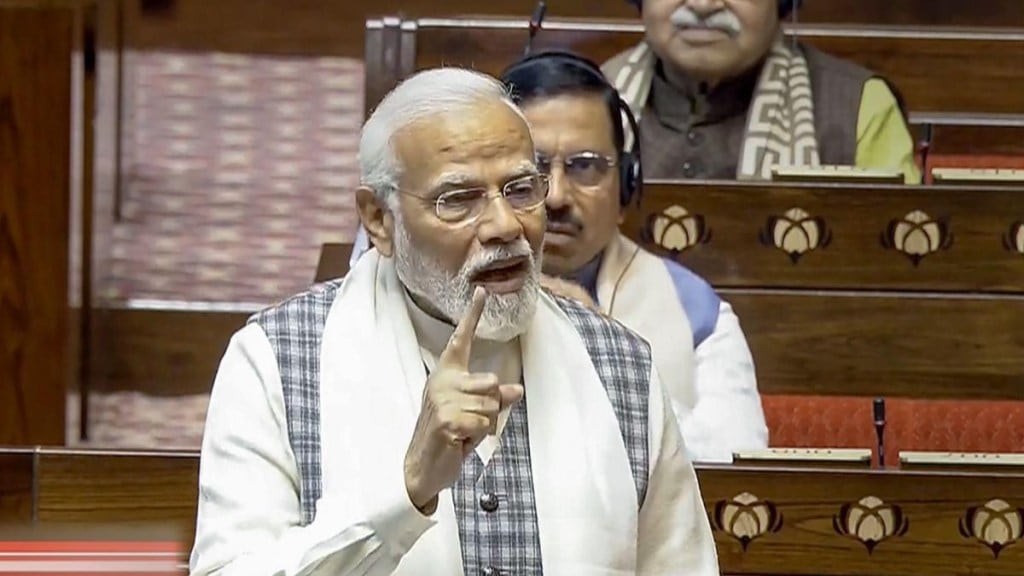
The winter session of the Parliament witnessed the Narendra Modi government passing a number of key bills – some of them meant for far-reaching policy reforms, making it one of its most active final parliamentary sessions in recent years. Ten new Bills were introduced in the Lok Sabha, of which eight were passed by both Houses and two sent for further scrutiny by a Standing Committee.
The key bills included the Viksit Bharat – Guarantee for Rozgar and Ajeevika Mission (Gramin): Viksit Bharat – G RAM G Bill 2025, the Sustainable Harnessing and Advancement of Nuclear Energy for Transforming India Bill, Sabka Bima Sabki Raksha (Amendment of Insurance Laws) Bill and the Health Security se National Security Cess Bill, 2025. Viksit Bharat Shiksha Adhishthan Bill, 2025 has been sent to the Joint Committee of Parliament for further scrutiny.
The 19-day sitting also saw the union government introduce the 2025 Securities Markets Code Bill to replace three laws related to the regulation of securities markets. The proposed law – meant to replace the 1992 Securities and Exchange Board of India Act, the 1956 Securities Contracts Regulation Act and the 1996 Depositories Act – aims to modernise the framework to encourage more market participation.
Together, these bills could unlock hundreds of billions of dollars in investments and advance PM Modi’s ambition of turning India into a developed nation in the next two decades. The Adani Group is already looking to build a commercial nuclear energy project in one of northern states, Bloomberg News reported.
PM Modi’s push for far-reaching policy reforms comes as his government accelerates trade talks with several partners, including the European Union, to offset US President Donald Trump’s 50% tariff blow. Earlier this week, India and Oman signed a Comprehensive Economic Partnership Agreement (CEPA), under which the Gulf Sultanate will provide India duty-free access to 98.08% of its tariff lines, which covers 99.38% of what India exports to Oman. Apart from the tariff removal on merchandise exports, Oman has also offered several concessions that are expected to benefit India’s service sector, including in terms of the mobility of workers. The free trade pact with Oman is the second of the year after one with the UK that granted New Delhi duty-free access to 99 per cent of its exports to the UK, covering nearly 100% of the trade value.
The passing of the bills “signal a policy shift toward diversification, structural reforms, and attracting long-term capital,” wrote economists Sonal Varma and Aurodeep Nandi of Nomura Holdings Inc., according to Bloomberg. “We see smoother sailing in 2026,” predicting economic growth of 6.9% for the year, it reported.
India’s economic growth projections for Fiscal Year (FY) 2025-26 are strong, with forecasts hovering around 6.6% to 7.2%, driven by robust domestic demand, strong consumption, and manufacturing/services sector growth. Still, the estimates are below the 8%-plus pace India needs to sustain in order to reach developed-nation status by 2047.
Why the India-US trade deal remains elusive
In February, PM Modi met the newly elected US President Donald Trump, just hours after he signed a plan to introduce “reciprocal tariffs.”
The optics of the meet were powerful as both the leaders vowed to double bilateral trade to $500 billion by 2030, with PM Modi stating, “Our teams will work on concluding very soon, a mutually beneficial trade agreement.”
Cut to December, and India is one of the highest-tariffed countries in the world.
India’s exports to the US, its biggest market, have weakened since the Trump tariffs came into force in August.
Despite months of negotiations, there has been no breakthrough, though US Ambassador to India Sergio Gor described a call between PM Modi and Trump as “great.”
50% US levies a humanitarian crisis: TN Chief Minister writes to PM Modi
The Indian rupee is currently Asia’s worst-performing currency. According to some reports, the currency is expected to log its largest decline since 2022 – a year marked by Russia-Ukraine war that sent crude oil prices soaring past $100 per barrel.
The stalled India-US trade talks have put pressure on export-reliant states like Tamil Nadu, prompting the state chief minister to write to PM Modi detailing how the high tariffs are causing “irreparable damage” to local businesses, leading to hundreds of millions of dollars in losses each day. The state accounts for 28 per cent of India’s textile exports and around 40 per cent of leather and footwear exports, together employing more than 85 lakh workers.
“The current trade stalemate is not merely an economic setback but a looming humanitarian challenge due to the irreparable damage caused by the tariffs,” he said.
December’s sitting of the Parliament, which began on the first of this month and concluded Friday, was its most productive in the past five years, according to PRS Legislative Research, which provides parliamentary information to the public. During the session, the Lower House registered 111 per cent productivity while the Rajya Sabha recorded 121 per cent.
The opposition parties, meanwhile, have accused the government of rushing through several pieces of legislation, including VB–G RAM G Bill, which is meant to overhaul a rural employment program, with minimal notice or debate.
The burst of policy action, political experts say, gives PM Modi a timely boost before five state elections in the new year.
“The rupture with Washington — which saddled India with the world’s highest US tariff rate — has injected urgency into improving the business climate,” wrote Chetna Kumar, Bloomberg’s geoeconomics analyst for South Asia, earlier this month. “A string of state election wins has also strengthened Modi’s hand for overdue changes.”