Since 2015 the global data center market has shown substantial expansion due to three major drivers including digital transformation requirements, the increasing popularity of artificial intelligence and the expanding presence of cloud computing. Industry analysts predict ongoing market expansion which drives the data center sector to evolve its infrastructure and solve environmental sustainability and power efficiency issues.
The market expansion of data centres occurs because users create increasingly large volumes of data while the Internet of Things (IoT) keeps increasing and AI applications continue their explosive growth. The global migration to hybrid work models combined with digital commerce and service platforms drives businesses to acquire a more robust infrastructure for managing their expanded workloads.
The data centre expansion unveils the highest interest areas across North America, Europe and Asia-Pacific regions. This region leads the data centre market because it combines an advanced technology infrastructure with numerous large-scale data facilities. Asia-Pacific currently demonstrates the fastest data centre development because of its expanding digital infrastructure and connectivity alongside substantial Chinese, Indian and Southeast Asian investments. The European data centre sector continues its expansion thanks to government-led data sovereignty rules and environmental sustainability programs.
As a leading figure in the software and technology investment space, Aman Kai Sidhant brings extensive knowledge in AI infrastructure development. During his time at Microsoft, Sidhant saw Microsoft’s buildout of data centres for their Azure cloud. “Microsoft is among the largest spenders in data centre capex today. They have publicly stated that they will spend $80B on capex in 2025. This scale of spending highlights how important data centres are going to be for economic development in the coming decade,” Sidhant said. As an investor at WestBridge, he has worked closely with WestBridge portfolio company Turing to supercharge AI training for frontier labs like OpenAI and Anthropic.
The evolution of data centre architecture
Data centre designs have experienced fundamental changes throughout the past ten years. The shift from simple on-site data centres to massive overscale facilities reflects how design preferences have evolved to support large processing demands. Hyperscale data centers implement modular flexibility and net maximum energy efficiency while delivering a wide spectrum of processing capabilities which includes AI model training together with real-time information handling capabilities.
According to Sidhant, infrastructure requirements have changed through the combination of AI technology with cloud computing. “Both AI and the cloud migration prioritise advanced performance computing abilities and minimal network delays as well as innovative heat management systems”, Sidhant said. Current developments have confirmed the indispensability of GPUs through other hardware elements that continue to gain significance.
Key hardware components in a modern data centre
A modern data centre relies on a combination of critical hardware categories, including:
Compute: Processing power stems from three fundamental systems: Servers with processors along with accelerators that do the heavy lifting as the data core. Cloud AI operations depend mainly on GPUs together with processors and particular accelerators including TPUs and FPGAs providing extended computational capacity.
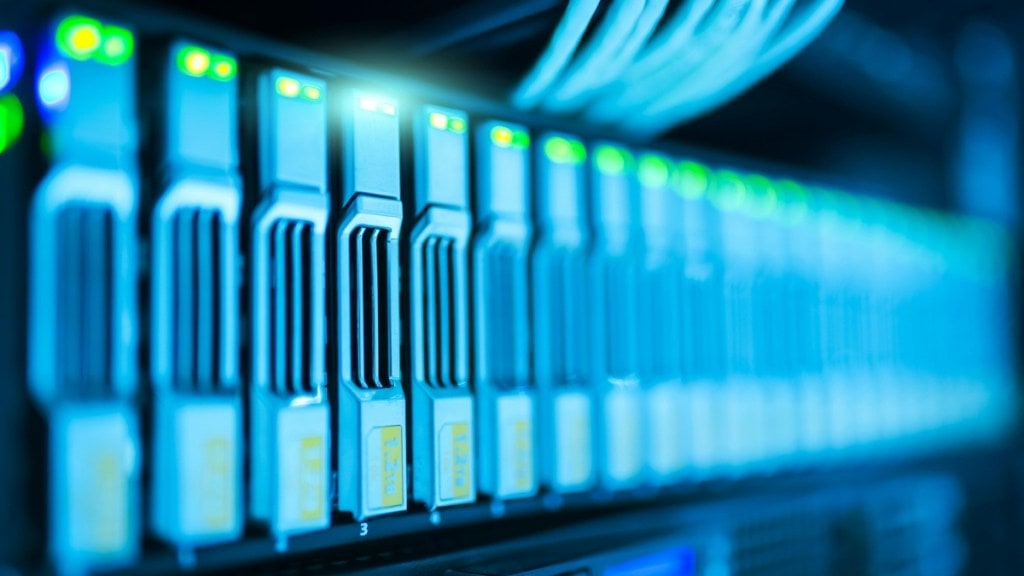
Storage: The storage solutions of SSDs, HDDs and storage arrays manage steadily increasing data volumes. The adoption of NVMe-based all-flash arrays and storage solutions leads organizations to experience amplified speed and increased operational excellence.
Networking: Data transmission in diverse data centres functions smoothly through the use of fast switches alongside routers and NICs. Modern applications require networking infrastructure to maintain sufficiently swift performance standards.
Power Infrastructure: Power distribution units (PDUs) together with uninterruptible power supplies (UPS) and backup generators form a protective reliability system for outages.
Cooling Systems: Data centre cooling receives significant attention as immersion cooling technology combines with liquid cooling systems to deliver improved power efficiency through enhanced thermal performance.
Challenges and stainability in data centres
Power usage alongside cooling difficulties and scalability limitations present major problems for data center operations. The industry needs to resolve these problems because growing energy usage creates environmental problems across the sector. Sustainable hardware selections are emerging as organizations prefer power-efficient processors alongside renewable operations and next-level cooling solutions.
The practice of managing electronic waste alongside optimized water usage in cooling systems and circular economy implementation emerges as new technical challenges. Stakeholders need to handle regulatory demands through increased carbon emission regulation while attaining both cost-effective solutions and resilient operations. Managers must prioritize investments in eco-friendly technological solutions coupled with smart efficiency tools to deliver performance objectives while meeting environmental mandates.
Conclusion
The worldwide data centre industry demonstrates strong expansion potential thanks to advancing artificial intelligence systems as well as cloud computing services and digital reinvention efforts. The data center infrastructure depends heavily on GPUs while Smart NICs together with custom ASICs along with high-bandwidth memory components show signs of transforming future infrastructure needs. Long-term success relies heavily on resolving power-related issues together with cooling techniques and sustainability concerns.