



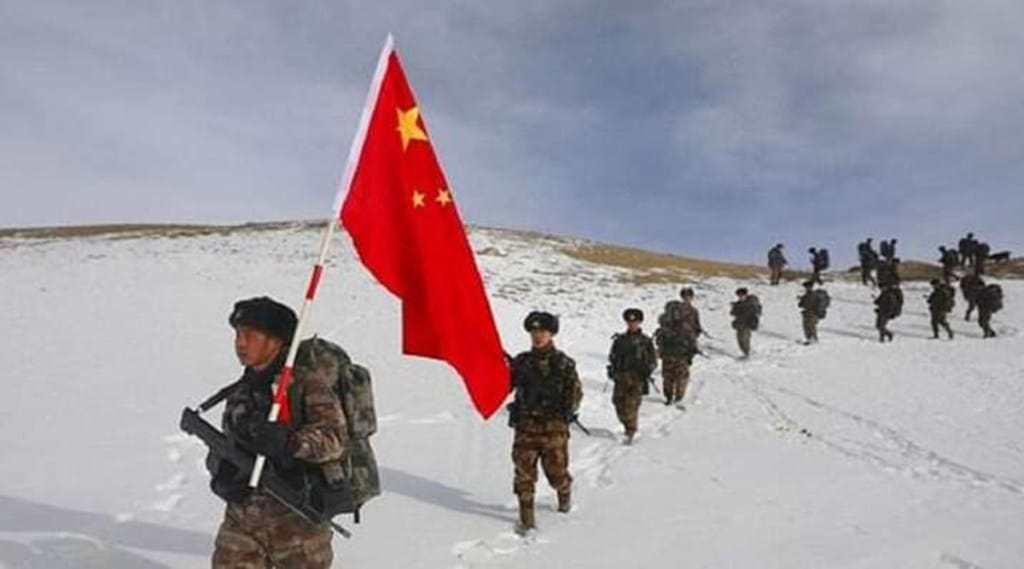
Three days from now (Jan 1, 2022), China’s new land boundary law will become operational. India has already urged Beijing to avoid actions that are likely to alter the situation in the border areas.
What is China’s Land Boundary Law?
As has been reported earlier, earlier this year in October, the Standing Committee of the National People’s Congress had passed the law for the protection and exploitation of China’s land border areas. According to the new law, “the sovereignty and territorial integrity of the People’s Republic of China are inviolable and sacred.”
The legislation which will come into effect from January 1, 2022, was passed by the Standing Committee of the National People’s Congress and is meant for the protection and exploitation of China’s land border areas.
It talks about the measures the state will take to improve public services and infrastructure, encouraging and supporting people’s life and work, strengthening the border defence; support economical and social development in border areas; and economic development in border areas.
What does it mean?
These measures mean that the Chinese are planning to settle civilian populations in the border areas.
However, the legislation has urged the state to follow the principles of “mutual trust, equality, and friendly consultation, and to properly resolve disputes and longstanding border issues with neighbouring countries through negotiations.
China shares its 22,457-km land boundary with 14 countries like India (the third longest border) and Russia and Mongolia. While there are disputed boundary issues between India and China, and Bhutan and China (477 km) there are no boundary issues with Russia or Mongolia.
Is the law specifically meant for India?
The simple answer is no. However, the 3,488-km boundary remains disputed. The armies of India and China continue to be in military standoff and according to experts there could be hurdles in resolving the boundary issues. The new legislation however suggests that the PLA will do border management.
The China-Pakistan Boundary Agreement of 1963
The new law does not confer any legitimacy to this agreement that has been termed invalid and illegal by India. And, India claims sovereignty over part of the land China and Pakistan had ceded in favour of each other through the deal. This also includes the land in northern Kashmir and Ladakh.
Model border villages
There have been reports about China building “well-off” border defence villages across the Line of Actual Control (LAC) in all sectors. In July this year, Chinese President Xi Jinping visited a village in Tibet which is located near the border with Arunachal Pradesh. India has already expressed its concern about the “dual military and civil” use of border villages.
Earlier this year, after several rounds of marathon talks at different levels – military as well as diplomatic level, troops from both sides withdrew from the north and south banks of Pangong Lake and at Gogra. However, despite the talks, troops remain at other friction points.
The Chinese side remains aggressive and has shown no interest in deescalating the border situation. India had made several suggestions to resolve the ongoing military standoff between the two sides during the 13 round of Corps Commanders talk in October. China did not agree with suggestions provided by India.