



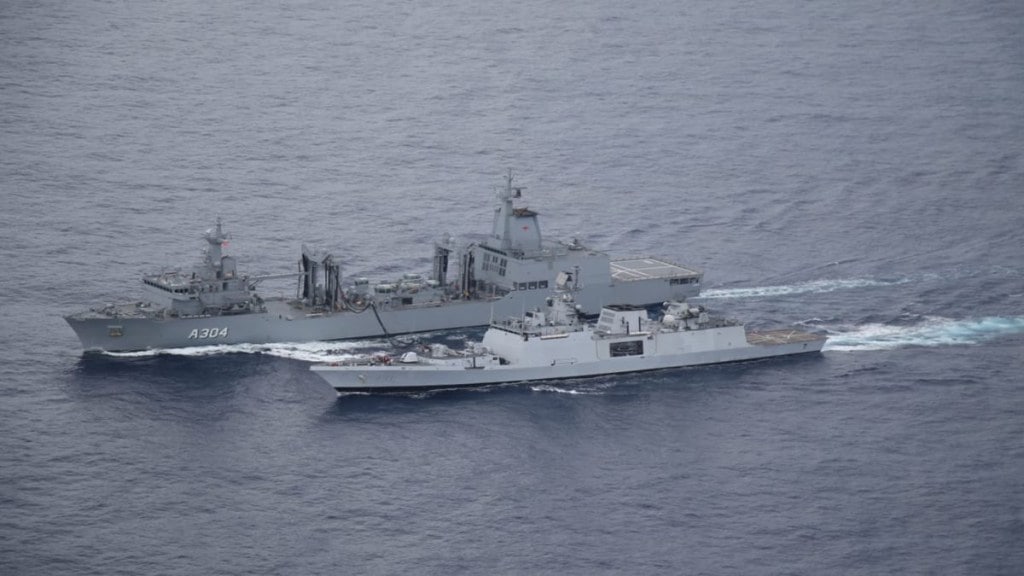
The high-tempo Ex Malabar exercise which saw the participation of navies of the QUAD countries — Japan, India, Australia and the US in conducting various operations involving Special Forces, anti submarine warfare and more concluded today. This was the 26th edition of the multinational drill which culminated in the seas off Japan marked the 30th anniversary of the exercise and was hosted by JMSDF.
Importance of the exercise
The focus of the drill was on interoperability and further enhancing tactical capabilities in the future editions of the multinational exercise. The QUAD members share similar values – open, free and fair Indo-Pacific Region.
Also Read: Ex Malabar 2022: Focus on enhancing interoperability in Indo-Pacific region
As reported in Financial Express Online this multinational drill helped the navies to further enhance their understanding of operational methodologies of each other and also their ability to cooperate in dealing with different maritime challenges.
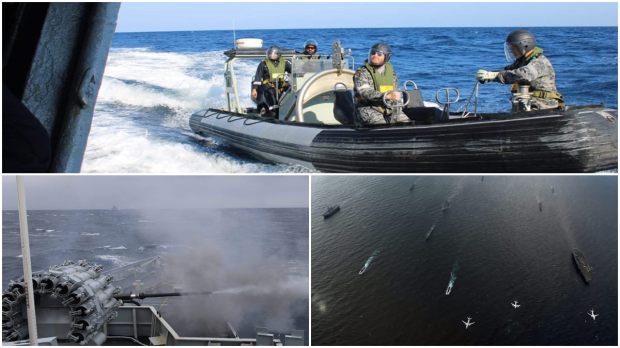
According to the Indian Navy there were eleven surface ships including a nuclear powered aircraft carrier with its integral air elements, two submarines, four long-range maritime patrol aircraft, and integral helicopters. This exercise also involved exchange of ‘Sea Riders’ between various all the participating ships.
More about the exercise
Over a period of five days the Sea Phase of the exercise was conducted near Yokosuka, Japan. There was demonstration of anti-air and anti-submarine warfare drills, tactical procedures, live weapon firings, surface, and tactical procedures.
Also, another highlight of the sea phase was the conduct of War at Sea exercises. This phase enabled all the participating navies of the QUAD member states to consolidate interoperability and also hone their tactical skills.
It has been reported earlier that the Indian Navy had deployed by Eastern Fleet INS Shivalik and Kamorta which were led by Rear Admiral Sanjay Bhalla, Flag Officer Commanding Eastern Fleet.
Besides the operational drills, the different bilateral support agreements between the countries were also validated.