



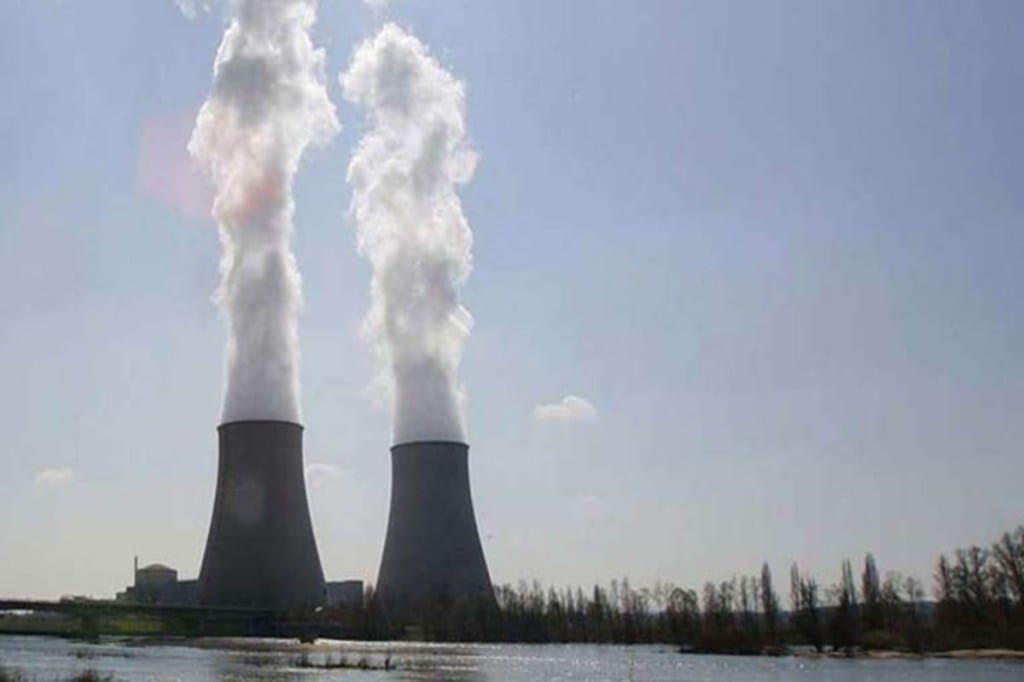
The indigenously built Gujarat based Kakrapar Atomic Power Station or KAPS –3 has achieved criticality, thus giving a boost to the `Make in India’ initiative in the reactors sector. Situated near the city of Vyara in Gujarat, the atomic power plant consists of two 220 MW pressurised water reactor with heavy water as moderator (PHWR).
The KAPS between 1993-95 had two PHWR reactors which had a total installed capacity of 440MW. However, due to leak in its water systems, the plant had to be shut down for 66 days in 1998. However, it recovered and in 2003, it was awarded the best PHWR in its class by the CANDU owners group.
Again, in 2018, the plant had received another treatment when all the coolant channel and feeder tubes at the core of the reactor had to be replaced.
In September 2018, KAPS-2 attained criticality. The construction of the Unit 3& 4 had started in 2010 and today (July 22, 2020) Unit 3 has achieved criticality.
Prime Minister Narendra Modi had earlier in the day tweeted his congratulatory message to the scientists soon after the Gujarat based plant’s Unit 3 achieved criticality, terming it as a shining example of the `Make in India’ initiative and a “trailblazer for many such future achievements.”
What does achieving criticality mean?
It means the 700 MW power plant in Gujarat has now achieved the regular operating condition of a reactor. And, the plant is now ready to generate power.
Plans for the commissioning of Kakrapar Unit 4 expected to be by 2021
The fourth unit of the KAPS is likely to be commissioned by 2021. While the Department of Atomic Energy (DAE) is the agency responsible for overseeing the atomic energy policy of the country, the Nuclear Power Corporation of India Ltd (NPCIL) has 22 reactors across India. The NPCIL is the only agency in the country to operate these plants.
Based on the information available on the IAEA website, being a large country, India needs a large electricity generating capacity. The power generation in the country during 1947-48 was 4.1 billion kWhr and in 2014-15 it was about 1272 billion kWhr which is including captive power.
It has been predicted in the next 50 years the generation may increase further. Presently, the main component of electricity is fossil fuels and there are environmental concerns like greenhouse gas (GHG) emissions which are associated with the use of fossil fuels.