



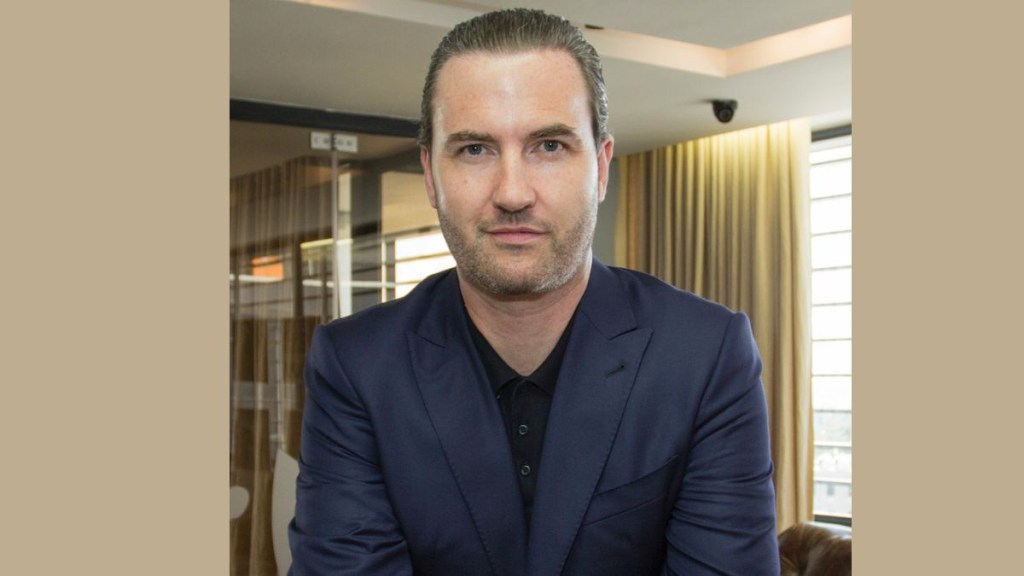
On his recent visit to India, Sean Donovan, APAC president for TBWA, told Christina Moniz about the shifts the agency made during the pandemic years, the importance he attaches to the Indian market and the agency’s focus on nurturing talent.
Edited excerpts:
What is your mandate for the agency’s Indian leadership this year, now that you got Russell Barrett on board?
Honestly, new talent joining us gives me an opportunity to visit and interact with the team here. If you notice Russell’s designation, it is ‘chief creative experience officer’. TBWA took a decision globally to add the word ‘experience’ in the CCO’s designation. It is a manifestation of our strategy, which over the last couple of years, was to move towards becoming an experience collective. In redefining the CCO’s role across markets, we are clearly indicating what our priorities will be and the kind of work we want to do.
The objective is not to replace creativity but rather to build capabilities to execute a great idea in a way that’s arresting, engages with the consumer and achieves a client’s business objectives. That’s the mandate for Govind (Pandey, TBWA India CEO) and the Indian leadership, and they’ve been doing a tremendous job so far.
Where does India as a market stand in your global scheme?
Among our larger markets are Japan, China, Korea and Singapore. India is somewhere in the middle. TBWA’s team is around 130 people here, and revenue-wise too, the country is somewhere in the middle. In terms of the contribution, however, India definitely over-indexed and punches way above its weight. We expect to grow further in this market, but we want our growth to be sustainable. Anything beyond a 20-25% revenue growth from new business is difficult to sustain. We choose businesses that are right for us, and businesses where we can make a real difference.
How would you summarise the past year for TBWA across Asia?
The pandemic has obviously been a big shadow in the past three years, and people have been through a lot. While business dipped in 2020, we saw a good recovery in 2021. But I have to say that 2022 was perhaps our best year ever in Asia. It has, however, been a bit of a mixed bag in different markets. Earlier in the pandemic, China bounced back quickly while the other countries took time to recover. Now, China is impacted by the pandemic while the other markets are doing well. China’s situation to some extent does impact other countries such as Thailand, which are heavily dependent on China for tourism.
From a work standpoint, one of the biggest positives during the pandemic years was the acceleration of change in the business. Consulting and data analytics became important during these years, and were key to business growth. Revenues from our work in the non-traditional space, which include technology and data, grew more than threefold. This made a real impact on our business growth and evolution, and what we offer brands today.
Overall, we saw a good double-digit growth in revenue and significant double-digit growth in profit. Moving forward in 2023, our focus is to bring back the magic of creativity and marry that with science.
What steps are you taking to address the issue of talent crunch, which affects most agencies today?
We work as a rather fluid collective. What this means is that we have certain focus areas within this market for the Indian team but there are also focus areas in other regions where the Indian team assists. TBWA also invests a lot in global learning programmes, which include both, in-person and remote training. We offer training for people across levels of experience. The other thing we do is create a sense of community, which may sometimes be viewed as nebulous but is necessary especially in a hybrid work environment. We also give people opportunities to travel to other markets and learn with the talent there.
Finally, we are seeking ways to give voice to newer talent that may sometimes be reluctant to share ideas or opinions.
In the event that people leave TBWA, our endeavour is to ensure they leave as the best possible version of themselves and are more employable wherever they go. In my view, that is our societal contract with them.
Our talent turnover in 2022 was 29.9% of the 2021 numbers, when the great resignation happened. This is one metric we are really happy about because at the end of the day, ours is a talent and people business.