



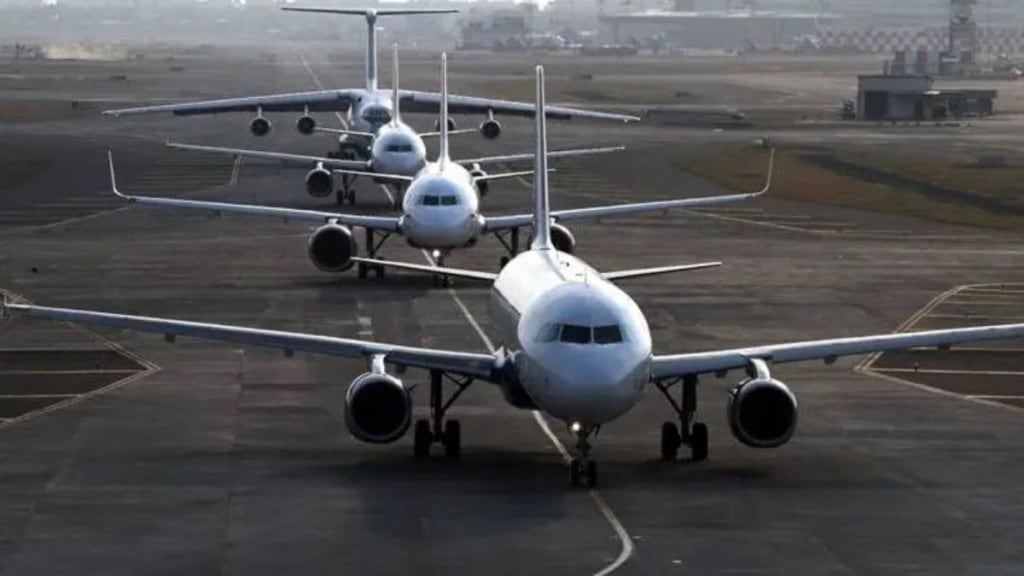
The aviation sector enters 2026 with a rare surge of infrastructure capacity, as the Noida International Airport at Jewar and the Navi Mumbai International Airport prepare to begin operations within months of each other. Together, they represent the largest single expansion of airport capacity delivered in such a short span, easing long-standing congestion pressures around the Delhi and Mumbai aviation markets.
For airlines, the opening of the two greenfield airports offers headroom to add flights, rebalance schedules and reduce peak-hour strain at existing hubs. Capacity constraints at Delhi’s Indira Gandhi International Airport and Mumbai’s Chhatrapati Shivaji Maharaj International Airport have long limited network expansion and operational flexibility. The new facilities are expected to absorb spillover traffic and create room for incremental growth.
Beyond congestion relief
The reach of the airports extends beyond congestion relief. Jewar is expected to expand the National Capital Region’s aviation catchment deeper into western Uttar Pradesh and parts of Rajasthan and Madhya Pradesh. Navi Mumbai is expected to improve access across the Mumbai Metropolitan Region while offering a closer gateway for passengers from Pune, Raigad and the Konkan belt. Airlines are likely to use the added capacity to open more point-to-point domestic routes, reduce reliance on a few congested hubs and, over time, add international services to the Middle East and Southeast Asia as demand firms up.
Yet the expansion comes against a backdrop of operational stress. Airlines are still grappling with crew shortages, delayed aircraft deliveries and global supply-chain disruptions. The past year exposed systemic weaknesses, with repeated disruptions and cancellations prompting closer regulatory scrutiny and public criticism.
Industry observers’ warning
Industry observers caution that infrastructure alone will not deliver results. Mark Martin, chief executive of Martin Consulting, said that airline adoption and passenger behaviour will determine whether the new airports succeed. “Navi Mumbai may have the infrastructure, but success will take time. Airlines actually have to start flying there, and there is no major established passenger catchment yet,” he said. He added that Jewar is effectively launching as a single-runway airport, with surrounding connectivity and support infrastructure still evolving.
Regulators have echoed similar concerns. The Directorate General of Civil Aviation has repeatedly warned that airport expansion must be matched by stronger air traffic management, safety oversight and skilled manpower. Without parallel investments in these areas, capacity additions risk translating into operational strain rather than resilience.
The caution follows a difficult 2025. Flight duty time limitation issues at IndiGo highlighted the risks of stretched crew resources, while the Air India Boeing 787 crash placed safety systems under intense scrutiny. Airlines also faced stalled fleet expansion plans as manufacturers struggled to clear backlogs.
According to Campbell Wilson, managing director and chief executive of Air India, the carrier should have received 28 aircraft from a 570-jet order placed in February 2022, but has so far received none from that order. The shortfall has constrained capacity planning and network optimisation.
As 2026 approaches, the sector’s reset is clear on paper. Whether new runways translate into smoother operations and sustainable growth will depend less on concrete and steel, and more on execution across airlines, regulators and the broader aviation ecosystem.