



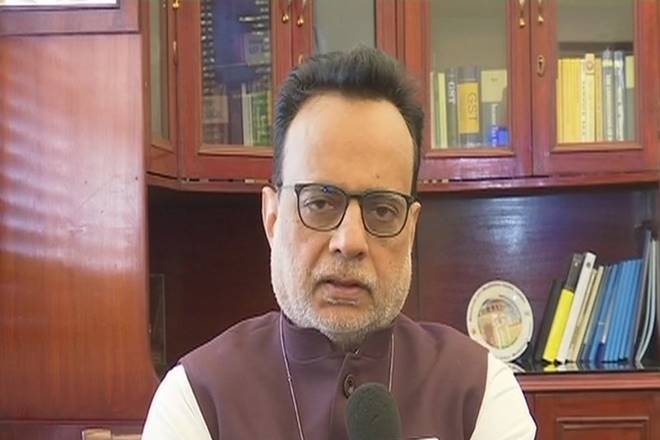
Revenue Secretary Hasmukh Adhia today welcomed the US rating agency Moody’s upgradation of India’s sovereign credit rating to ‘Baa2’ with a stable outlook suggesting improved growth prospects driven by economic reforms. In a series of Twitter, Adhia said, “The path that Government has chosen for long-term reforms and fiscal consolidation is well recognised by investors already”. In another tweet, he added, “The rating agency too has now confirmed it formally, which is welcome”.
The rating upgradation has come after 13 years. The US rating agency had last upgraded India’s rating to ‘Baa3’ in 2004. It changed the rating outlook to ‘positive’ from ‘stable’ in 2015, PTI said.
“The decision to upgrade the ratings is underpinned by Moody’s expectation that continued progress on economic and institutional reforms will, over time, enhance India’s high growth potential and its large and stable financing base for government debt, and will likely contribute to a gradual decline in the general government debt burden over the medium term,” Moody’s said in a statement.
“Moody’s believes that the reforms put in place have reduced the risk of a sharp increase in debt, even in potential downside scenarios,” it said. It upgraded the Centre’s local and foreign currency issuer ratings to ‘Baa2’ from ‘Baa3’. Moody’s also changed the outlook on the rating to stable from positive, the statement added.
Suggesting that reforms will help in sustainable growth prospects, Moody’s pointed out that government is in the middle of a wide-ranging programme of economic and institutional reforms.
“While a number of important reforms remain at the design phase, Moody’s believes that those implemented to-date will advance the government’s objective of improving the business climate, enhancing productivity, stimulating foreign and domestic investment, and ultimately fostering strong and sustainable growth,” Moody’s said.
1/3 On Moody’s upgrade of India’s rating:
— Dr Hasmukh Adhia (@adhia03) November 17, 2017
Important reforms like Goods and Services Tax (GST) will play a crucial role by removing barriers to inter-state trade. Adding further Moody’s said that improvements in monetary policy framework, steps to address the overhang of non-performing loans (NPLs) in the banking system and steps like demonetisation, Aadhaar system of biometric accounts, and targeted delivery of benefits through the Direct Benefit Transfer (DBT) have been introduce with intention to reduce informality in the economy.
2/3 The path that Government has chosen for long term reforms and fiscal consolidation is well recognised by investors already.
— Dr Hasmukh Adhia (@adhia03) November 17, 2017
3/3 The rating agency too has now confirmed it formally, which is welcome.
— Dr Hasmukh Adhia (@adhia03) November 17, 2017
Other important steps which are yet to get result include planned land and labour market reforms, which depends on cooperation between states on the great extent, it said.
“Most of these measures will take time for their impact to be seen, and some, such as the GST and demonetisation, have undermined growth over the near term,” it added.