



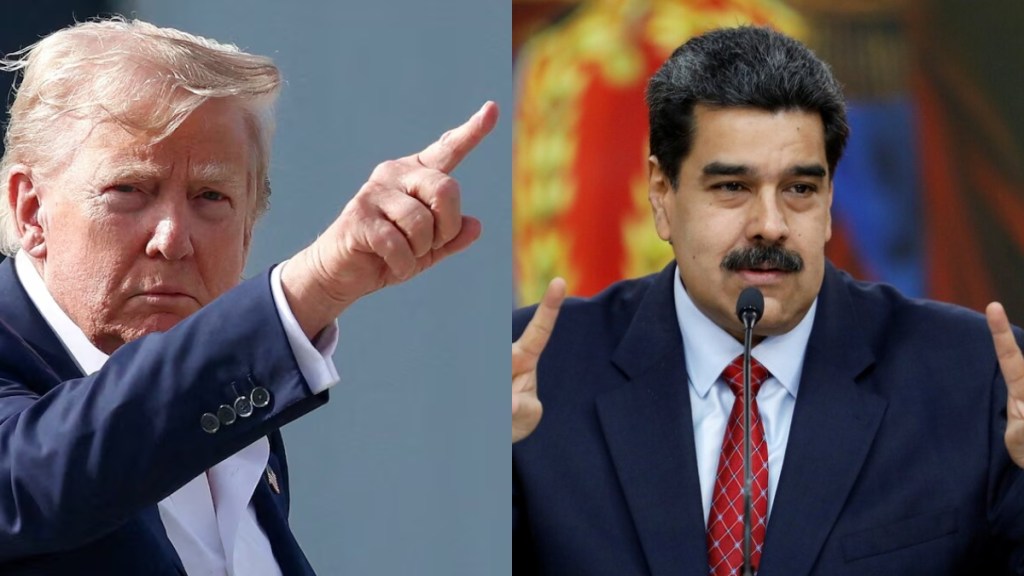
Amid heightened tensions between the US and Venezuela, a federal law known as the War Powers Resolution has once again come into the spotlight.
The resolution, designed to limit the president’s authority to engage US armed forces in hostilities without congressional approval, has become central to debates over recent American military actions in the region over drug trafficking allegations.
Recently, several House Republicans rejected a War Powers Resolution introduced by Democratic Congressman Jim McGovern, which sought to compel President Donald Trump to cease all hostilities within or against Venezuela unless explicitly authorised by Congress.
But, what is this law about?
Enacted during the Vietnam war era, the law seeks to restore the constitutional balance between the executive and legislative branches by requiring consultation and, in many cases, formal authorisation from the US Congress before prolonged military engagements.
The law requires the president to notify Congress within 48 hours of introducing American armed forces into hostilities and generally prohibits combat beyond 60 days without either a declaration of war or specific statutory authorisation, according to Congress.gov
In late 2025, the War Powers Resolution became a focal point in debates over President Trump’s escalating military actions related to Venezuela and drug trafficking operations in the Western Hemisphere.
Trump ordered a series of military strikes on vessels alleged to be involved in drug smuggling, deployed significant US naval assets to the region, and later announced a naval blockade on sanctioned oil tankers in and out of Venezuela, a move his administration said pressured President Nicolás Maduro’s government and disrupted criminal networks, according to TIME.
Other lawmakers had also raised concerns
Many lawmakers, especially Democrats and some bipartisan voices in the Senate, argued that these actions amount to hostilities under the War Powers Resolution and therefore require Congress’s explicit approval.
In October, senators including Adam Schiff and Tim Kaine pushed a War Powers Resolution aimed at preventing further US military engagements, including boat strikes, without legislative authorisation.
In mid-December, the US House of Representatives voted on multiple war powers resolutions intended to curb Trump’s use of military force in the region, according to Reuters.
Supporters of the resolutions argued that the Constitution clearly vests the authority to declare war in Congress, and that prolonged military engagements without legislative approval undermine this role.
Critics, including many Republican lawmakers, defended the administration’s actions as necessary to counter drug trafficking and protect US interests, though some acknowledged that Congressional authorisation should be sought for extended hostilities, The Associated Press reported.