



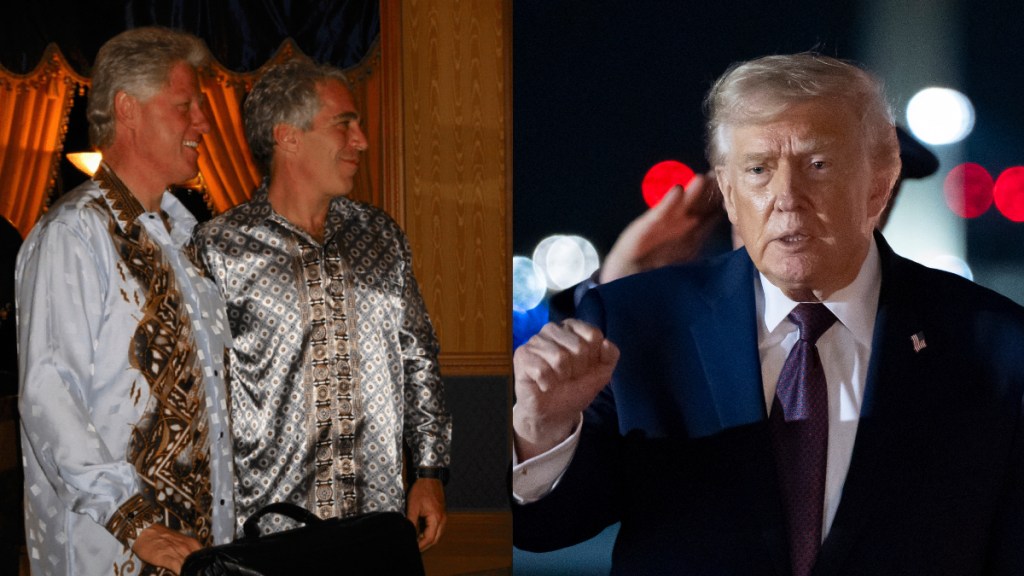
The US government has warned people to be cautious after new documents from the Epstein files made serious allegations against President Donald Trump, including claims of rape. The Department of Justice said some of the claims found in the newly released records are “untrue and sensationalist,” including a late-2020 tip alleging rape.
At the same time, the US Justice Department has said that a handwritten letter it released earlier this week, signed “J. Epstein” and addressed to convicted sex offender Larry Nassar, is fake. The department now says the handwriting does not match that of Jeffrey Epstein.
Trump accused of rape: FBI doc describes 1995 phone call
One FBI document included in the release contains details of a phone call made by a limousine driver to investigators. The driver told the FBI that he overheard a phone conversation in 1995 involving Donald Trump. According to him, Trump was allegedly talking about “abusing some girl” and mentioned the name “Jeffrey,” which the driver took to mean Jeffrey Epstein.
The same driver also told investigators that his former partner later claimed she had been raped by both Donald Trump and Jeffrey Epstein. However, the FBI added a note to this testimony that appears to question the reliability of the source and the claims being made.
The Department of Justice claimed that many such claims were made to the FBI just before the 2020 US presidential election. According to them, the limousine driver’s call to the FBI was made on October 27, 2020, just one week before voters went to the polls. While the DOJ did not mention the rape claim directly in its warning, it cautioned against last-minute allegations surfacing during an election period.
“To be clear: the claims are unfounded and false,” the department said, adding that if there had been any real evidence, it would already have been used against Trump.
The allegation appeared in a new release of around 30,000 additional pages of Epstein-related documents that were made public on Monday night. This latest release follows earlier batches that featured heavy redactions and little direct mention of Trump.
DOJ: Letter signed by ‘J. Epstein’ mentioning ‘our President’ is fake
In a series of posts on X, the Justice Department questioned the credibility of some documents, including a “fake” note attributed to Jeffrey Epstein that mentioned Donald Trump. The department claimed that many people named in the files have not been accused of any wrongdoing, and their inclusion does not imply guilt.
When the letter was first made public on Tuesday, the Justice Department said it was still checking whether the document was real. Just hours later, the department announced, “This fake letter serves as a reminder that just because a document is released by the Department of Justice does not make the allegations or claims within it factual.”
The Justice Department listed several reasons why it believes the letter was not written by Epstein. The envelope was postmarked in Virginia, not New York, where Epstein was being held at the time. The return address also listed a jail that was not the Metropolitan Correctional Centre, where Epstein was imprisoned. The envelope was processed three days after Epstein died by suicide in August 2019.
The letter was addressed to “L.N.” and appeared to be sent in August 2019, the same month Epstein died. It included disturbing language about “love and caring for young ladies” and made a lewd reference to “our president” and his treatment of women. While Donald Trump was not named directly, he was president at the time.
CNN reported earlier, based on prison records, that Epstein appeared to have sent a letter to Nassar while he was in jail. However, the contents of that letter were never made public
Who is Larry Nassar?
Larry Nassar is one of the most notorious sex offenders in US history. He was a doctor for USA Gymnastics and Michigan State University and is now serving a 60-year federal prison sentence. According to the NYT, more than 150 women and girls told courts that Nassar sexually abused them over decades, often under the guise of medical treatment. His case exposed deep failures at major institutions that ignored complaints and warning signs for years.