


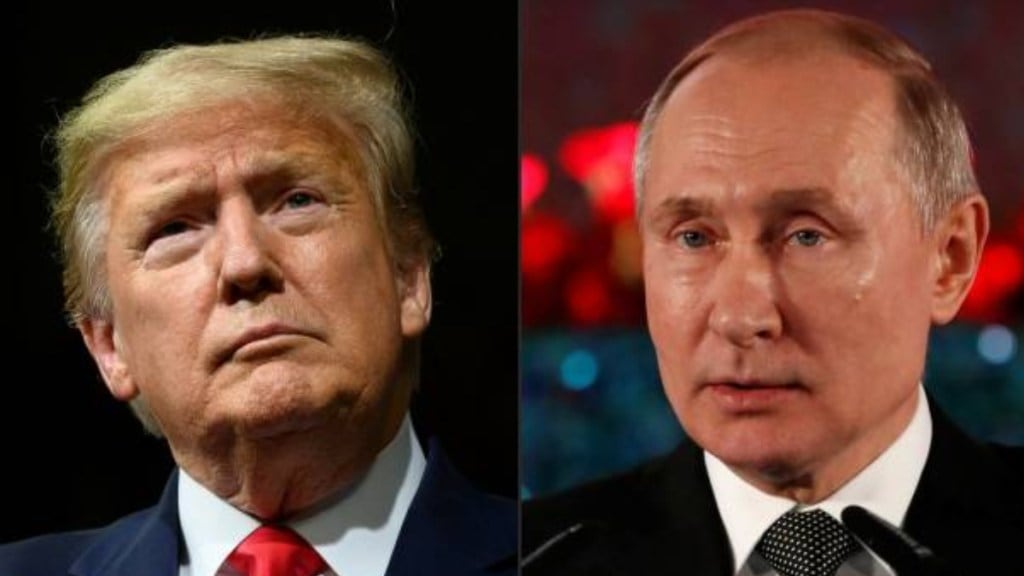

President Donald Trump has reiterated that targeting Russia’s oil revenue could be the key to ending the war in Ukraine. Trump, who promised during his campaign to swiftly end the conflict, is now focusing on leveraging OPEC+—the coalition of oil-producing nations—by urging them to cut oil prices to pressure Russia.
In his first days back in office, Trump called on OPEC+, led by Saudi Arabia, to reduce oil prices. He argues that cutting prices would deprive Russia of crucial funds to continue its military operations in Ukraine. “One way to stop it quickly is for OPEC to stop making so much money,” Trump stated. He believes that reducing oil prices could force Russian President Vladimir Putin to reconsider the war.

Challenges to pressuring OPEC+
However, industry experts believe that pressuring OPEC+ could be difficult. The group has already postponed increasing oil production due to weaker demand and competition from non-member countries. Despite this, Trump repeated his calls for lower oil prices during a virtual address to the World Economic Forum in Davos, Switzerland, this week.
Keith Kellogg, Trump’s special envoy to Ukraine and Russia, also weighed in, suggesting that an oil price reduction to $45 per barrel could pressure Russia to end the war. He emphasized that Russia is profiting significantly from oil sales, particularly to countries like China and India, which purchase Russian oil at a discount.
The complex Saudi-Russian relationship
The relationship between Russia and Saudi Arabia is intricate, despite their cooperation on oil production within OPEC+. The two countries joined forces in 2016 to create OPEC+, partly in response to the U.S. shale oil boom. While Trump has a better rapport with Saudi Crown Prince Mohammad bin Salman than President Biden, experts caution that Saudi Arabia has its own financial obligations to meet and might be hesitant to reduce oil prices drastically.
The Kremlin’s response
The Kremlin dismissed the idea that oil prices could force Russia to end the war, with spokesman Dmitry Peskov stating that the conflict is not driven by oil prices but by Russia’s security concerns and the refusal of Western nations to listen to them.
Trump recently spoke by phone with the Saudi crown prince, his first foreign leader call after his return to the White House. While details of the conversation remain unclear, Trump has previously expressed a desire to strengthen U.S.-Saudi relations, including securing a $600 billion investment from Saudi Arabia into the U.S.
A risky strategy for Trump
Publicly pressing Saudi Arabia and OPEC+ nations is a bold strategy, and it’s uncertain whether it will yield better results than Biden’s previous attempts. Biden’s push for increased oil production was rejected by Saudi Arabia, and Trump faces a similar challenge in navigating the interests of the two largest oil producers within OPEC+.
Trump’s broader strategy on Ukraine
Trump has framed his approach to the Ukraine conflict in economic terms, arguing that leveraging economic pressure on Russia could force Putin to negotiate. He has been critical of Biden’s handling of the war, often claiming that the conflict would never have happened under his leadership. Trump remains hopeful that he can help bring an end to the war through diplomacy, emphasizing the enormous loss of life in the ongoing conflict.
Trump’s bold strategy highlights his focus on using economic leverage, particularly targeting oil, as a tool to resolve global conflicts—a stark contrast to military interventions.